An evening kick-off, rain from half-time on. The perimeter LED still has to stay bright enough for the stands and for the broadcast cameras, while water runs down the panel face and the power cabinet sits right beside the running track. Stadium operators, clubs and brands all want the same answers before they sign: how much water can the gear take, where does the power come from, and who protects the system if lightning strikes.
Those three questions become three groups of specifications: IP rating, power supply design, and earthing with surge protection. This article covers each one against published technical documents and the standards in force in Vietnam.
What an IP rating really says
Protection of outdoor electrical equipment is classified under IEC 60529, titled "Degrees of protection provided by enclosures (IP Code)", which applies to enclosures for electrical equipment rated up to 72.5 kV. The code has two digits: the first covers solid objects and dust, the second covers water.
| Code | First digit | Second digit |
|---|---|---|
| IP54 | Limited dust protection | Protected against splashing water |
| IP65 | Dust-tight | Protected against low-pressure water jets |
| IP66 | Dust-tight | Protected against powerful water jets |
For LED displays, the front and the rear can carry different ratings, so read both. Published documentation for a common P10 outdoor LED line states IP65 front and IP65 rear, an operating range of minus 20 to 50 degrees C and operating humidity of 10 to 90 per cent.
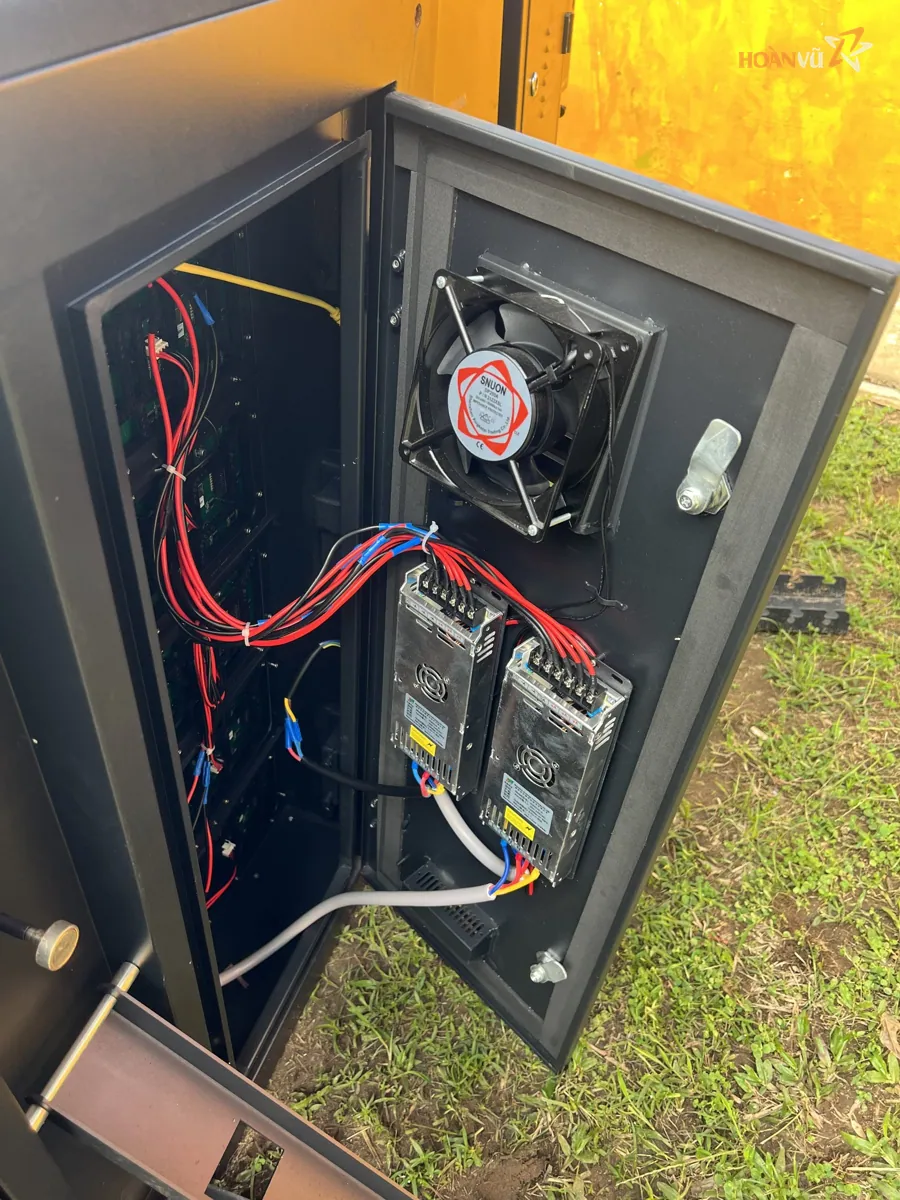
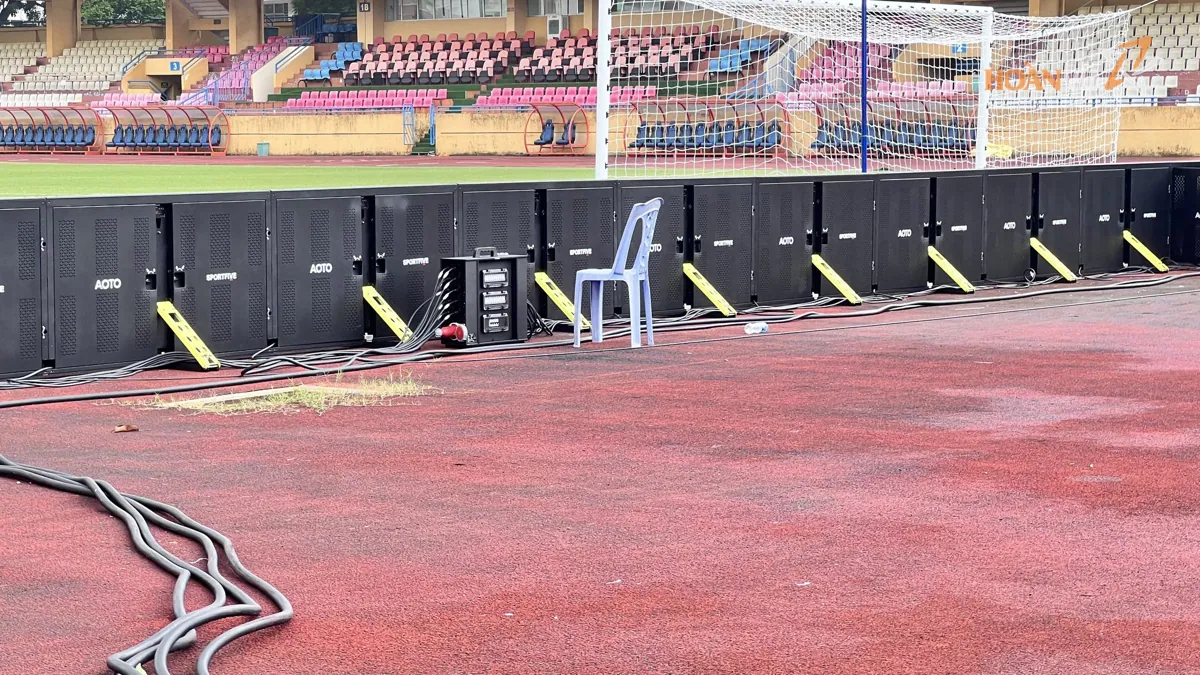
The point that gets missed: the IP figure belongs to the cabinet enclosure, not to the whole system. Power and signal connection points, and any cabinet left outdoors, need an equivalent level of protection, otherwise the run is only as strong as its weakest joint.
Sizing the load and choosing a power setup
LED power is rated per square metre. Datasheets usually publish two numbers, maximum and average. The maximum figure is what sizes cable, breakers and generators, because that is the case where every pixel runs white at full output.
| Published specification | P10 outdoor line (A) | P10 outdoor line (B) |
|---|---|---|
| Peak brightness | 6,000 nits | 6,000 nits |
| IP front and rear | IP65 and IP65 | IP65 and IP65 |
| Operating temperature | Minus 30 to 50 C | Minus 20 to 50 C |
| Maximum power | 694 W per square metre | 750 W per square metre |
| Refresh rate | 7,680 Hz | 7,680 Hz |
At 694 W per square metre, a 100 square metre perimeter run needs roughly 69 kW of headroom for the worst case. Real draw during a match sits below that, because advertising content is rarely full white, but the electrical design still has to follow the peak.
Only then can a team settle:
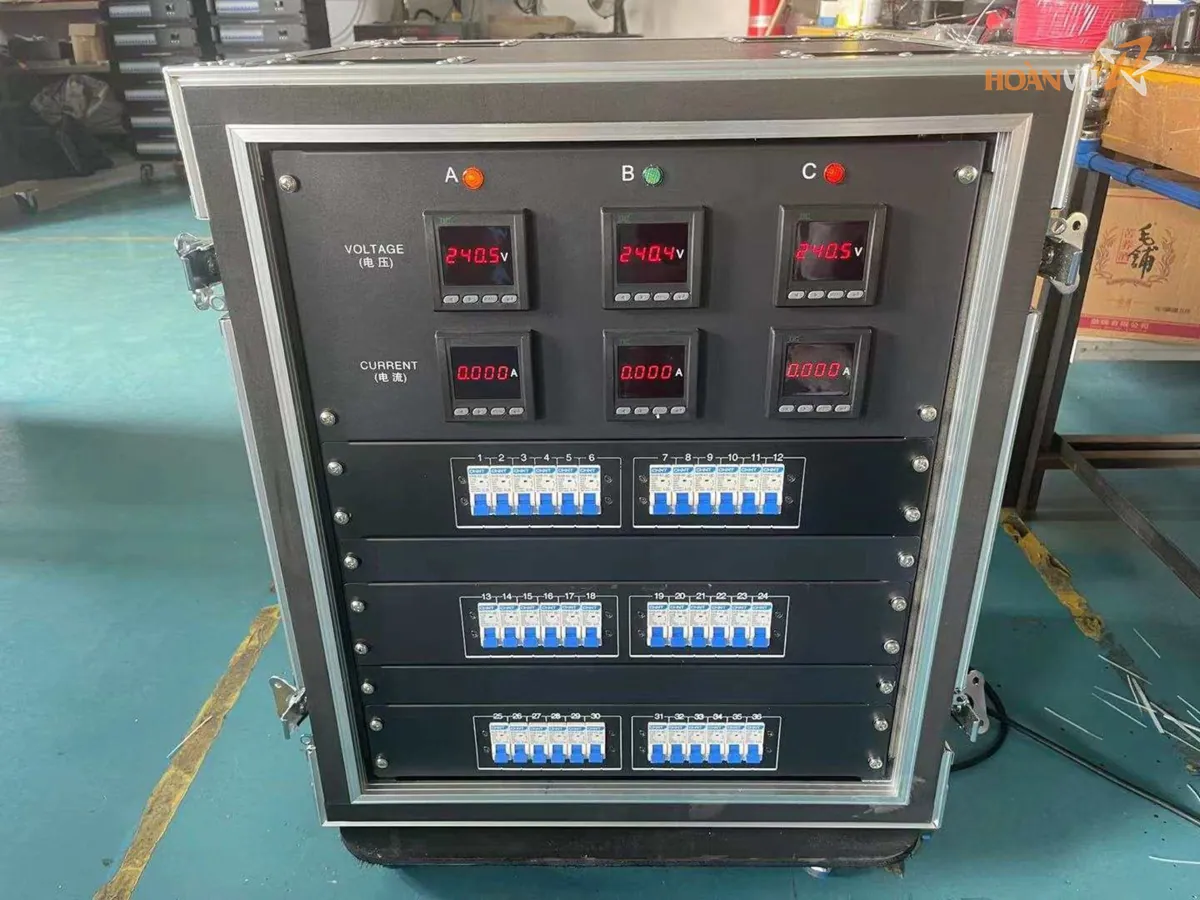
- Cable size and run length from the distribution cabinet to both ends of the LED line.
- Phase allocation and load balancing, so voltage does not sag at the last cabinet.
- Backup supply, because a screen going dark mid-match is a failure the broadcast shows.
Earthing and lightning protection outdoors
A stadium is tall, open, and full of steel: steel-frame stands, floodlight masts. TCVN 9385:2012 gives guidance on the design, inspection and maintenance of lightning protection systems for buildings, including specific guidance for special cases such as temporary structures, cranes and steel-frame grandstands. It also sets out the principle of using existing metal structure as part of the system, and requires the whole structure to be covered by one complete bonded system.
For electronics added to a venue, such as a perimeter LED run, a scoreboard or a control rack, the concern is surge protection on power and signal lines. The TCVN 9888 series on lightning protection has a dedicated part for electrical and electronic systems inside structures.
On the operations side, Clause 27 of TCVN 9385:2012 recommends inspecting a lightning protection system at intervals of no more than 12 months, more often in harsh climates. For a football ground, the sensible slot is before each season, alongside electrical checks and grandstand structural checks.
Heat, humidity and condensation
The published operating range for outdoor LED is wide, but Vietnam adds two problems of its own. First, afternoon sun heats the panel face while the power supplies add heat from behind. Second, high humidity and the temperature swing after rain invite condensation inside the cabinet.
The fix lives in procedure more than in hardware:
- Do not drive a damp cabinet hard straight away; run low brightness first to dry it out.
- Check gaskets, covers and connectors after every strip-down, because a gasket fails quietly.
- Keep fans and vents clear of tape, decals and improvised rain covers.
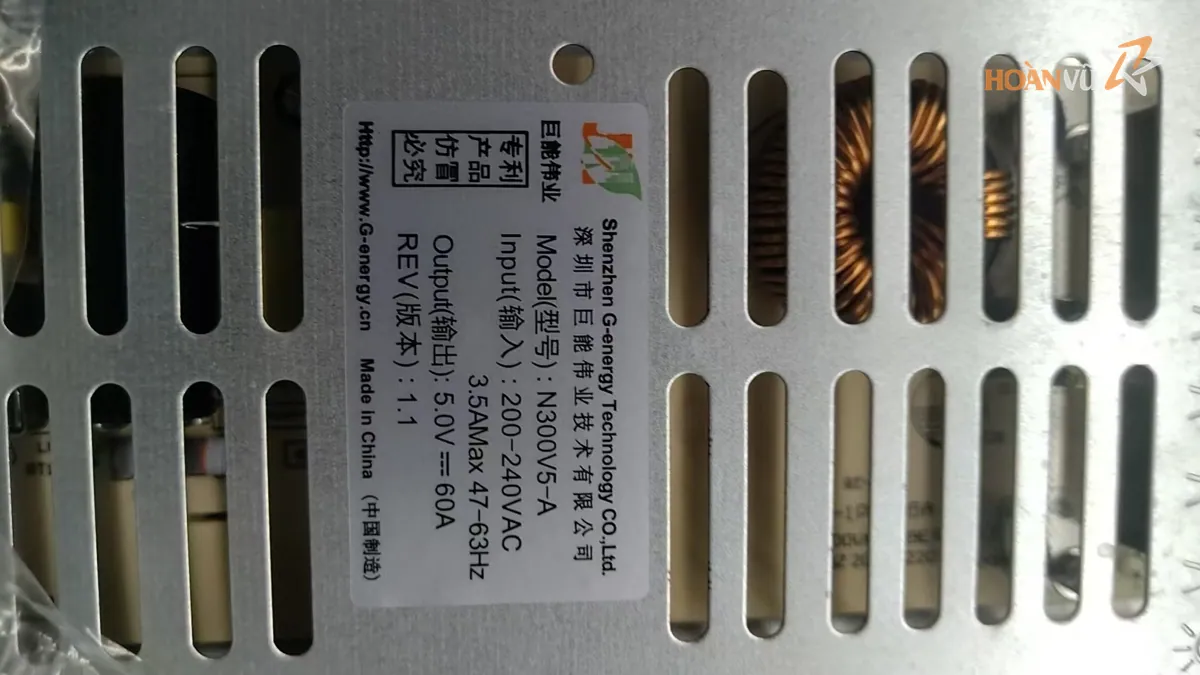
- Keep a record of power-supply labels, so replacements match type and voltage range.
How this runs at the ground
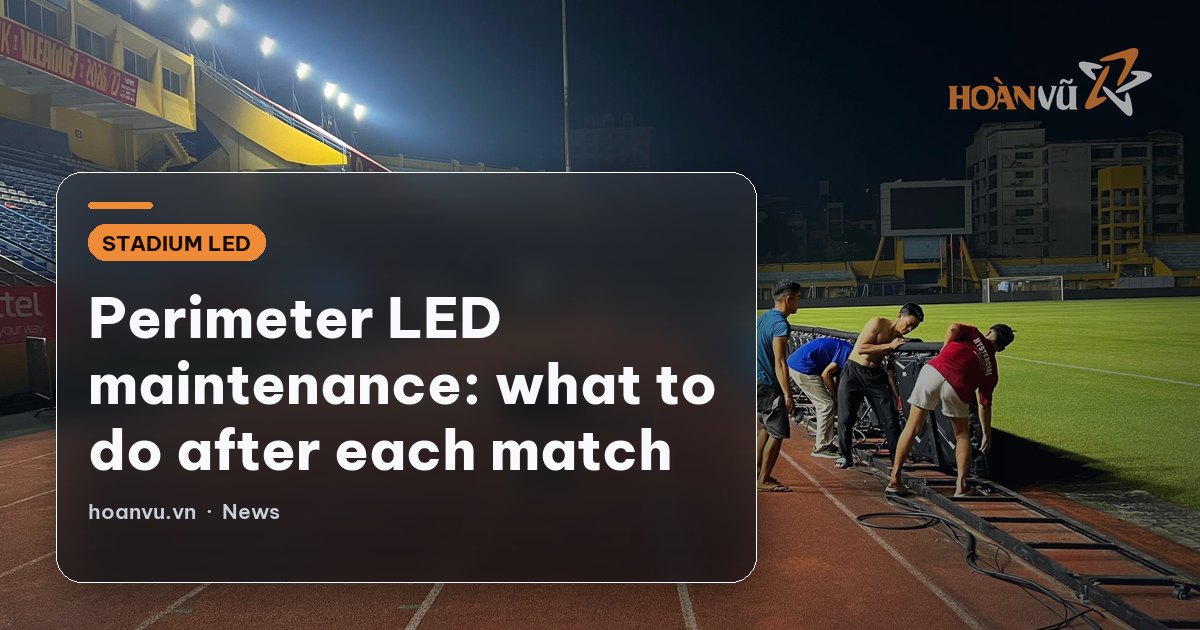
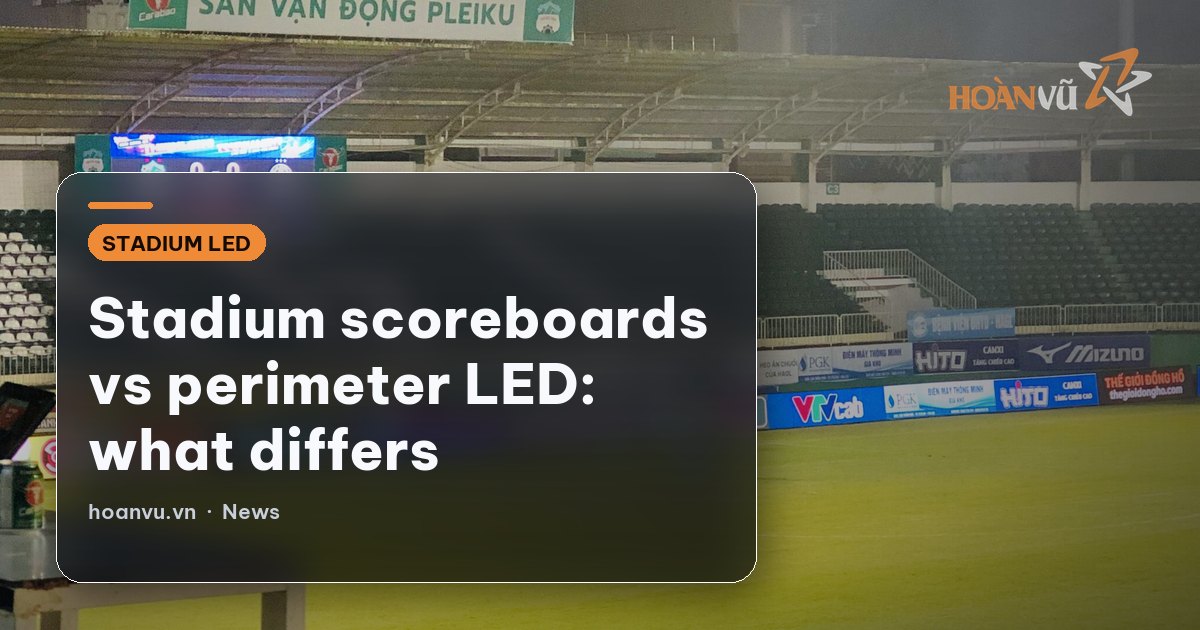
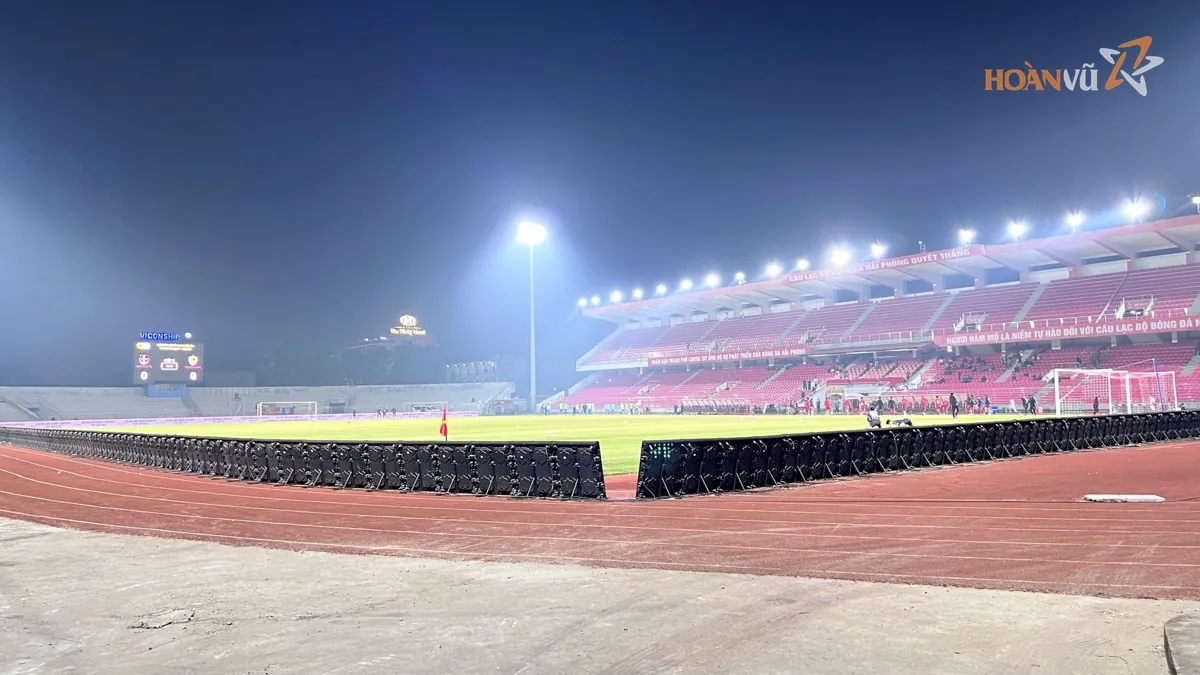
Hoan Vu has worked in advertising since 2001 and became a joint stock company in 2010. It currently operates perimeter LED at four grounds, Hang Day, Lach Tray, Binh Phuoc and Pleiku, working with six clubs across about 84 matches a season. Every match has a technical crew on site, and each match closes with an acceptance record supported by photos and video. That rhythm of 84 matches is exactly why power, earthing and weather protection have to be a procedure rather than an improvisation.
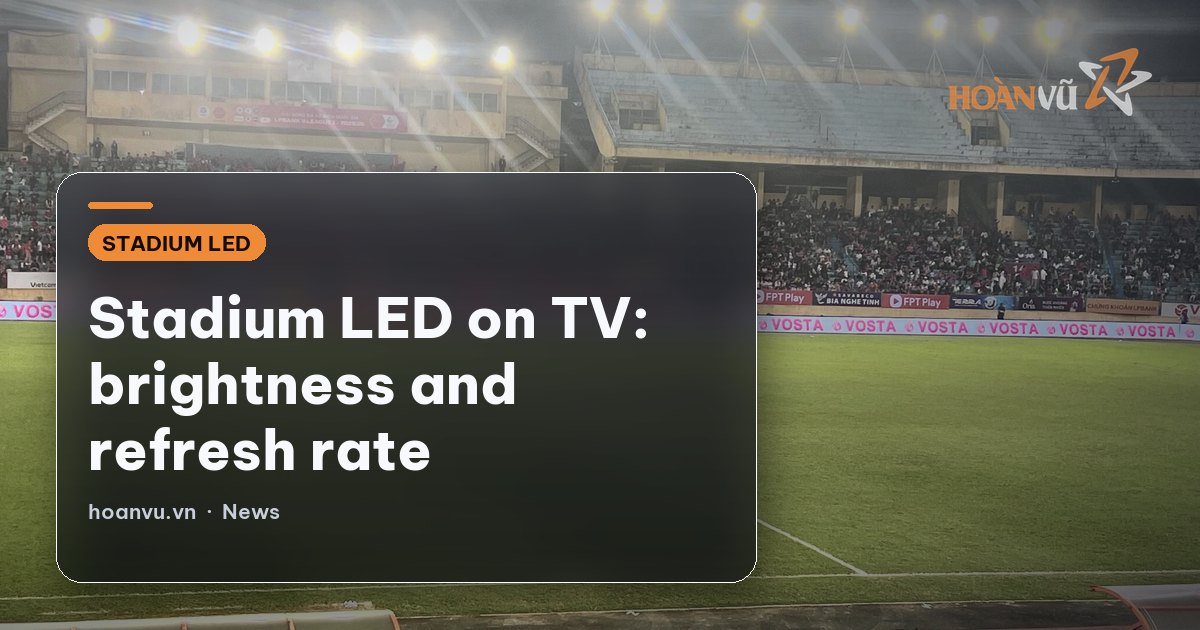
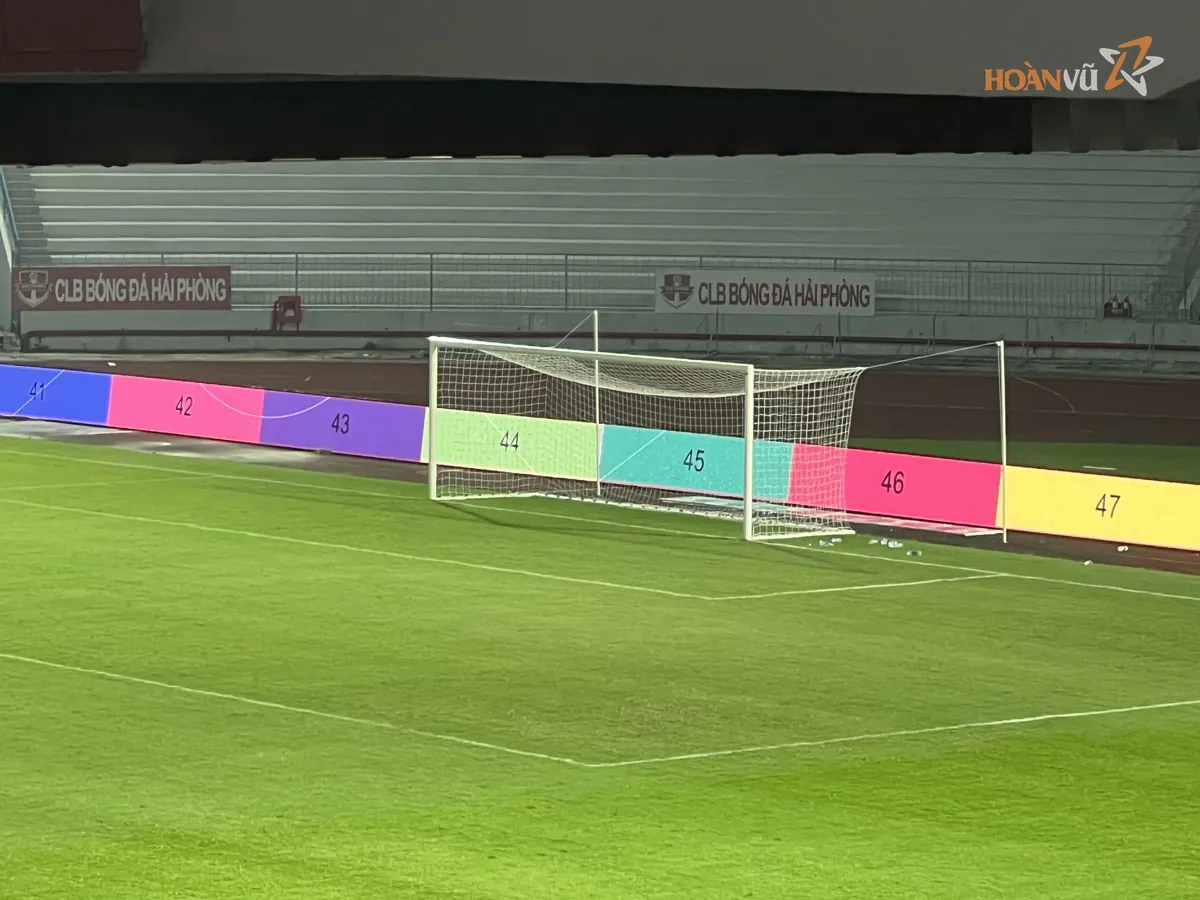
A typical wet-match sequence: check the distribution cabinet and connectors before gates open, run a per-cabinet colour test, watch temperature and current through the match, shut the load down in order afterwards, then cover up. For the broadcast side of the picture, see Stadium LED on TV: brightness and refresh rate.
Frequently asked questions
Does IP65 mean the panel can be submerged?
No. Under IEC 60529, a second digit of 5 means protection against low-pressure water jets from any direction, not immersion. Immersion corresponds to a second digit of 7 or above.
Does heavy rain mean switching the perimeter LED off?
Not necessarily, provided the panels, distribution cabinet and connectors carry a suitable protection level and the system is properly earthed. The final call sits with the technical crew and the match organiser, based on the actual state of the cabinet and the cable runs.
How often should a venue's lightning protection be inspected?
Clause 27 of TCVN 9385:2012 recommends intervals of no more than 12 months, more often in harsh climates. For a football ground, fold it into pre-season preparation.
Conclusion
Weather protection for perimeter LED is not one IP number on a datasheet. It is a chain: cabinet enclosure, connectors, distribution cabinet, earthing, and the match-by-match operating routine. See more on stadium LED solutions, or leave your details for a site survey and a power plan. Hotline 0964 73 74 73.
Hoan Vu designs, installs and runs match-day LED, with co-investment options.