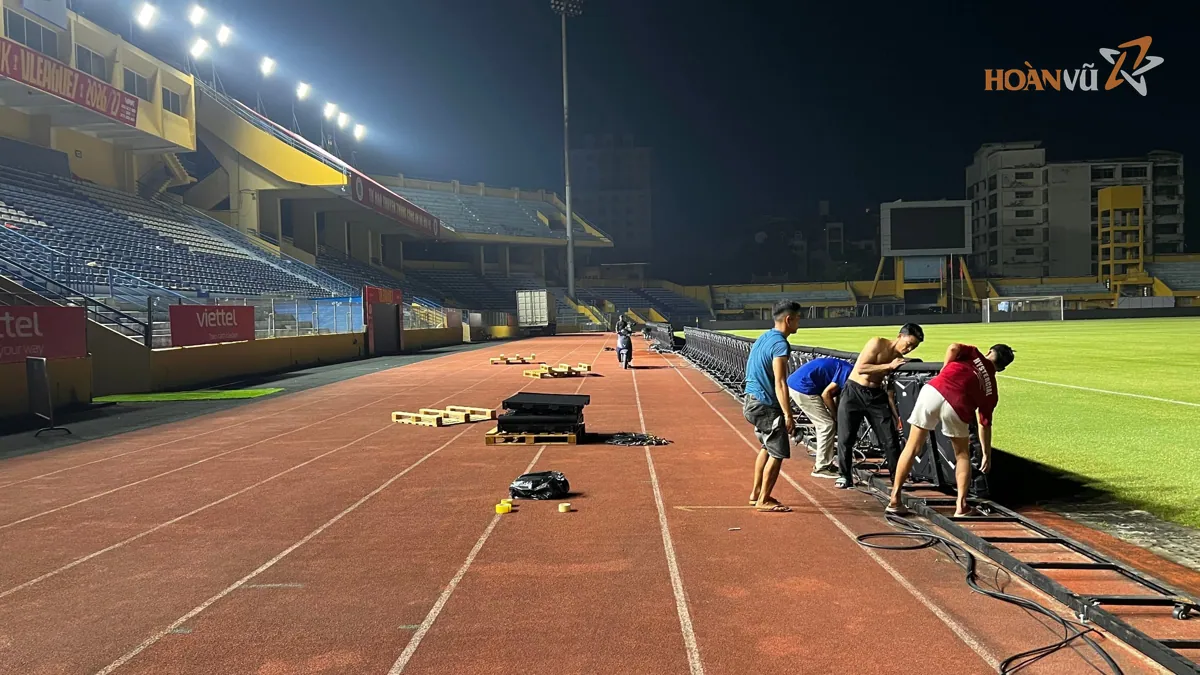
Early in the season every perimeter LED run looks even. By round ten the picture changes. One cabinet sits darker than its neighbours. A section drops signal in stoppage time. A sponsor calls to ask why their logo looked greyer on television than the match before. Most of those faults do not come from weak hardware. They come from the gap between two matches when nobody touched the boards.
Perimeter LED maintenance is not something you do when a board breaks. It is something you do after every match, from a fixed checklist, signed off by a named person.
A long season and equipment that lives outdoors
V.League 2026/27 has 14 clubs, 26 rounds and 182 matches, running from 4 September 2026 to 22 May 2027. Add the national cup, friendlies and events, and a host stadium powers up its boards dozens of times a season. Hoan Vu runs perimeter LED at four grounds, Hang Day, Lach Tray, Binh Phuoc and Pleiku, works with six clubs and covers around 84 matches a season.
Unlike an indoor screen, perimeter LED takes direct sun, driven rain, track dust, pitch irrigation and the occasional shot from a player. UEFA technical specifications for perimeter LED boards in club competitions call for weather protection to IP-65 at the front and IP-54 at the back, with rubber louvers and padding protecting both the LEDs and the players, and foot stands covered with rubber. IP is the classification of enclosure protection defined by the IEC 60529 standard.
A compliant enclosure keeps that rating only while the gaskets stay sealed, the screws stay in place and nobody opens a rear cover the wrong way. That is what maintenance is for.
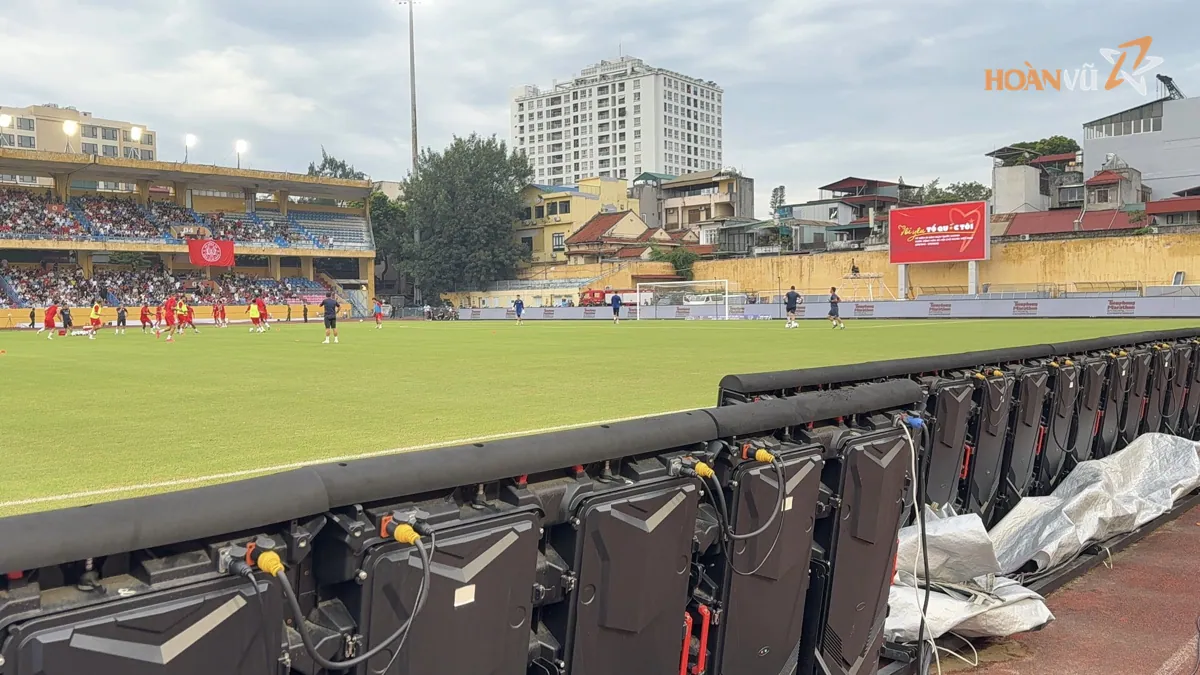
What to do right after the final whistle
- Shut down in sequence: screen first, then the software, then the control computer. Reverse the order when powering up. Manufacturer documentation recommends waiting at least 5 minutes between a shutdown and the next start.
- Run white, red, green and blue test patterns at low brightness to spot dead pixels and modules drifting in colour. Do not leave a single flat colour running long at maximum brightness.
- Log every fault by cabinet number, with photos. Not "the section near the goal".
- Vacuum the front face and the ventilation slots at the back.
- Check gaskets, rear covers, foot stand screws and rubber padding.
- Coil cables in fixed bundles, with no sharp bends at the connectors.
- If water has got in, cut power immediately and do not power up again until the inside is fully dry.
The list takes about an hour for one stadium run. A module replaced early is far cheaper than a cabinet dying mid-match on a televised game.
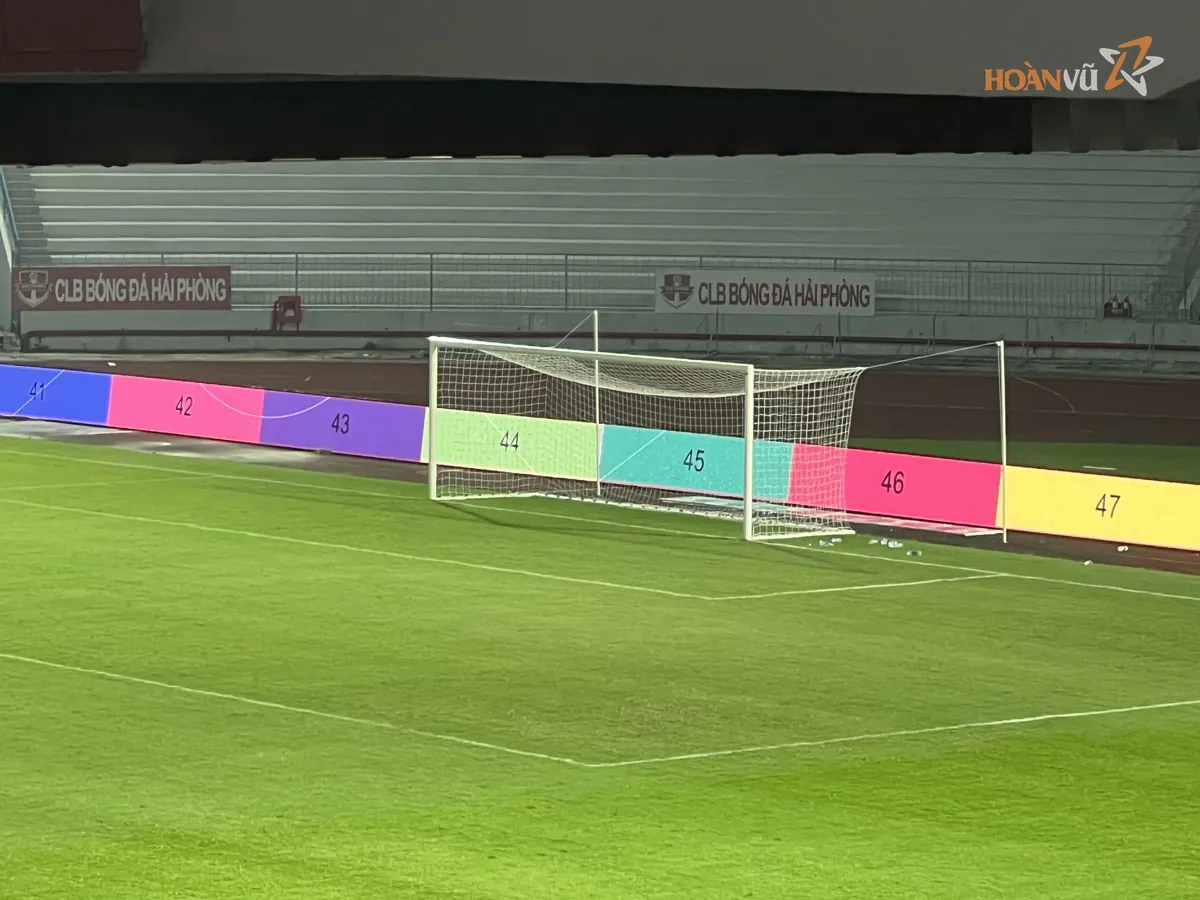
Clean dry first, keep liquids away
Many crews reach for a hose or a wet cloth because it is quick. Manufacturer documentation says the opposite: do not put any liquid on an LED module and do not wipe the face with a damp cloth. Use a soft brush and a vacuum, light pressure, working along the module rows.
Dust is the real enemy. It traps moisture, causes shorts and lets mould settle on circuit boards. The rear vents need clearing too, because a board that cannot breathe runs hot power supplies and shortens LED life. When replacing a module, follow the manufacturer's arrow direction, use the dedicated vacuum tool for front maintenance and a safety rope for rear maintenance, and never touch the LED lamps directly, since they are sensitive to electrostatic discharge.
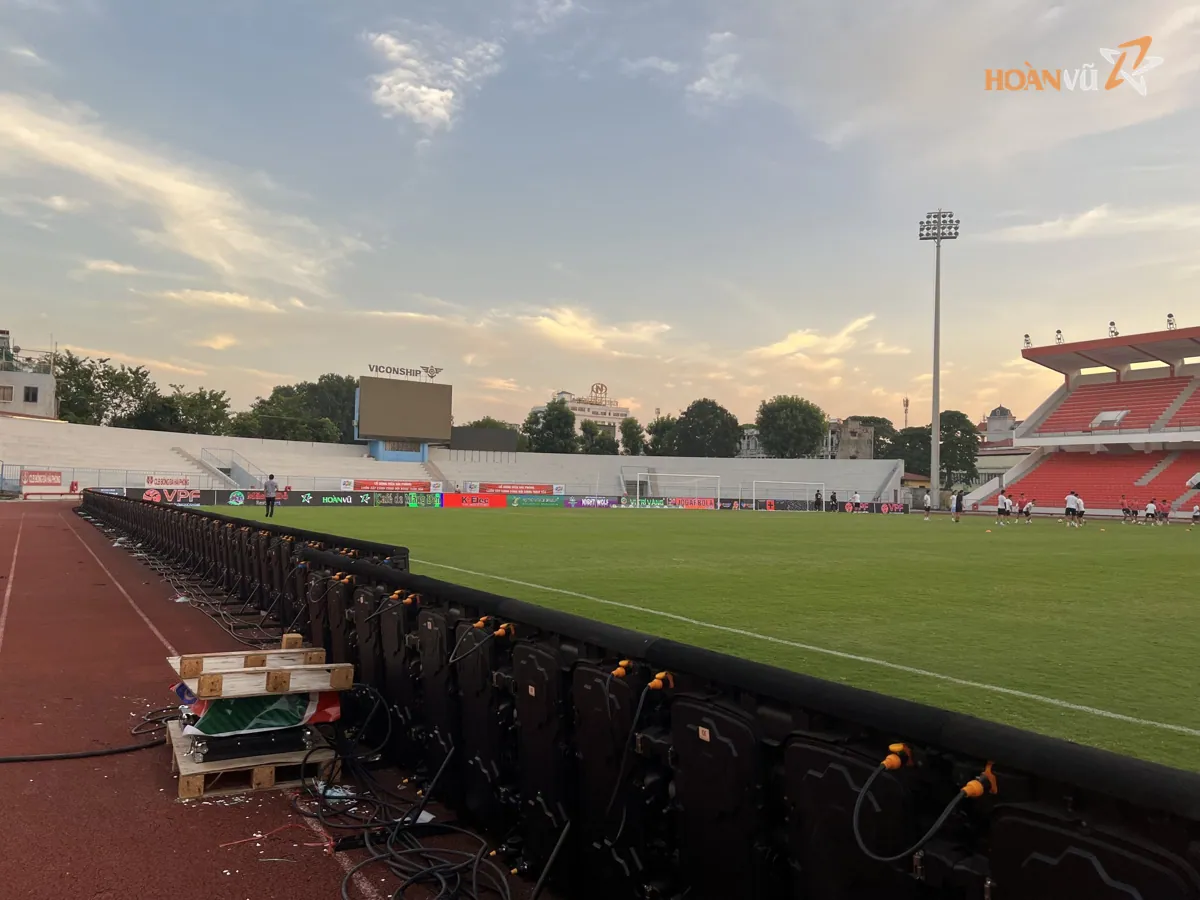
Power and connectors, the usual failure point
UEFA specifications require each cabinet to have one breaker of 16 A or less including a 30 mA RCD, and a power loss should affect only one cabinet. Splitting power this way stops a single fault from darkening the whole run mid-match.
Power and signal terminals need re-tightening on a schedule. Temperature swings and humidity loosen lugs over time, which leads to poor contact and a heat risk. Tighten evenly and do not over-torque. Spares belong at the ground: modules, power supplies, receiving cards, signal cables and at least one complete cabinet.
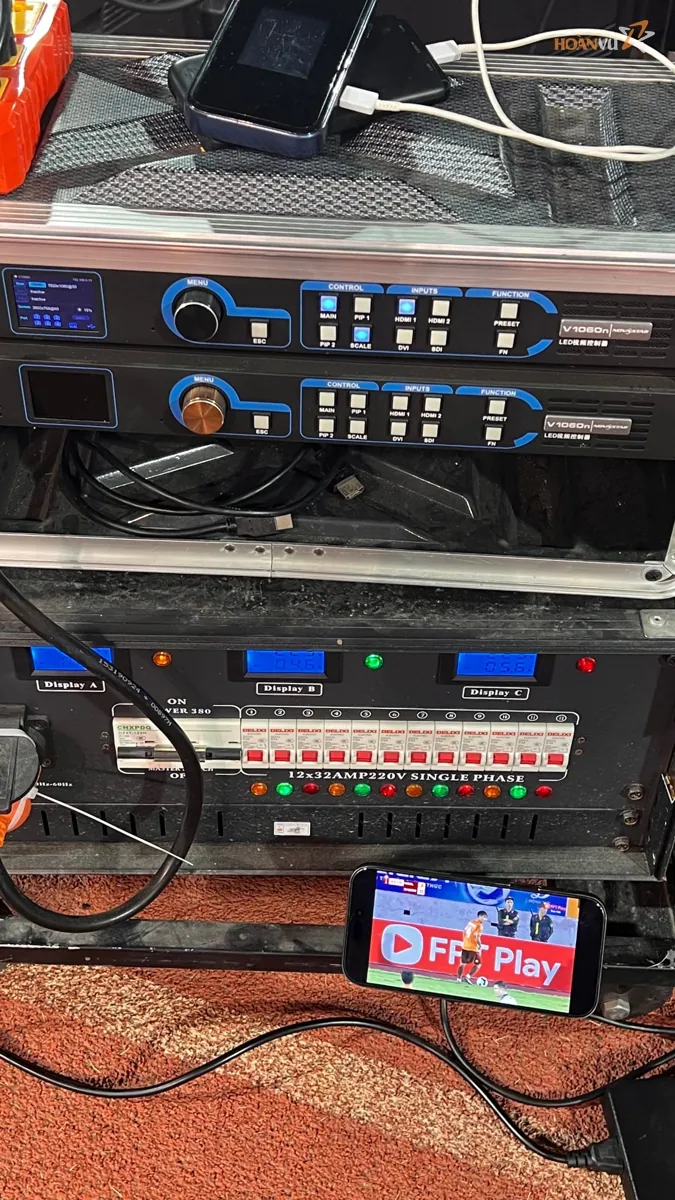
Rainy season: keep the boards running, do not let them sit
A perimeter run left unpowered in a humid environment is the fastest way to damage. Manufacturer guidance is specific:
- Idle more than 3 days in humid conditions: preheat at 30–50% brightness for 4–8 hours, then raise to 80–100%.
- Idle more than 7 days: preheat at 30–50% brightness for over 12 hours before returning to normal levels.
- In the rainy season: power the boards at least once a week. Outside it: at least once a month, for 2 hours or more.
- After unpacking, store the units below 30 °C and under 70% relative humidity.
A common cabinet operating window is -10 to 40 °C and 10–80% humidity. Vietnamese stadiums sit inside that range, but the rainy season in the north, the centre and the Central Highlands often pushes humidity close to the upper limit for days at a time. Maintenance should therefore follow the match calendar:
| Interval | Main work | Signs needing immediate action |
|---|---|---|
| After each match | Shut down in sequence, run test patterns, vacuum, log faults by cabinet | Dead pixels clustering, one cabinet clearly off colour |
| Weekly in the rainy season | Power up, check for moisture, inspect gaskets and rear covers | Condensation behind the face, a burnt smell |
| Monthly | Re-tighten power and signal terminals, clear rear vents | Discoloured lugs, power supplies unusually hot |
| Before a televised match | Full-run test, colour match with the main camera | Colour drift against the artwork, flicker on screen |
| Mid-season and end of season | Stock count, brightness measurement, replace degraded modules | Brightness differing between sections of the run |
Maintenance records and the pre-broadcast test
UEFA specifications require that maintenance and failure records for the system are available. UEFA stadium lighting guidance states that the LED perimeter system should be assessed on installation and tested before each broadcast event, including a colour match with the host broadcaster's main camera under full match lighting.
These records are not only for the competition organiser. They let a club and its sponsors see which matches ran clean, which section once failed, what was replaced and when. The Hoan Vu technical crew works match by match and issues an acceptance report with photos and video after the game, so the equipment history always has somewhere to be checked. The route from survey to first match is covered in installing perimeter LED at a stadium.
Frequently asked questions
Should a perimeter LED face be hosed down with water?
No. Manufacturer documentation advises against putting liquid on LED modules and against wiping the face with a damp cloth. Use a soft brush and a vacuum with light pressure.
What should be done when boards sit idle for a month between legs?
Power them up at least once a month for 2 hours or more, and weekly during the rainy season. After more than 7 idle days in humid conditions, preheat at 30–50% brightness for over 12 hours before returning to normal levels.
How often is enough for a V.League host stadium?
Count by matches, not by months. Run the basic checklist after every match, re-tighten terminals and clear vents monthly, and run a full-run test before every televised game.
Conclusion
Perimeter LED maintenance is small work, done consistently, with paperwork behind it. Done properly the run stays even all season, sponsors do not have to ask and the organiser does not have to chase. Clubs and owners who want a crew to take on seasonal operation and maintenance can look at the stadium LED solution and then leave your details, hotline 0964 73 74 73.
Hoan Vu designs, installs and runs match-day LED, with co-investment options.