A perimeter LED board can look fine to the naked eye and still fall apart on television: horizontal bands crawling across the surface, soft text, shifted colour, or white copy blowing out into a single streak. Brands pay for the image that reaches the broadcast, so every minute of wrong output is real money. Most of the trouble sits in two specs that rarely come up when equipment is signed off: refresh rate and brightness.
This article looks at stadium LED through a broadcast lens, written for clubs, brands and companies selling pitch-side advertising.
A camera does not see an LED board the way the eye does
An LED does not glow continuously. It switches on and off on a fast control cycle, and the human eye blends those cycles into steady light. Manufacturer documentation notes that the eye can barely detect flicker once the rate passes roughly 960Hz.
A camera works differently. Each frame captures only a thin slice of time set by shutter speed. If that slice lands while the LEDs are off, the frame records a dark band. Frame after frame, it becomes a horizontal band drifting across the board.
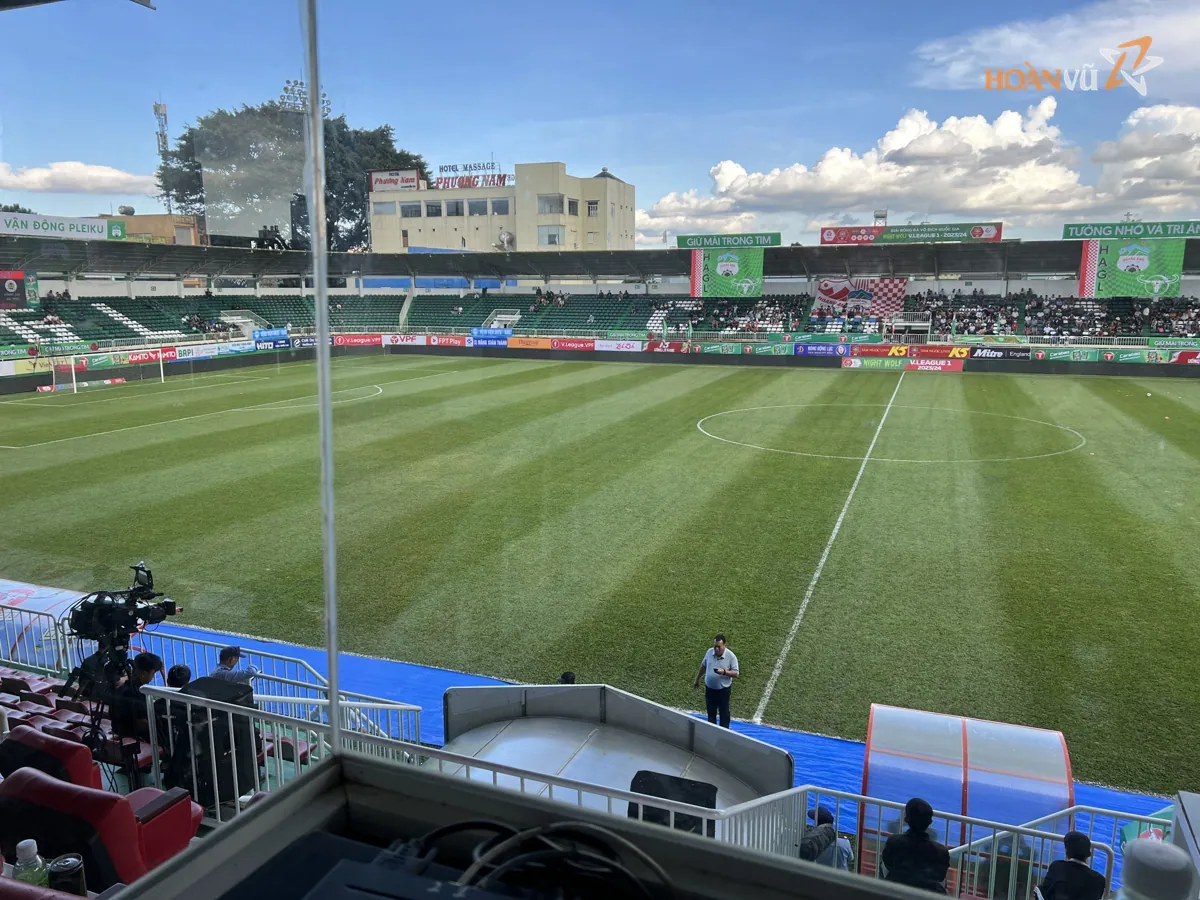
Football is harder still, because sports coverage often uses fast shutter speeds to freeze the action. The faster the shutter, the thinner the slice, and the easier it is for the board to reveal its flicker. The rule of thumb in manufacturer documents: refresh rate should be at least twice the camera shutter speed.
Refresh rate: 1920Hz or 3840Hz
This is the spec most often trimmed to cut cost. Two figures dominate the market: 1920Hz and 3840Hz.
| Use case | Refresh rate | Note |
|---|---|---|
| Text signs, simple message boards | around 960Hz | Not suitable where cameras are present |
| Indoor advertising, lobbies, conferences | 1920Hz | Fine for the eye, can still flicker on a good camera |
| Televised stadiums, studios, rental stages | 3840Hz and up | Recommended level for content that gets filmed |
Control-system documentation puts the recommended figure for stadium displays at 3840Hz or higher, and dedicated perimeter cabinet series publish refresh rates from 3840Hz. Vietnamese technical pages place 3840Hz in the group meant for filming, live broadcast and sports events.
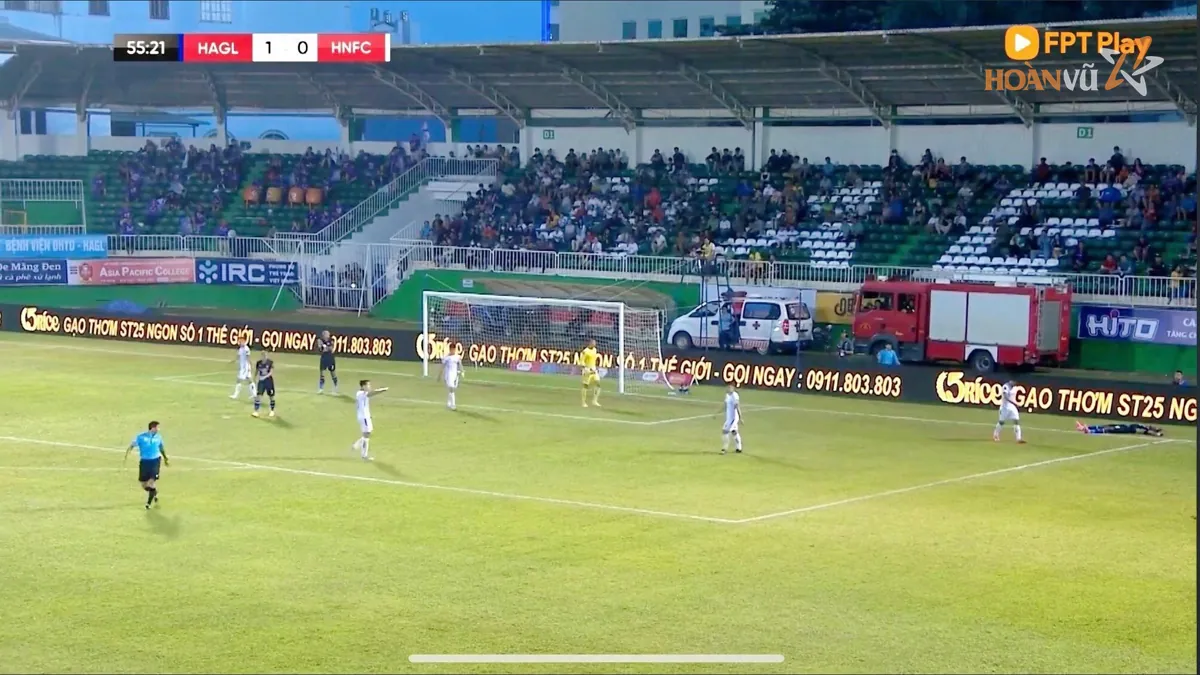
One common mix-up: refresh rate is not frame rate. Content at 24 or 25 frames per second still runs on a 3840Hz board, which means each frame is redrawn hundreds of times.
Refresh rate also does not live in a single component. It is capped by the driver chip on the module, by the receiving card and by the sending card. Technical documents group them: standard chips reach about 960Hz, dual-latch chips reach 1920Hz, and high-grade PWM chips reach 3840Hz and above. Asking for one number without asking about the whole control chain guarantees nothing.
Brightness: daytime and night are two different problems
In daylight the board has to beat the sun. Technical documentation for outdoor LED sets the mark from 5,000 nits. Perimeter cabinet series for stadiums publish brightness between 5,500 and 6,000 cd/m² depending on pixel pitch, with IP65 sealing at the front and IP54 at the rear.
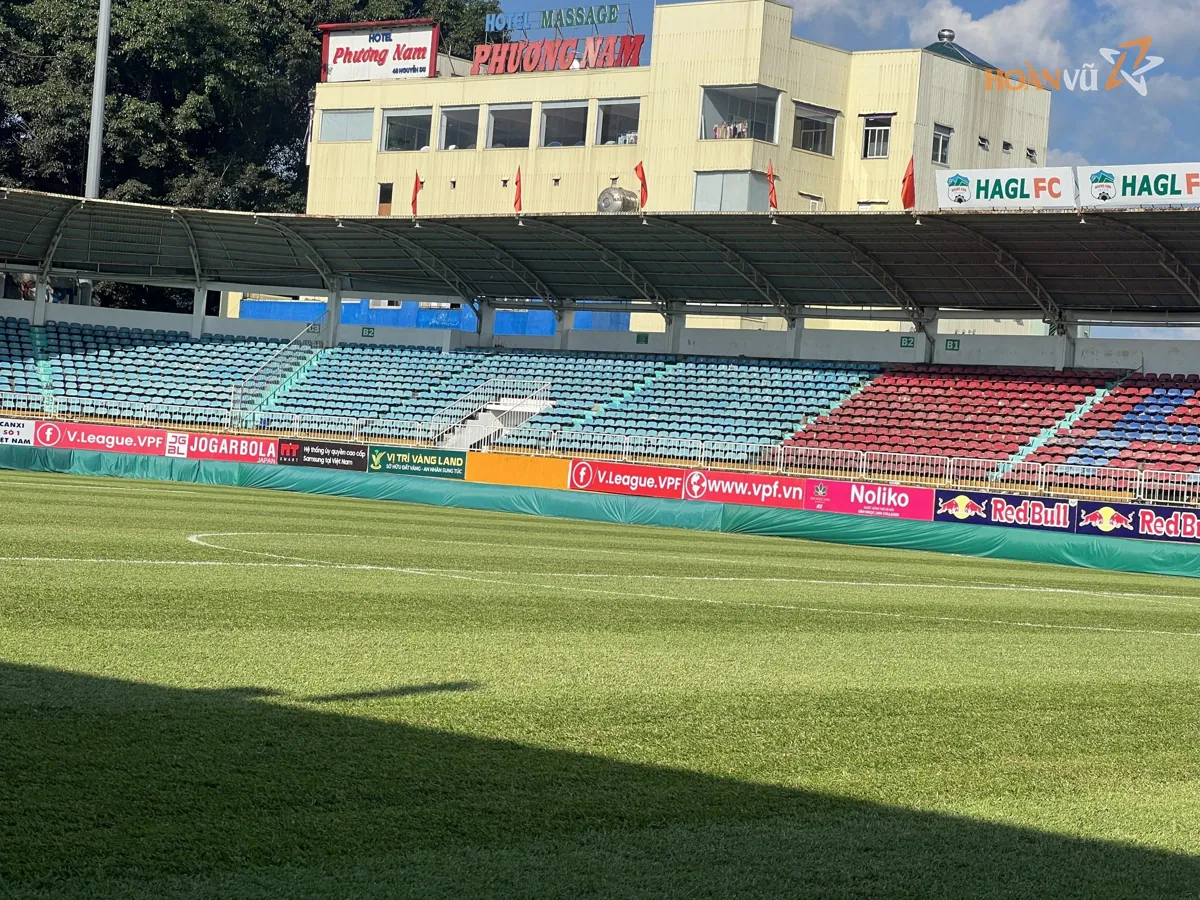
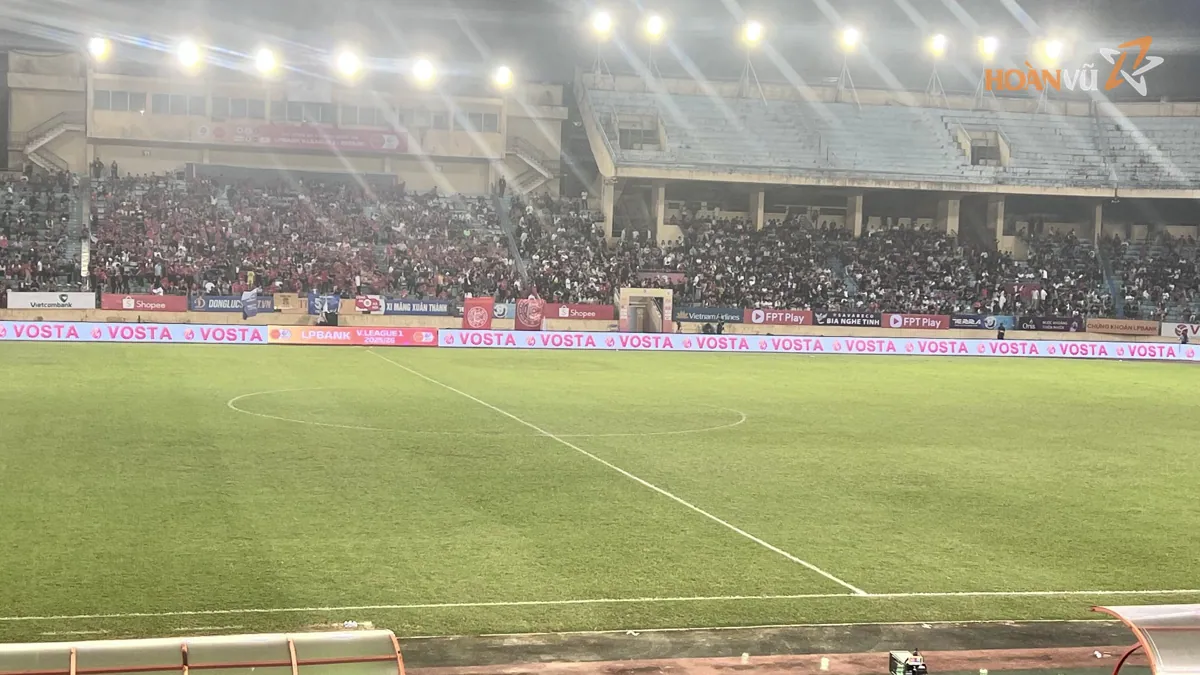
At night the logic reverses. Keeping the daytime level under floodlights is the fastest way to blow out the camera: white text turns into a block, logo edges lose definition, red drifts towards orange. Brightness has to come down for the kick-off conditions, and the board still needs detail in the dark areas after it does. That is where greyscale depth earns its place; the cabinet series above publishes 14-bit greyscale.
Outdoor pixel pitch usually sits between P8 and P10, and only stands very close to the pitch call for P6. Manufacturer documentation notes that from about 15 m, viewers struggle to tell P8 from P6. For perimeter LED, money is better spent on refresh rate, brightness and colour calibration than on pushing pixel pitch lower.
Colour calibration and a rehearsal before every match
Purchased specs are only the starting point. A perimeter run is assembled from hundreds of modules, and each production batch drifts slightly in colour. Without cabinet-by-cabinet calibration, the run reaches the broadcast as a series of brighter and darker segments, most visible on camera pans along the touchline.
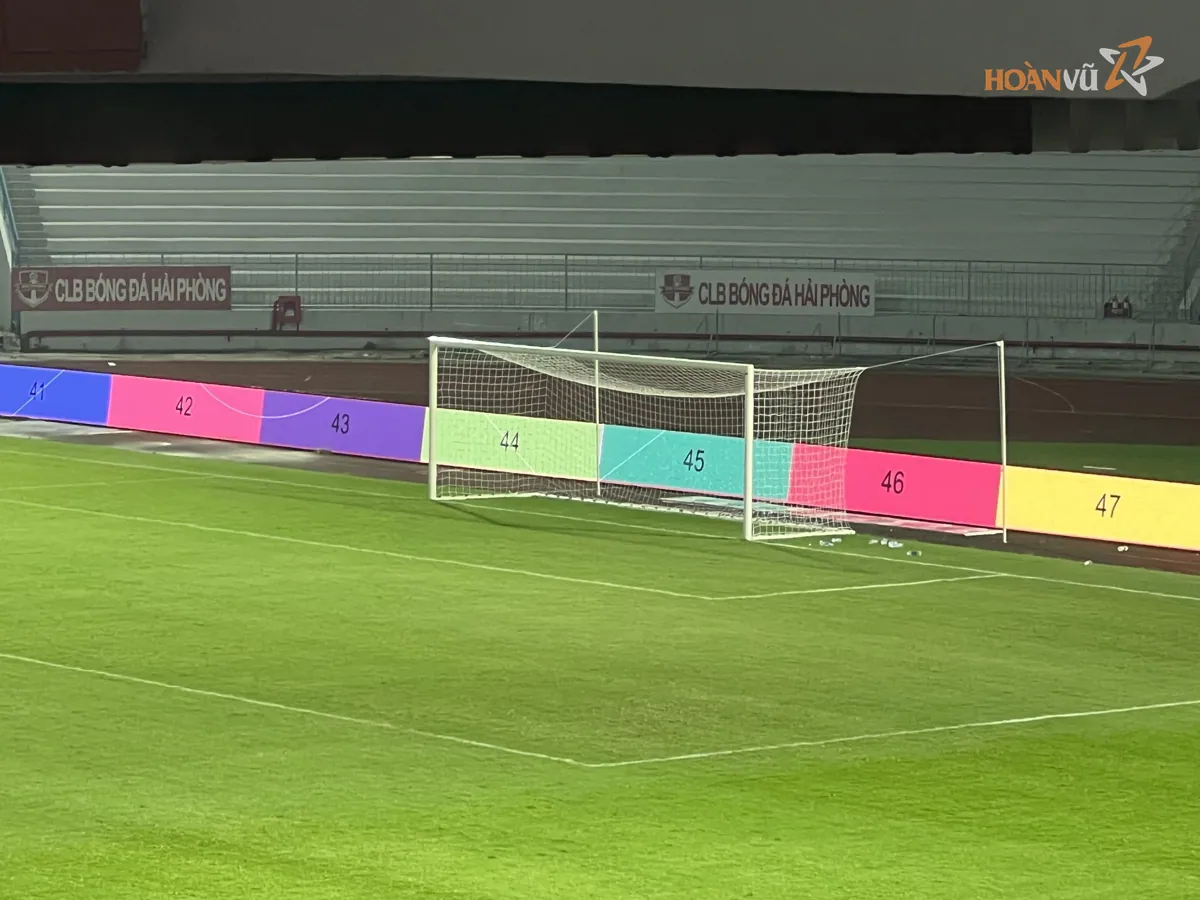
The real pre-match routine repeats a short list: check power and signal runs along the track, run the per-cabinet colour test, set brightness for the weather and kick-off time, rehearse the sponsor playlist exactly as booked, then sit in the control room through the match.
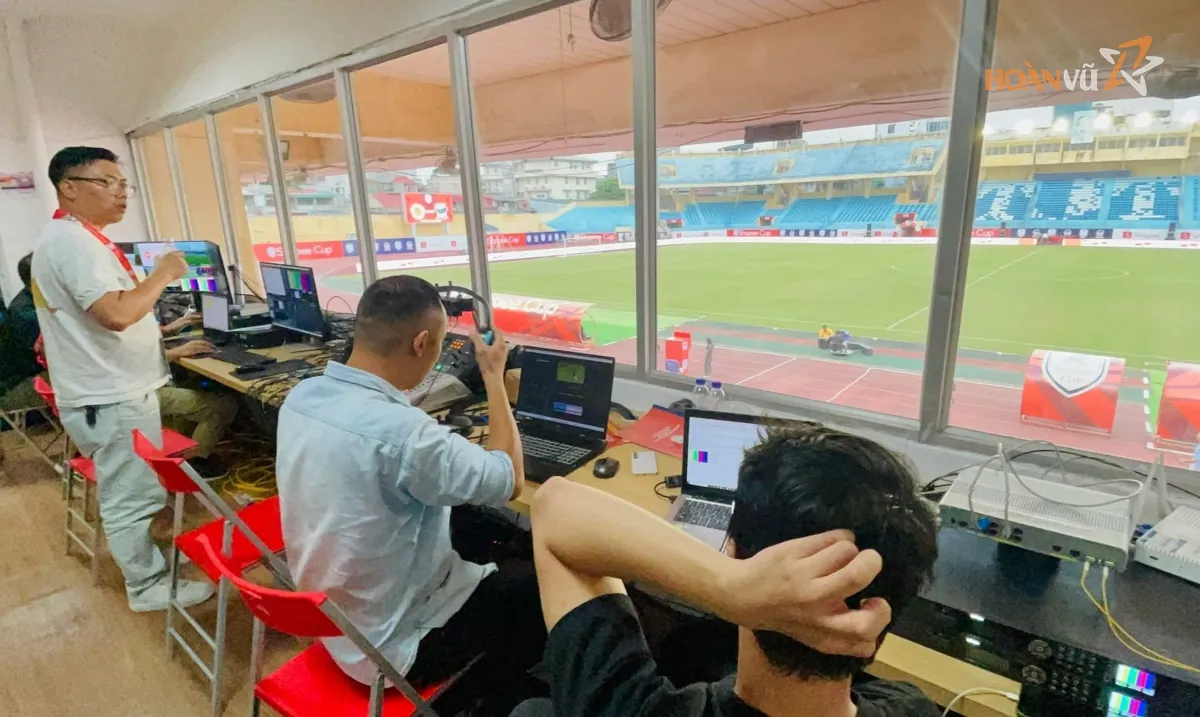
Hoan Vu has worked in advertising since 2001 and was incorporated as a joint-stock company in 2010. The company currently operates perimeter LED at four grounds, Hang Day, Lach Tray, Binh Phuoc and Pleiku, alongside six clubs across roughly 84 matches a season. Every match has a technical crew on site, and each match is followed by a handover report with photos and video so brands can check what actually aired. The same approach is described in Stadium perimeter LED: how it runs and what brands receive.
What to ask before signing off equipment
- The real refresh rate of the whole chain: driver chip, receiving card, sending card.
- Published brightness and how it is stepped down for kick-off conditions.
- Greyscale depth in bits, and how far brightness can drop before detail goes.
- Sealing rating front and rear, since perimeter LED sits outdoors all season.
- Whether the face has soft padding and rounded edges for player contact.
- Who calibrates colour, at what point, and whether a post-match report exists.
That list belongs in the handover file, not only in an email thread.
Frequently asked questions
What refresh rate is enough for a televised ground?
Manufacturer documentation recommends 3840Hz and above for stadium displays and filmed content. 1920Hz satisfies the human eye but can still show flicker when a camera uses a fast shutter.
Why does an LED board show horizontal bands on television?
Because the camera shutter captures a very thin slice of time, and that slice can land while the LEDs are off in the refresh cycle. Raising the refresh rate across the control chain fixes the cause; raising brightness does not.
Does perimeter LED brightness need to drop at night?
Yes. Holding the daytime level under floodlights blows out the camera and softens text and logos. Brightness should follow the weather and kick-off time, and the board needs enough greyscale depth to dim without losing detail.
Conclusion
For perimeter LED, the two specs that decide the on-air image are refresh rate and adjustable brightness, plus colour calibration and a rehearsal before every match. Hoan Vu handles site surveys, installation and match-day operation; see stadium LED solutions or leave your details and the crew will call back. Hotline 0964 73 74 73.
Hoan Vu designs, installs and runs match-day LED, with co-investment options.