When a stadium is upgraded, clubs and venue owners often put two line items into one budget row: the electronic scoreboard and the perimeter LED strip. Both are LED displays, yet their jobs, mounting positions and operating routines are almost entirely different. Merging them tends to leave a gap when the venue is checked against competition regulations, or to overspend on capability nobody needs.
This article separates the three display groups found at a football ground: the scoreboard, the giant screen and the perimeter LED. The references are the AFC stadium regulations, the IFAB Laws of the Game and manufacturer technical documentation.
Two devices, two jobs
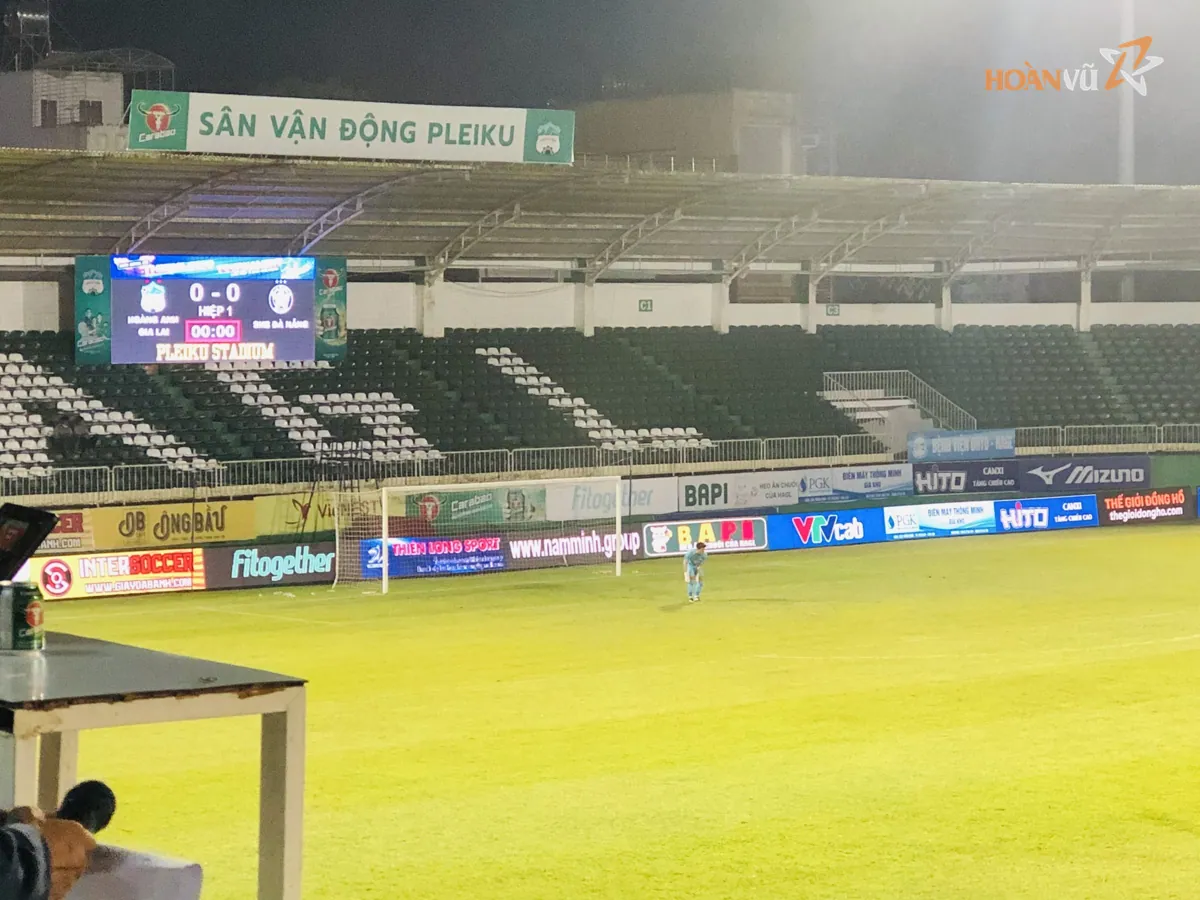
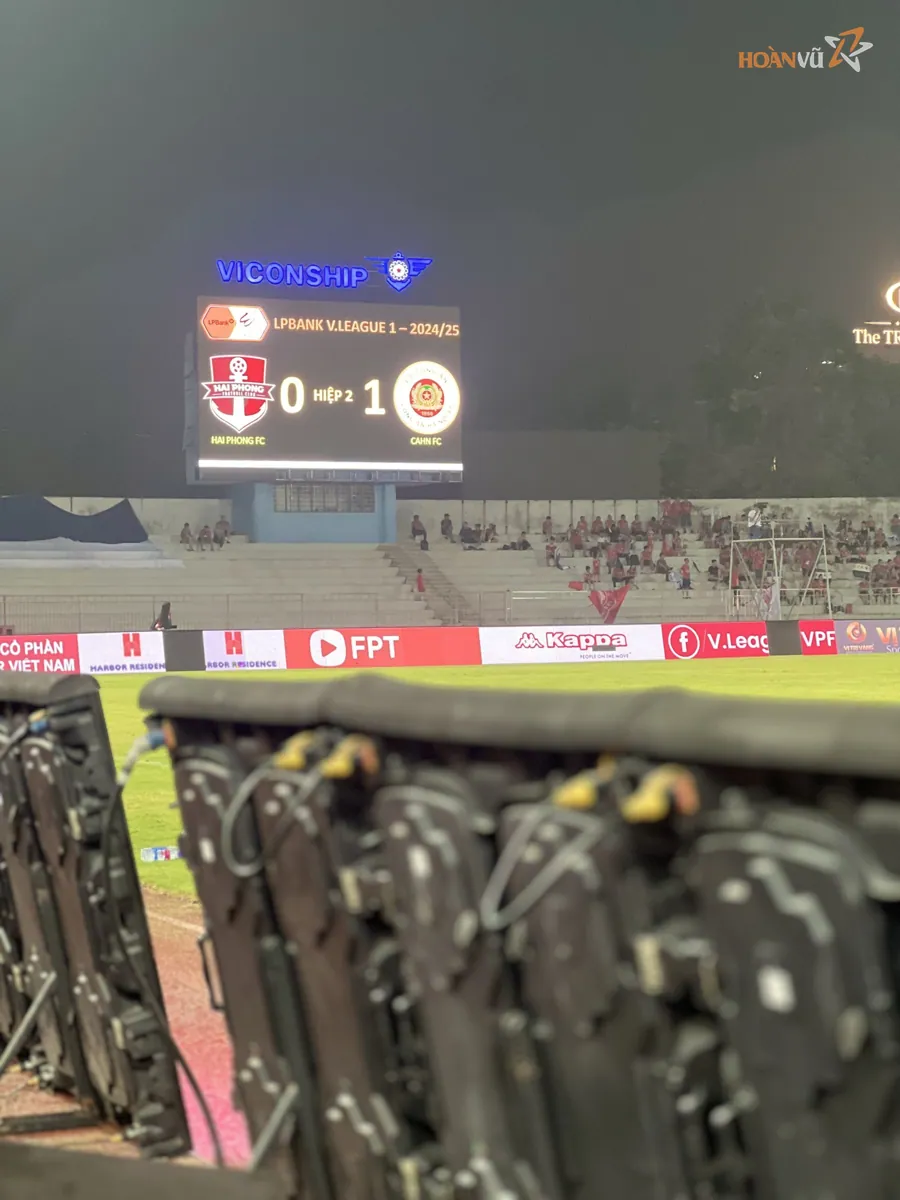
The scoreboard handles match information. AFC Stadium Regulations, Edition 2026, Art. 10.4 requires a stadium to have a scoreboard that displays the score at all times, and to show normal playing time, extra time and penalties as applicable.
The giant screen handles pictures. Art. 10.6 requires giant screens to be integrated with a display system and to provide good viewing and sound for spectators, placed where they pose no risk to the crowd and do not disturb play. Art. 10.7 recommends a 16:9 video area, which may be extended to carry score and substitution details alongside the main content.
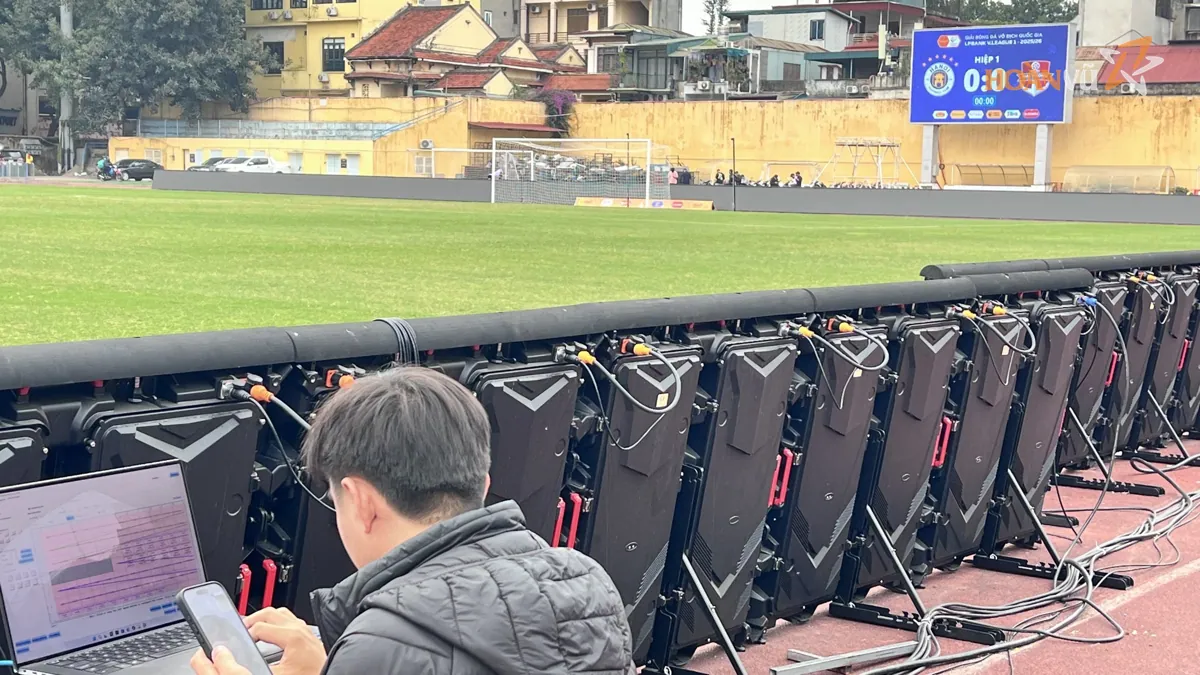
Perimeter LED handles commercial rights. The low strip along the touchline is not part of the match information group. It belongs with the advertising boards around the pitch, governed by the Laws of the Game rather than by a mandatory quantity rule like the scoreboard.
What the regulations require of scoreboards and giant screens
The match clock and how it stops
Art. 10.1 requires a digital clock showing official playing time. Art. 10.2 sets how it runs: 0 to 45 minutes for the first half, 45 to 90 for the second, 90 to 105 for the first period of extra time and 105 to 120 for the second. Art. 10.3 requires the clock to stop at the end of normal playing time in each half, and at 105 and 120 minutes during extra time.
This detail is easy to miss when buying an off-the-shelf board. A unit that only shows the score with a clock running straight to 90 minutes will not cover those marks.
How many screens each category needs
Art. 10.5 lists the minimum number of giant screens and scoreboards by stadium category:
- Category A: two fixed giant screens
- Category B and Category C: one fixed giant screen each
- Category D: one fixed or portable giant screen
- Category E: one fixed or portable scoreboard
Read that table and the investment path becomes clearer. A lower-category ground needs a compliant score display first, possibly a portable one. Fixed giant screens, and then a second screen, belong to venues aiming at the higher categories.
Professional venues in Vietnam are moving the same way. Bongdaplus reports the V.League venue standard at 10,000 seats, with one club adding roughly 6,000 temporary seats to be ready for the 2025/26 season. As capacity grows, the furthest viewing distance grows with it, and so do the size and resolution demands on the display equipment.
Where perimeter LED sits, and how far from the pitch
IFAB Law 1, in its commercial advertising section, sets precise limits. Advertising, real or virtual, is banned on the field of play, in the area inside the goal nets and in the technical area, from the moment the teams enter until half time, and again from their return until full time. No advertising is permitted on the goals, nets, flagposts or their flags. The ground within 1 m of the boundary lines falls under the same ban.
For upright advertising, perimeter LED cabinets included, Law 1 sets minimum clearances: 1 m from the touchlines, a distance from the goal line equal to the depth of the goal net, and 1 m from the goal net.
The AFC regulations add three further marks. Art. 6.5 requires the field of play surface to extend at least 1 m beyond the touchlines and 2 m beyond the goal lines. Art. 6.2 states that no physical structure should be lower than 21 m above the field of play, worth remembering for any screen hung over the pitch area. Art. 29.2 shows an operating reality: photographers normally work behind the advertising boards behind the goals, so the perimeter run has to leave room for them.
Put together, a perimeter LED run cannot sit on the line. The usable length depends on the width of the running track and the mandatory clearances, so a site survey has to come before any cabinet count is fixed.
Scoreboard, giant screen and perimeter LED compared
| Criterion | Scoreboard | Giant screen | Perimeter LED |
|---|---|---|---|
| Main job | Score, clock, substitutions | Live feed, replays, announcements | Commercial rights, league messaging |
| Regulatory basis | AFC Art. 10.1 to 10.5 | AFC Art. 10.5 to 10.7 | IFAB Law 1, commercial advertising |
| Position | Stand end, full-pitch sightline | Stand end or corner, clearance per Art. 6.2 | Along the touchline, at least 1 m off the line |
| Reference pixel pitch | Lower than the main screen | P6 to P10 outdoor, P6 to P8 for professional grounds | P6 to P10 |
| Reference brightness | Per board configuration | From 6,000 nits outdoor, 7,000 nits professional | 6,000 to 8,000 nits |
| Refresh rate | Not set by regulation | As required by the broadcaster | Minimum 3,840 Hz, some specs 7,680 Hz |
| Ingress protection | Depends on mounting | IP65 minimum outdoors | IP65 |
Operating and coordinating through a match
Three devices, three signal sources, three people. The scoreboard follows the match and the confirmations of the referee team and match commissioner. The giant screen follows the vision director. The perimeter LED follows a content schedule agreed with sponsors and the league, split into time slots per contract.
Those three positions need a shared radio channel and one coordinator. On a substitution, the scoreboard and the giant screen overlay change together. On a goal, the perimeter LED usually gives a slot to league messaging before returning to the advertising schedule.
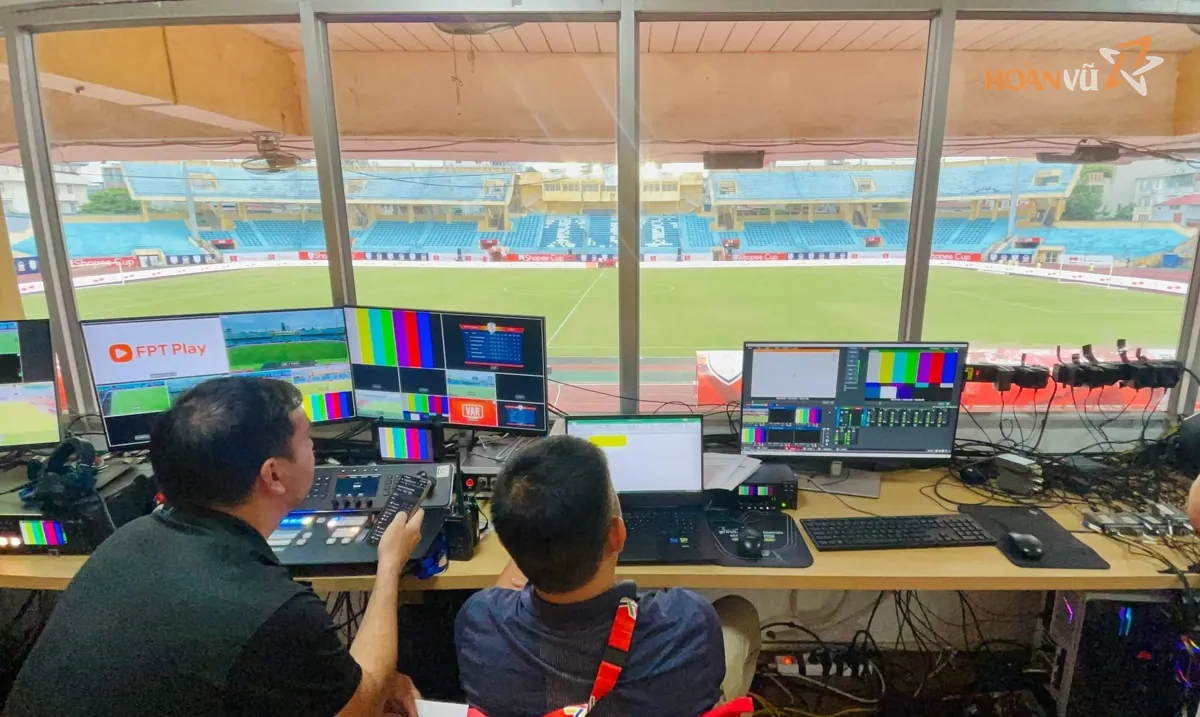
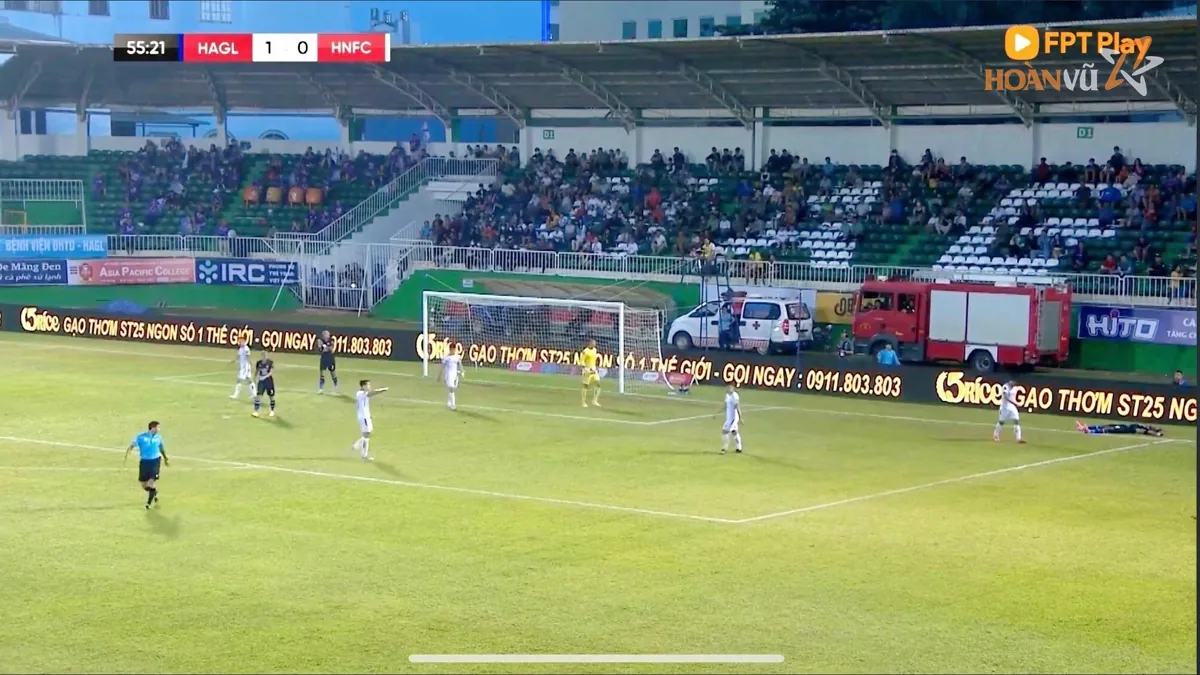
Hoan Vu has worked in advertising since 2001 and was incorporated as a joint stock company in 2010. The company currently runs perimeter LED at four grounds, Hang Day, Lach Tray, Binh Phuoc and Pleiku, alongside six clubs across roughly 84 matches a season. Every match has a technical crew on site, and each match closes with an acceptance record including photos and video so brands can check what actually went out. Indoor and outdoor LED screens, billboards and signage come through the same team, with details under stadium LED solutions. Brightness and refresh rate for broadcast are covered in Stadium LED on TV: brightness and refresh rate.
Frequently asked questions
Can an electronic scoreboard replace a giant screen?
Not under the regulations. Art. 10.5 of the AFC Stadium Regulations, Edition 2026, accepts a scoreboard only as the minimum for the lowest category in the table. Every category above that requires a giant screen.
How far from the touchline must perimeter LED sit?
IFAB Law 1 requires upright advertising to be at least 1 m from the touchlines, 1 m from the goal net, and as far from the goal line as the depth of the net. The AFC regulations also require the surface to extend at least 1 m beyond the touchlines and 2 m beyond the goal lines.
Does a lower-category ground need a fixed giant screen?
Under the Art. 10.5 table, Category D may use a fixed or portable giant screen, while Category E needs only a fixed or portable scoreboard. Fixed or portable is better judged against the venue's whole-year usage, not the football calendar alone.
Conclusion
The scoreboard, the giant screen and the perimeter LED are three separate line items under three separate sets of requirements. Separating them at the budgeting stage avoids the two usual outcomes: a gap when the venue is checked against the regulations, and overspending on a need that has not arrived yet.
If your ground is at survey or upgrade stage, leave your details or call the hotline on 0964 73 74 73 so the technical crew can measure the site and build an option matched to the category you are aiming for.
Hoan Vu designs, installs and runs match-day LED, with co-investment options.