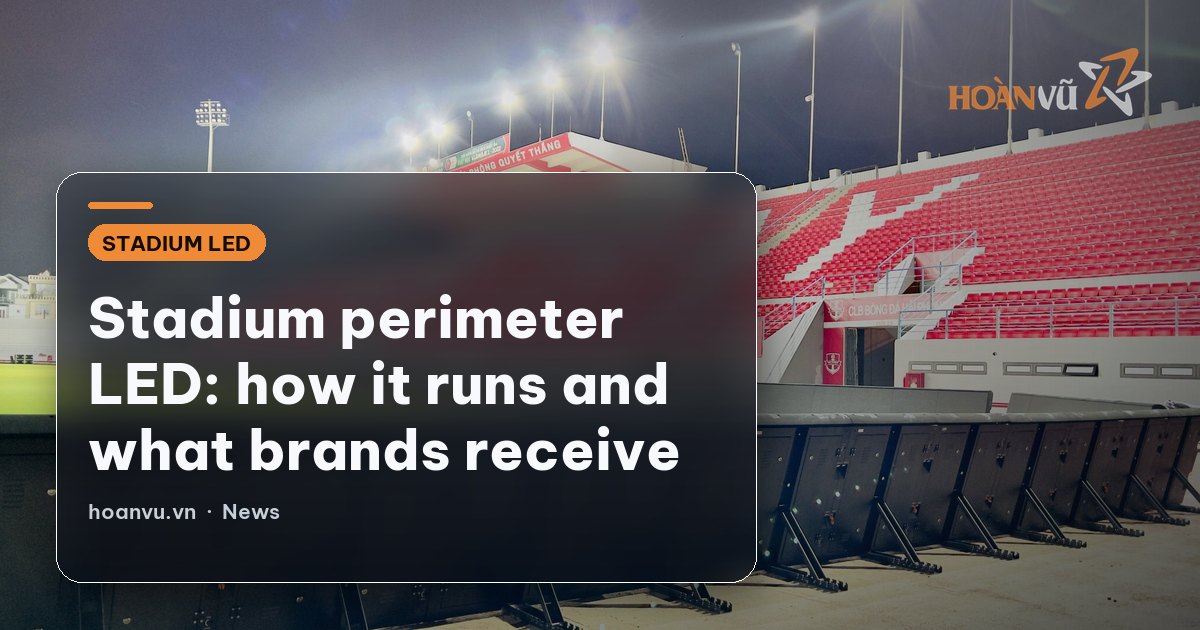
The perimeter LED board running sponsor content for ninety minutes is only the visible part. What decides the outcome happens in the days before: the site survey, the power calculation, staging the cabinets and the test run. This article sets out the sequence the Hoan Vu crew follows at V.League stadiums.
Site survey
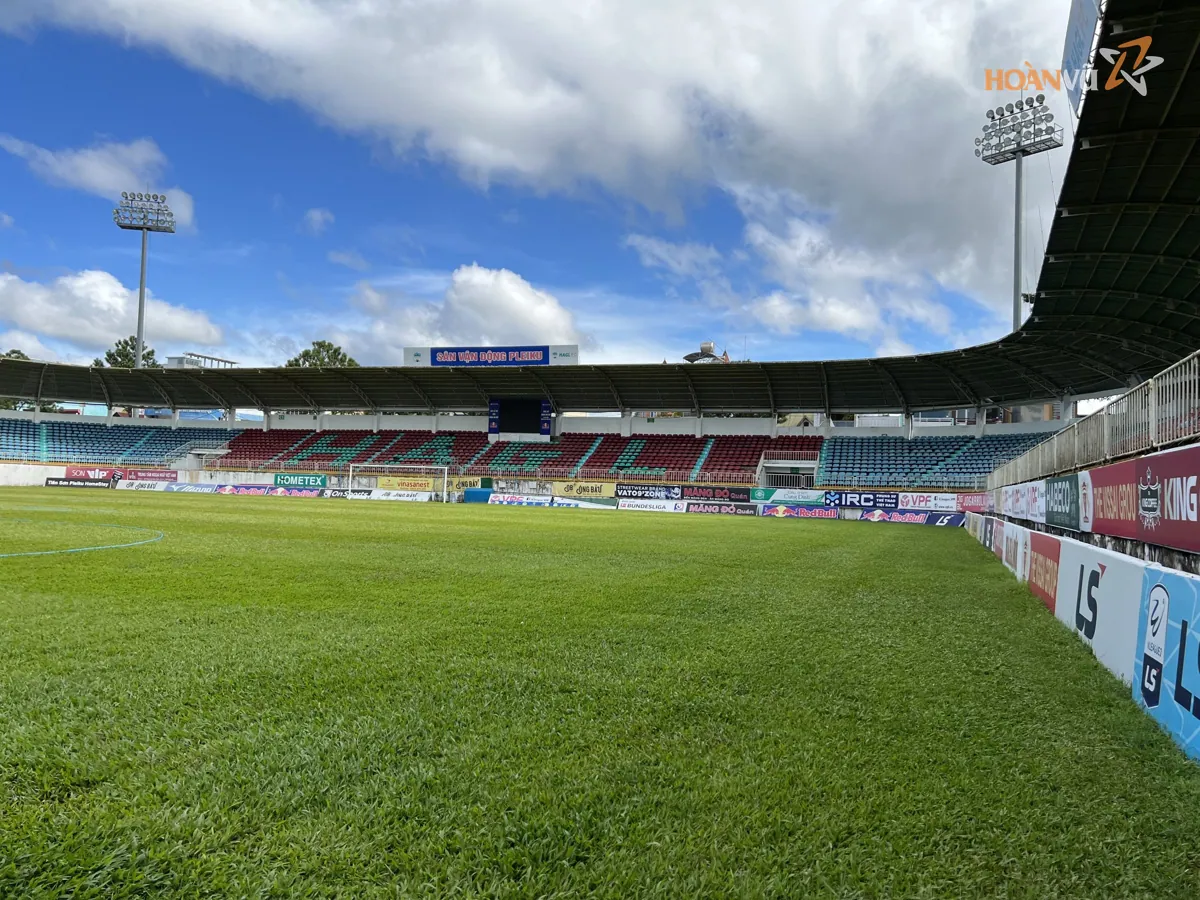
The survey is a working session at the ground with stadium management, to settle three things: the cabinet line, the cable route and the control room position.
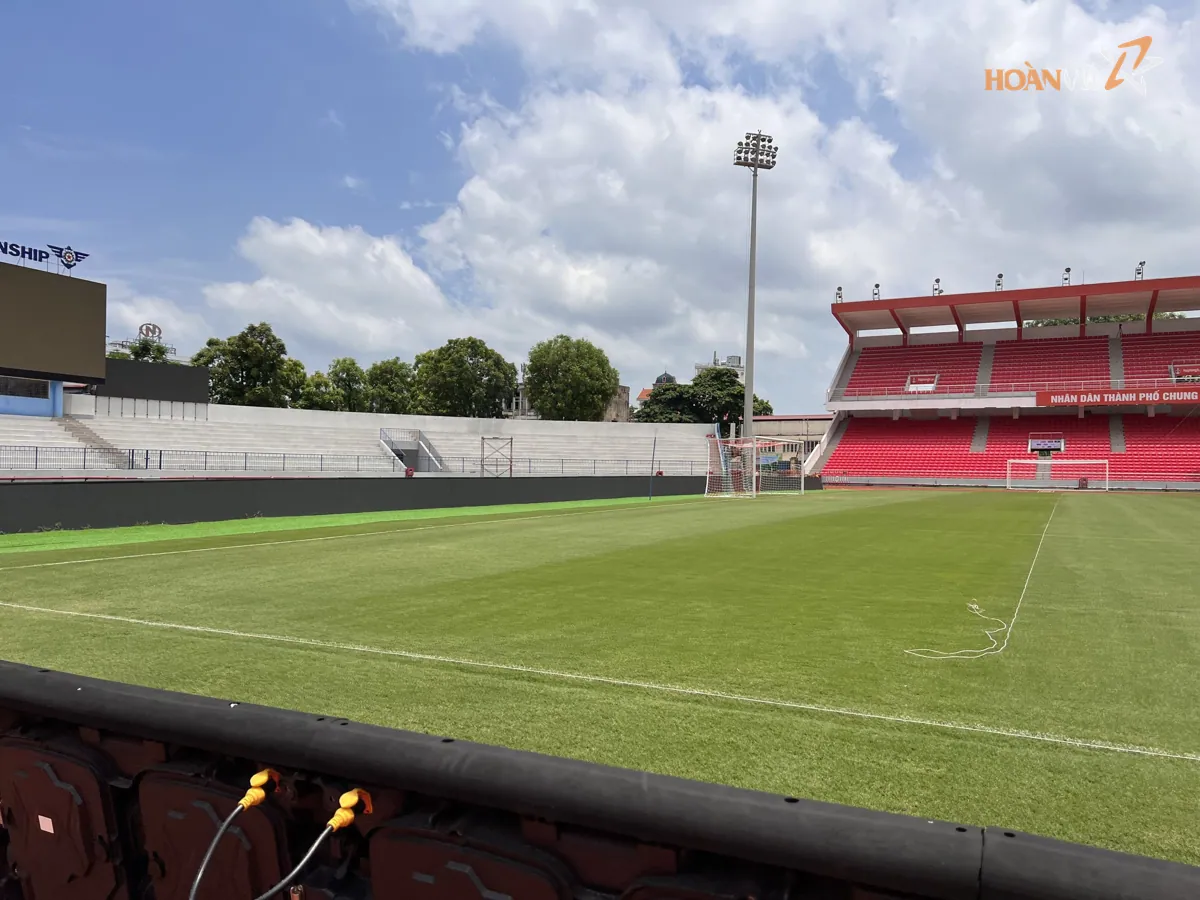
The cabinet line must sit outside the touchline as the competition rules require, must not block the assistant referee's run and must not cover fixed advertising boards already under contract. The running track surface needs its slope measured, because the LED board has to read straight from the main camera.
Signal and power cables run along the track and need trunking or mats wherever people cross. The control room needs a clear view of the pitch, stable power and a signal path to the board.
Power supply
The total load of the whole board is a figure to calculate in advance, not to estimate. Stadium management needs the exact number to arrange a dedicated supply and breaker, separate from the floodlight system.
- A dedicated supply for the LED board, with its own breaker and proper earthing.
- Backup: a generator or second source for televised matches.
- Measure the actual voltage at the connection point, not just read the panel rating.
Staging and building the cabinets
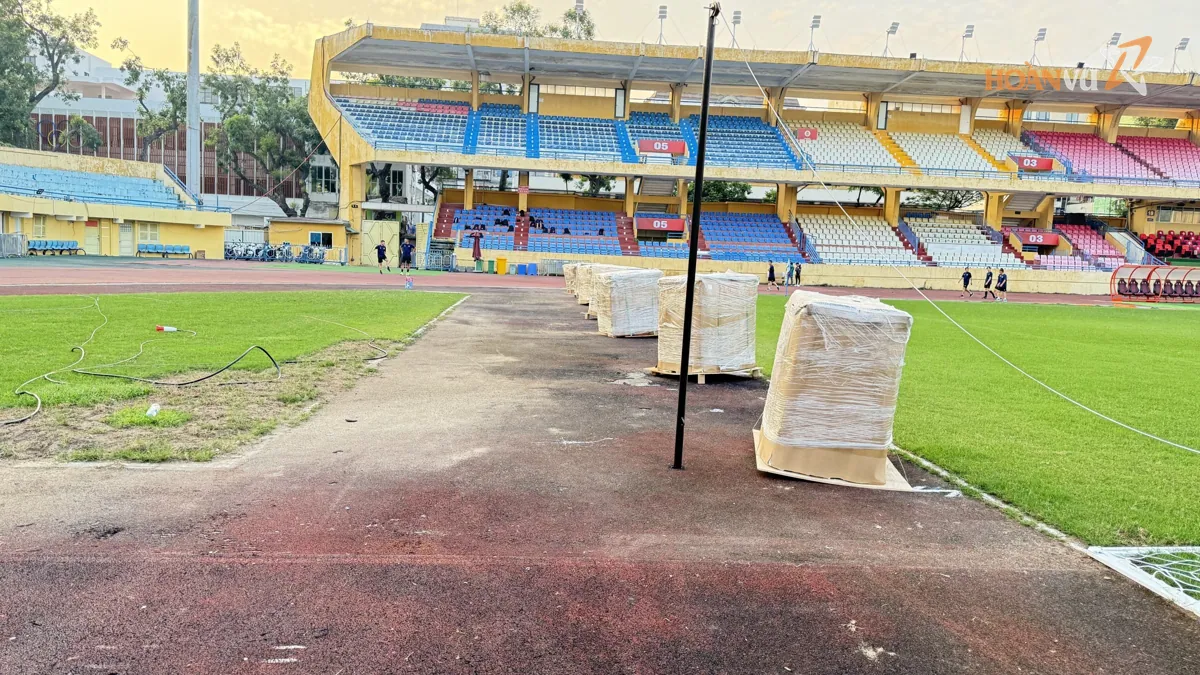
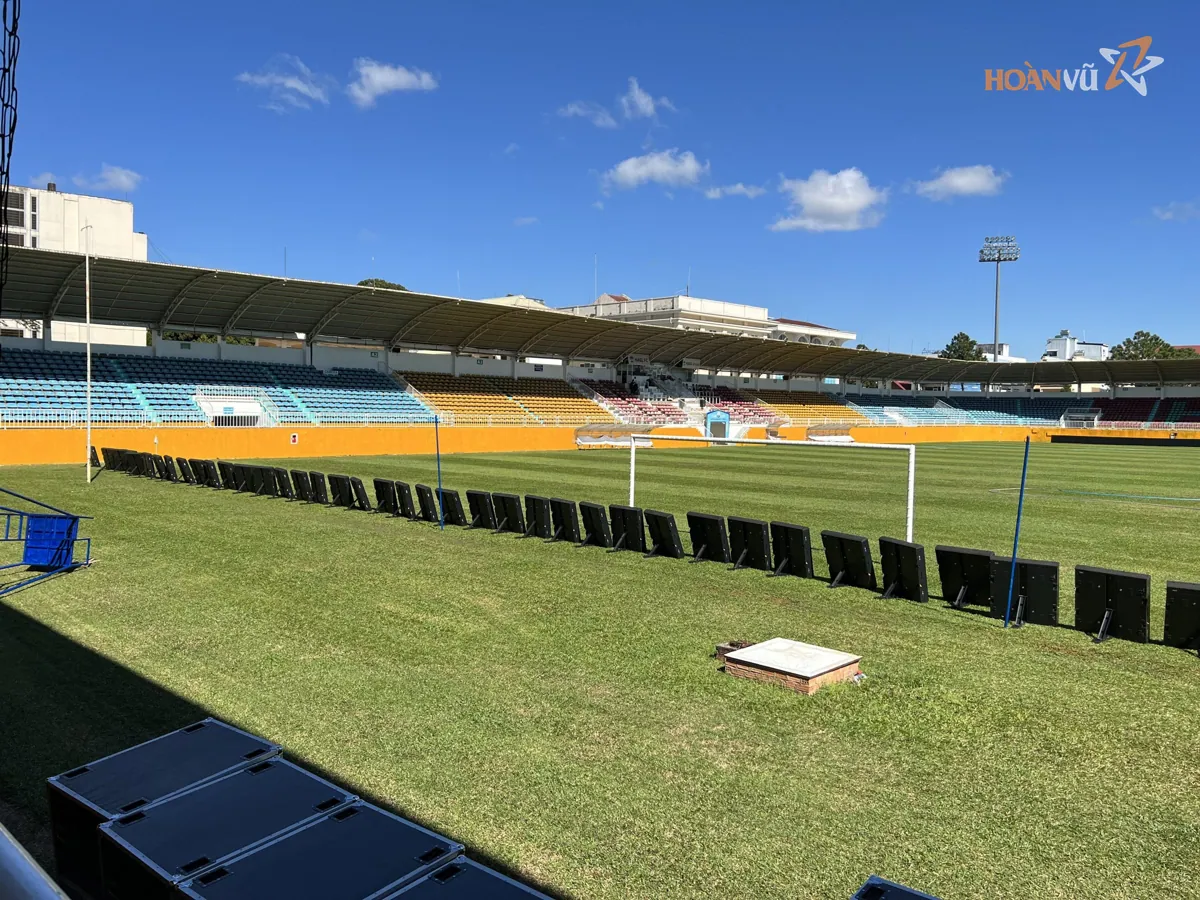
Cabinets arrive crated and are staged along the track in installation order, so nothing has to be carried twice. Each cabinet is numbered and the crew builds to a numbered layout prepared in advance.
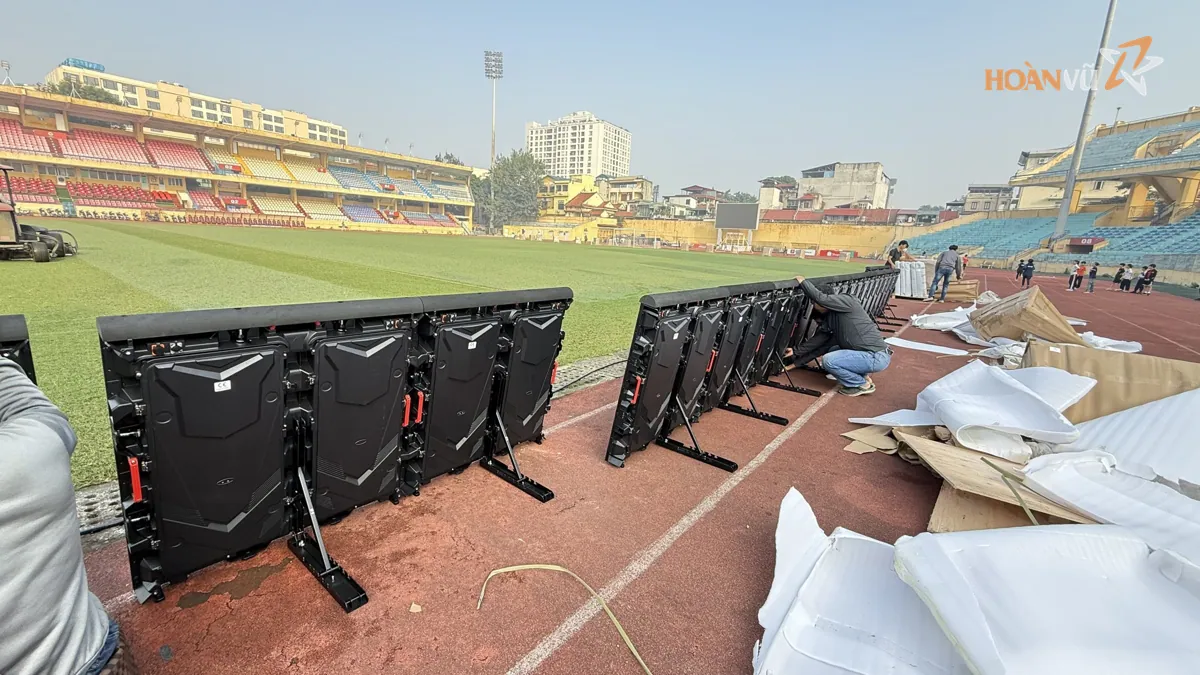
Two technical points matter here. First, the support legs must allow the tilt to be adjusted, so the LED face aims at the main camera rather than at the sky or the grass. Second, the front face needs soft padding, because players can run into it when the ball goes out.
Cabling
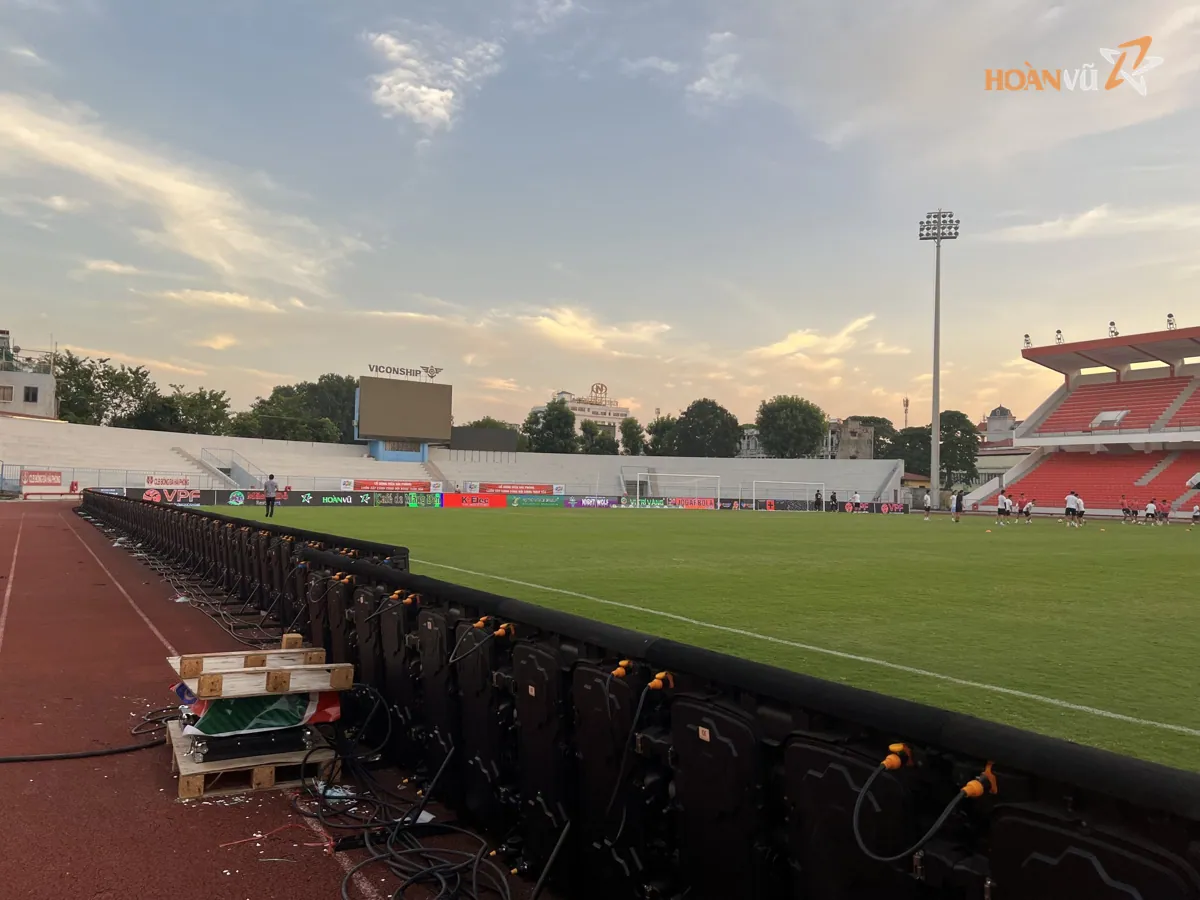
Signal cable runs in a chain from one cabinet to the next, with power cable alongside. Every connector must be locked and weatherproofed, because matches go ahead in the rain.
Any cable crossing a route used by players, referees or media needs a mat over it. This is the step most often skipped and the one that causes most incidents.
Calibration and test run
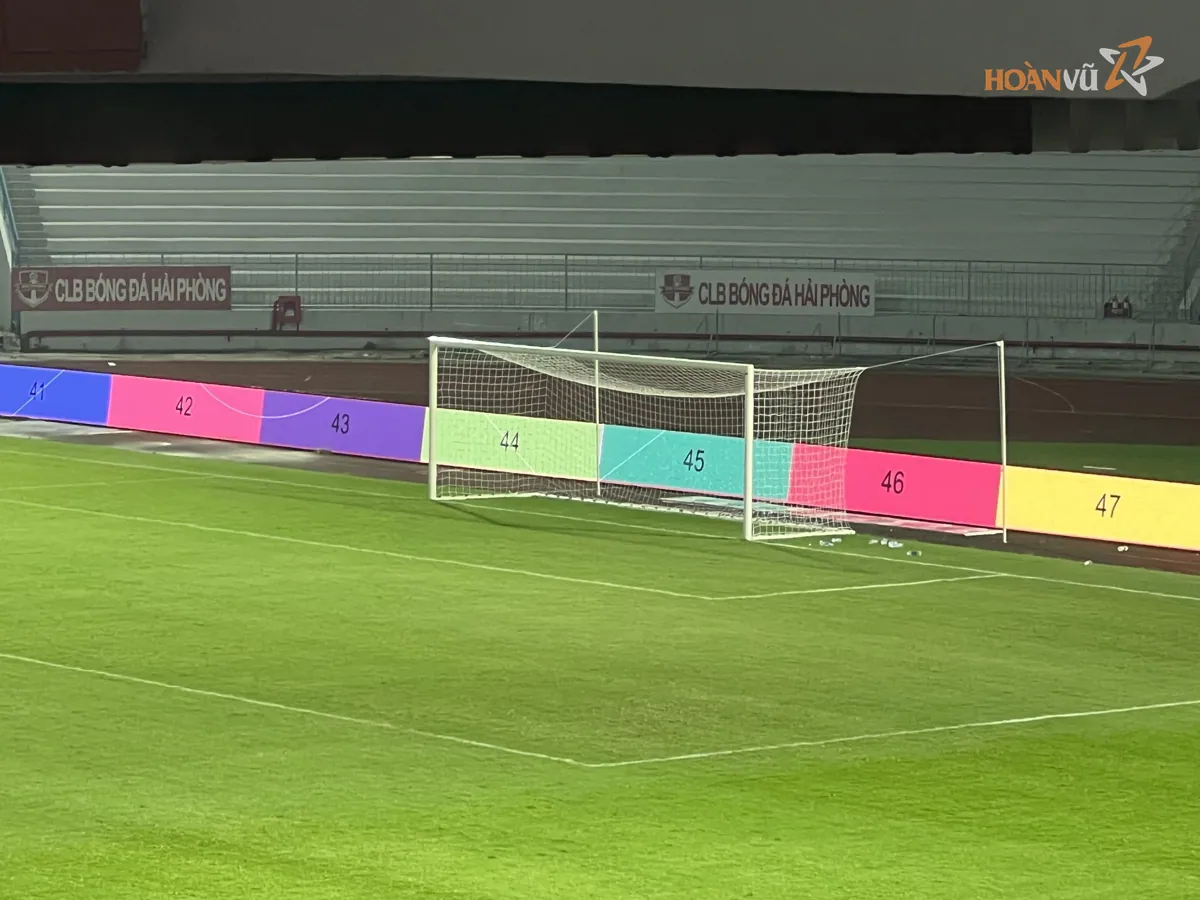
Once wiring is done, the board runs a colour test: each cabinet shows a flat colour so faulty modules, colour shift or dead pixels show up. Any cabinet that is off gets swapped or corrected there and then, not at match time.
Next comes a run of the actual sponsor content, viewed from the main camera position. Brightness is set for the lighting conditions of the ground: a daytime match and an evening match are two different settings.
Timeline for a home match
| When | What must be finished |
|---|---|
| Several days before | Survey, cabinet line agreed, power agreed |
| Day before the match | Cabinets staged, board built, cables run |
| Match day morning | Wiring complete, colour test on every cabinet |
| Before kick-off | Content test run, brightness set, playlist loaded |
| After the match | Power off, covered or dismantled as agreed with the ground |
Frequently asked questions
How long does it take to build a perimeter LED board?
It depends on the length of the board and the site conditions at each ground. In practice the crew builds and cables the day before the match, so match day morning only needs wiring and testing.
Does perimeter LED work in the rain?
Yes. The equipment and connectors are weatherproofed. What needs attention is drainage under the cabinet feet and mats over any cable crossing a walkway.
Why run a colour test before the match?
To find faulty modules, colour shift or dead pixels while there is still time to fix them. One cabinet out of colour in a long board is obvious on a television feed.
Conclusion
A board that runs cleanly through a match is the result of a thorough survey, correctly calculated power and a test run with no steps skipped. Where all of that is done, match day is only about operating.
For a site survey or a quotation for perimeter LED, contact Hoan Vu.
Hoan Vu designs, installs and runs match-day LED, with co-investment options.