The most common question a club or an investor asks while reading an equipment proposal is simple: how long will it last. The paperwork usually says "lifespan 100,000 hours". That figure is not wrong, but it answers a different question. Stadium LED lifespan is not the moment the screen goes dark; it is the moment the picture has faded past what broadcast work can use.
This article unpacks that figure, places it inside one Vietnamese season, and lists the signs that a cabinet needs replacing.
What the 100,000-hour figure actually measures
LEDs do not burn out the way an incandescent bulb does. They fade. The lighting industry calls the marker L70: the point where light output has dropped to 70% of the original value. L50 is the 50% point. Both definitions sit in the IES TM-21 document.
Technical material for outdoor LED signage puts the average at roughly 100,000 hours and converts that to about 10 years, assuming full power 24 hours a day. A stadium perimeter strip does not run that way, so the 10-year figure does not transfer.
Where lifespan numbers come from
LM-80 is the real measurement: LED packages run continuously while light output is logged at set hour marks. TM-21 takes that LM-80 data and projects it forward. One limit is worth knowing as a buyer: TM-21 does not allow a projection beyond 6 times the tested duration. A 10,000-hour test supports a claim up to 60,000 hours, and the sample must be large enough for that 6x multiplier to apply.
The projection is also tied to temperature. In the TM-21 worked example, the same package gives an L70 of about 36,392 hours at 55°C but only about 23,997 hours at 85°C. Thirty degrees more heat removes over a third of the life. That is why every conversation about outdoor LED lifespan ends up being a conversation about heat.
How many lit hours one season really uses
Before worrying about lifespan, it helps to know how much the equipment actually runs. This year's Vietnamese top flight is sized as follows.
| 2026/27 season figure | Value |
|---|---|
| Clubs in V.League 1 | 14 |
| Rounds | 26 |
| Total matches | 182 |
| Opening date | 4 Sep 2026 |
| Closing date | 22 May 2027 |
In a double round-robin, each club plays 13 home matches. On a match day the strip is lit from the pre-kickoff test pattern until the crowd has left, roughly 3 to 4 hours. That is an operating figure from crew experience rather than a technical specification, so treat it as a range.
Taking 4 hours for easy arithmetic, a home venue runs about 52 lit hours a season. Add national cup matches, friendlies, the opening ceremony and rented events, and the total still sits well under a few hundred hours.
What ages an LED board faster than the datasheet suggests
Heat
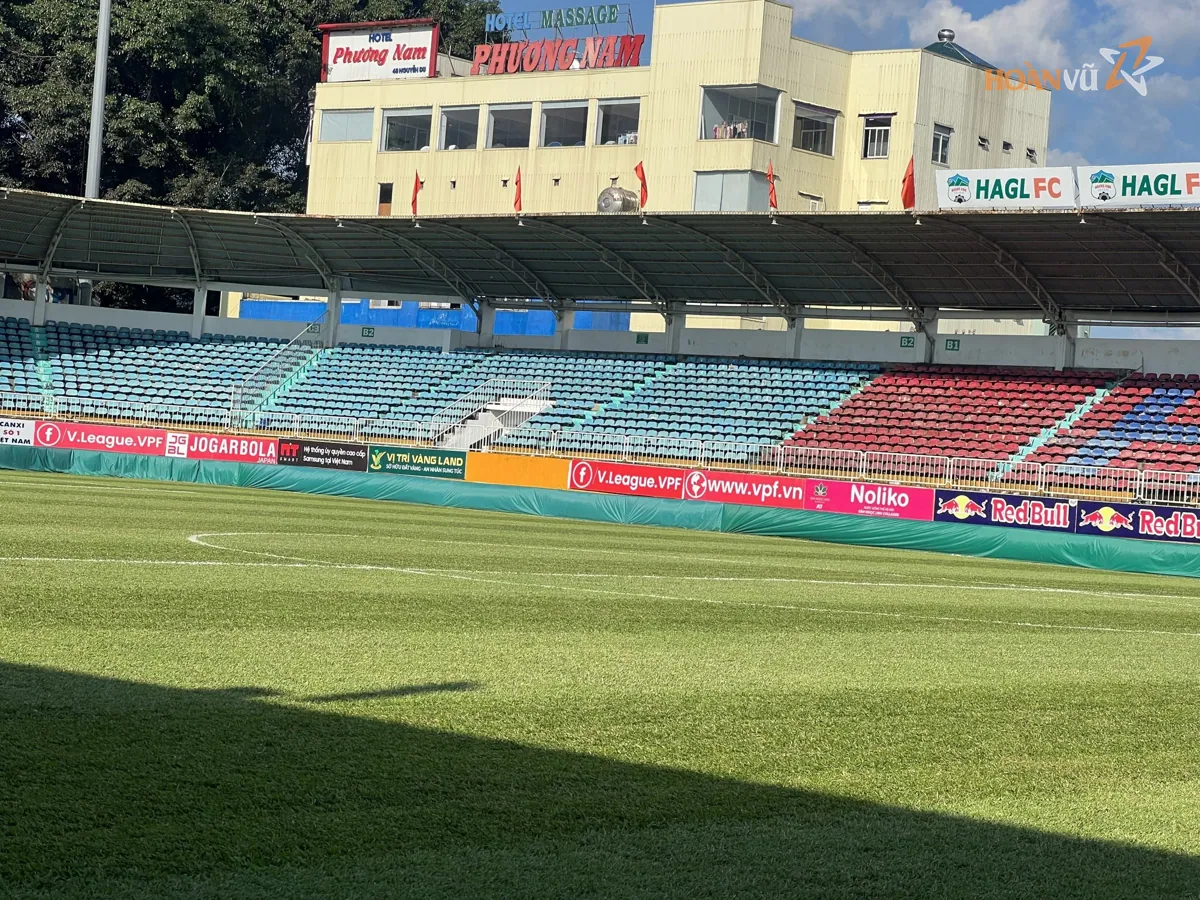
Industry material on outdoor LED signage calls heat the biggest threat, because higher temperatures make diodes degrade faster. The perimeter strip sits beside the turf in direct sun, with a sealed rear box holding the power supplies. Ventilation and temperature sensors are therefore mandatory items, not options.
Brightness and content colour
A white background draws full power from the red, green and blue LEDs at once. Darker content draws less. Running at maximum brightness for a whole match adds heat without helping the broadcast picture, because the camera only needs enough brightness relative to the light at the venue. Pulling brightness back to the level actually required costs nothing and buys life.
Outdoor conditions
Technical material for a stadium-grade LED line states the following working range.
| Item | Value in the technical material |
|---|---|
| Brightness | 5,500 nits |
| Ingress protection | IP65 front, IP54 rear |
| Operating temperature | -20°C to +50°C |
| Operating humidity | 10% to 90% RH |
| Power | 180 W/m² average, 450 W/m² maximum |
The season runs from September to May, straight through the rainy months in all three regions of the country. For most of that time the equipment sits outdoors or in a venue store, not in an air-conditioned room.
Signs a cabinet is due for replacement
- A few cabinets look clearly brighter or duller than the rest during the colour test pattern. Brightness drift between panels is the clearest sign and also the one that shows on air.
- Overall brightness has to be pushed higher than before and the broadcast picture still looks washed out.
- The number of modules swapped after each match climbs through the season instead of staying rare.
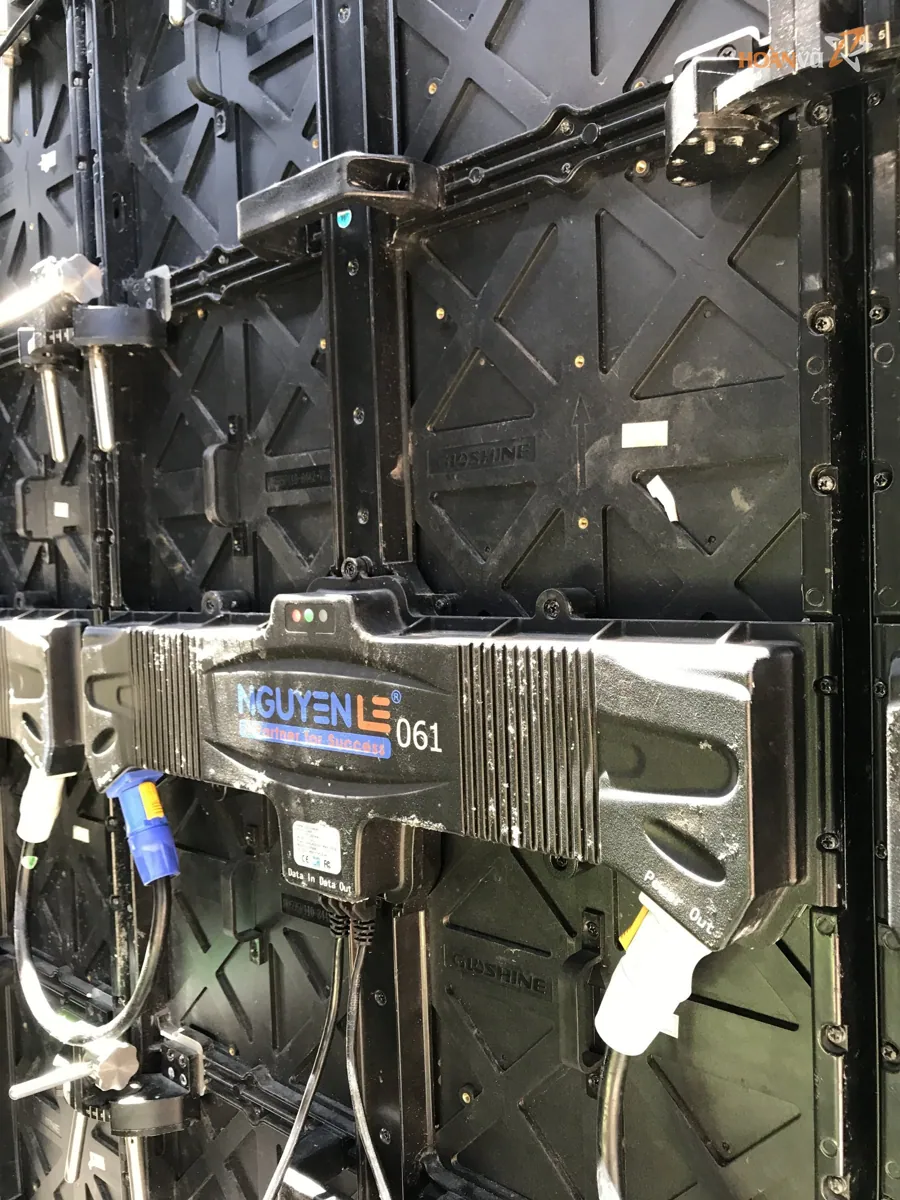
- Cracked housings, hardened gaskets, water ingress after rain, loose support feet.
- No same-batch modules left, so a new panel sits off-colour next to the old ones.
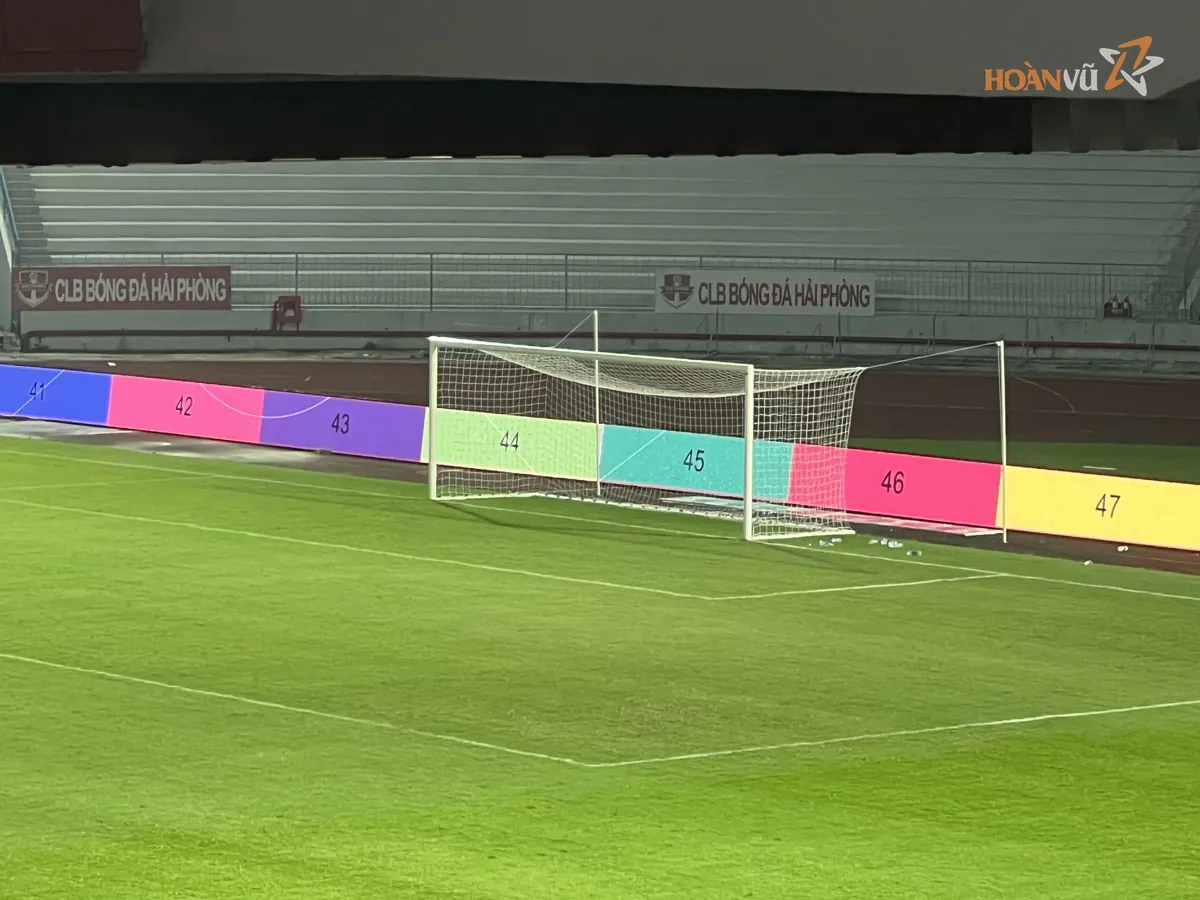
Replacing the whole strip in one go is not the only option. Many venues replace in clusters, starting with the sections in front of both goals and at the halfway line where the main camera spends most of its time, and keeping the rest for another season. That spreads the cost and holds the on-air look steady.
Practical steps that extend service life
- Log brightness for every match along with the weather, so the trend is visible instead of guessed.
- Run the colour test before each match and keep the photos, then compare across rounds.
- Clean the front face, check the gaskets and retighten the locking hardware after each match.
- Keep the power supply stable and protected, and avoid switching the board off abruptly while lit.
- Store cabinets in flight cases, raised off the floor, in a ventilated room, never against a damp wall.
- Hold a stock of same-batch cabinets and modules so replacements match in colour.
Hoan Vu has worked in advertising since 2001 and was incorporated as a joint stock company in 2010. The company currently runs perimeter LED at four venues, Hang Day, Lach Tray, Binh Phuoc and Pleiku, works with six clubs across roughly 84 matches a season, sends a technical crew to every match, and issues an acceptance record with photos and video after each one. That scope sits inside stadium LED solutions, and the per-match task list is covered separately in perimeter LED maintenance.
Frequently asked questions
Does 100,000 hours mean the screen fails after that?
No. It marks the point where light output has fallen to an agreed threshold, usually 70% of the original. The board still lights up past that point, but the broadcast picture has faded below what the job needs.
How many running hours before a perimeter strip must be replaced?
Running hours per season sit far below the published lifespan, so hours are rarely the reason for a replacement. The timing usually comes from brightness drift between cabinets, the state of housings and gaskets, and whether same-batch modules are still available.
Does lowering brightness to save life hurt the broadcast picture?
No, if the reduction is measured. Brightness only needs to suit the light at the venue and the range the camera can capture. Running at maximum all match mostly adds heat.
Conclusion
Stadium LED lifespan is a range, not a single number. Heat, content brightness and the way panels are stored between matches decide whether that range sits above or below the figure on the datasheet. A club or investor working out when to replace a perimeter strip can leave your details and a technical crew will survey the current condition and report back. Hotline 0964 73 74 73.
Hoan Vu designs, installs and runs match-day LED, with co-investment options.