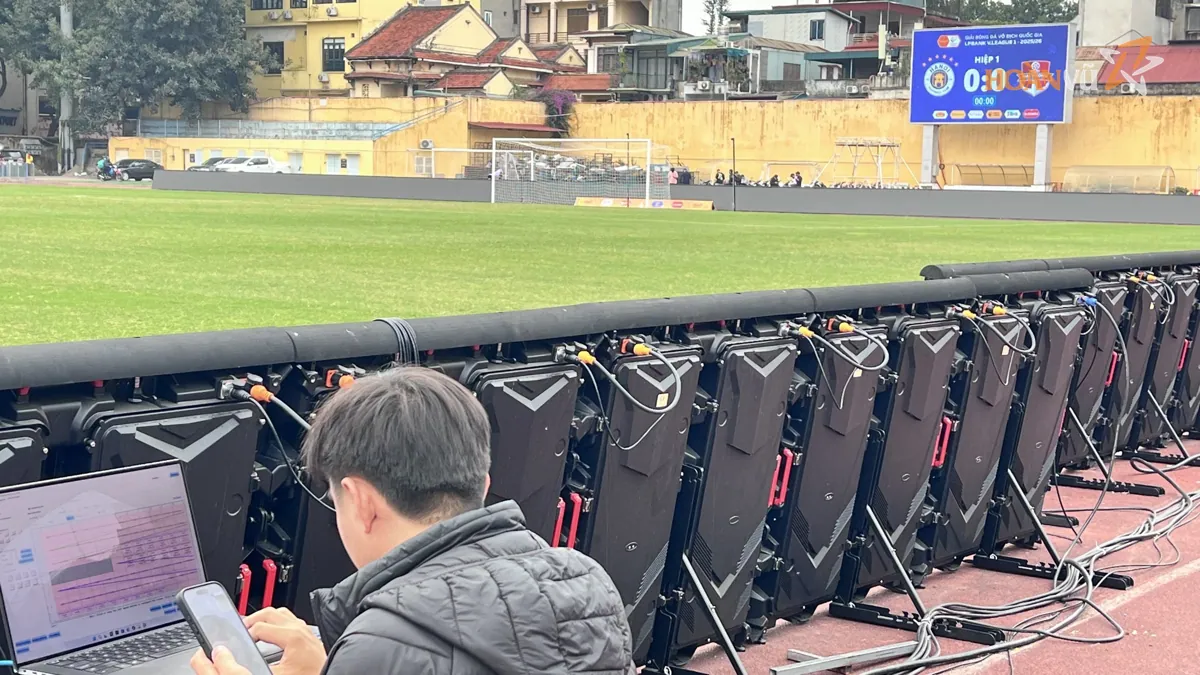
The match is under way, the stands are full, and one section of the perimeter LED goes dark. Or the whole band stays lit but the colour drifts and turns dull grey on the broadcast feed. Most of those faults are not in the panels. They sit in the perimeter LED control system: the signal path, the processor, the receiving cards, the power supply, and the crew behind the control desk.
This article describes how that system runs during a match, and which redundancy layers belong in place before kick-off.
The signal chain from content to panel surface
A perimeter LED band does not take an advertising file directly. Content travels through several stages:
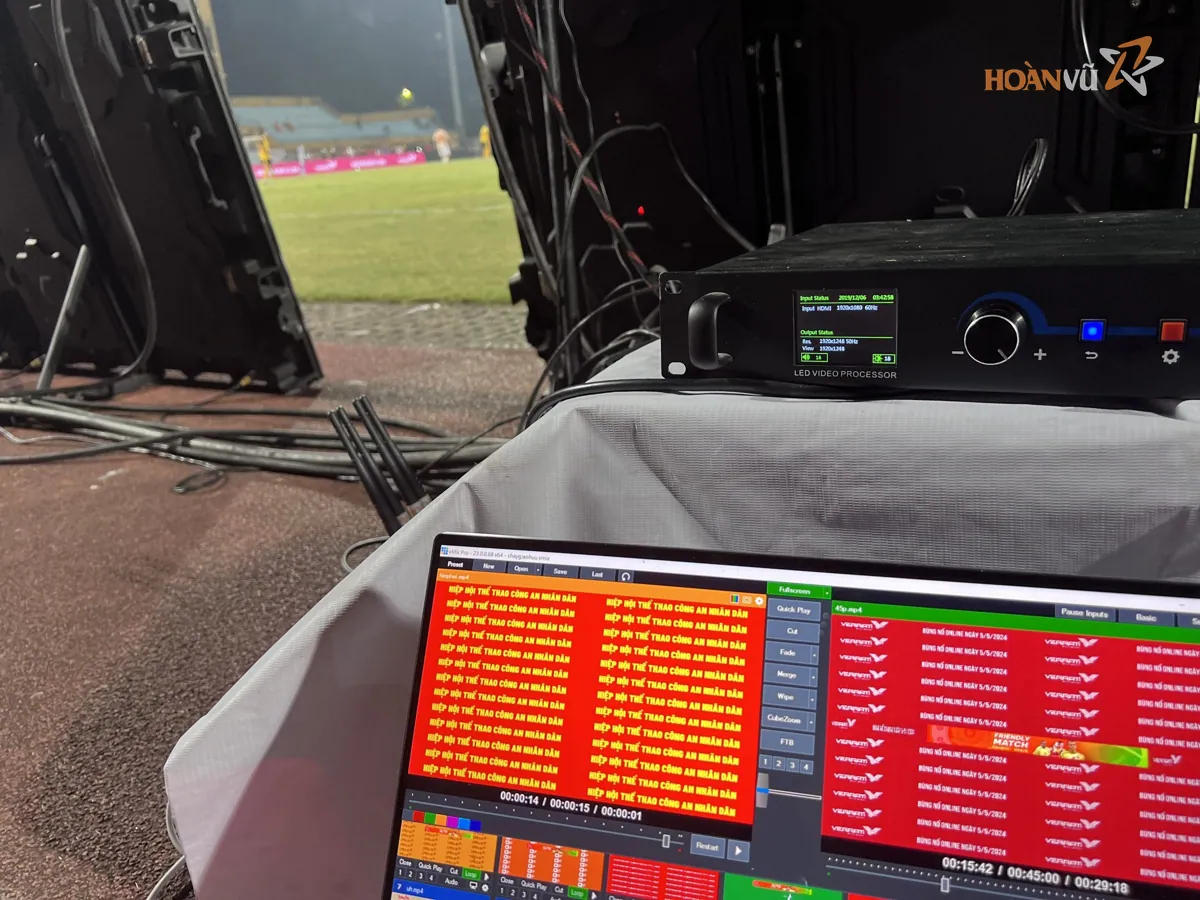
- A content machine, usually a computer running playback software against a pre-arranged playlist.
- A video processor, where content is cropped, mapped and fitted to the exact length of the band.
- A sending card, which turns picture data into panel control data.
- Network or fibre cable running along the running track.
- A receiving card inside each cabinet, then the LED modules.
Every stage is a possible point of failure, and every stage has its own backup method. Competition rules look at the system the same way: the UEFA Conference League 2025/26 regulations require the host club to provide an LED board system including the LED controller units, with the club or its supplier operating it, artwork management and on-site graphics control included.
Receiving cards and redundancy inside each cabinet
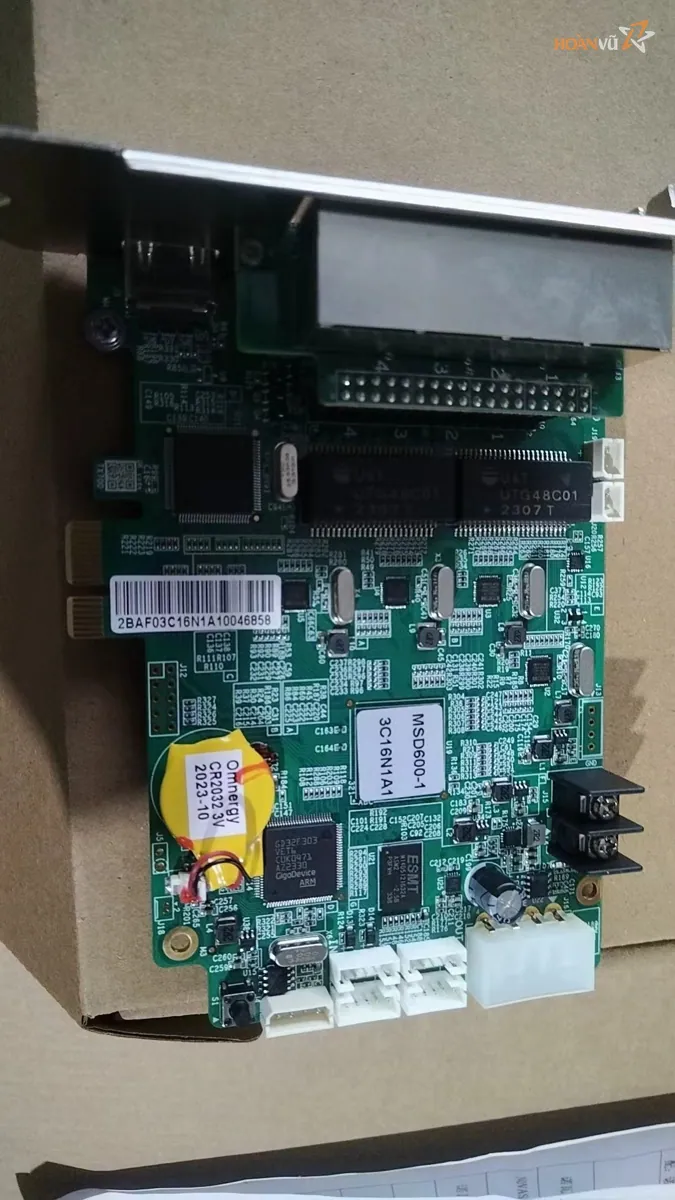
Each cabinet has a receiving card behind it. The card takes data from the sending card and drives the LED modules on that cabinet.
A receiving-card manufacturer's datasheet states that a common card loads up to 320x256 pixels, carries two Gigabit Ethernet ports, and offers two notable backup mechanisms:
- Dual-card backup: two cards on one hub board, with the backup taking over if the main card fails.
- Loop backup: if one cascading line fails, the other continues to work.
The same datasheet lists an operating range of minus 20 to 70 degrees Celsius and 10 to 90 percent humidity, non-condensing. Both figures matter in Vietnam, where a hot afternoon match and a wet evening match can fall days apart on the same pitch.
Looping the cable so one section does not follow the fault
The cheapest layer of redundancy is in the cabling. The manufacturer's configuration guide is explicit: the last receiving card must be connected back to the sending box, forming a loop between the sender and all receiving cards. If a cable section breaks, data travels the other way round and the cabinets beyond it stay lit.
On the sending side there are two common approaches. One uses a second port on the same sending device as the backup. The other sets a second sending device as backup, and in that case both configurations must be identical, otherwise the system reports that the backup cannot be found.
| Equipment layer | Role | Common backup approach |
|---|---|---|
| Content machine | Runs the in-match playlist by rotation | Second machine in parallel, content stored locally |
| Video processor | Crops, maps and fits content to the band | Second input path, spare unit kept pitchside |
| Sending card | Turns picture data into panel control data | Second port, or a second sending card set as backup |
| Signal cable | Carries data along the running track | Closed loop from the last cabinet back to the sender |
| Receiving card | Drives the modules on each cabinet | Backup card on the same hub board, two-way cable loop |
| Power supply | Feeds cabinets and control equipment | Split circuits, backup supply or a dedicated generator |
Power, the redundancy layer nobody sees
The FIFA stadium guidelines recommend a redundant power supply so the boards do not fail during matches, and they rate mains supply as highly recommended. The same document describes the usual size of a perimeter LED board: an active screen area of around 0.9 m, with the overall unit height nearer 1.0 m.
The UEFA regulations go further on execution: existing pitchside supply is used when capacity and security can be guaranteed, otherwise a dedicated twin-pack generator is brought in, with consumption costs carried by the home club.
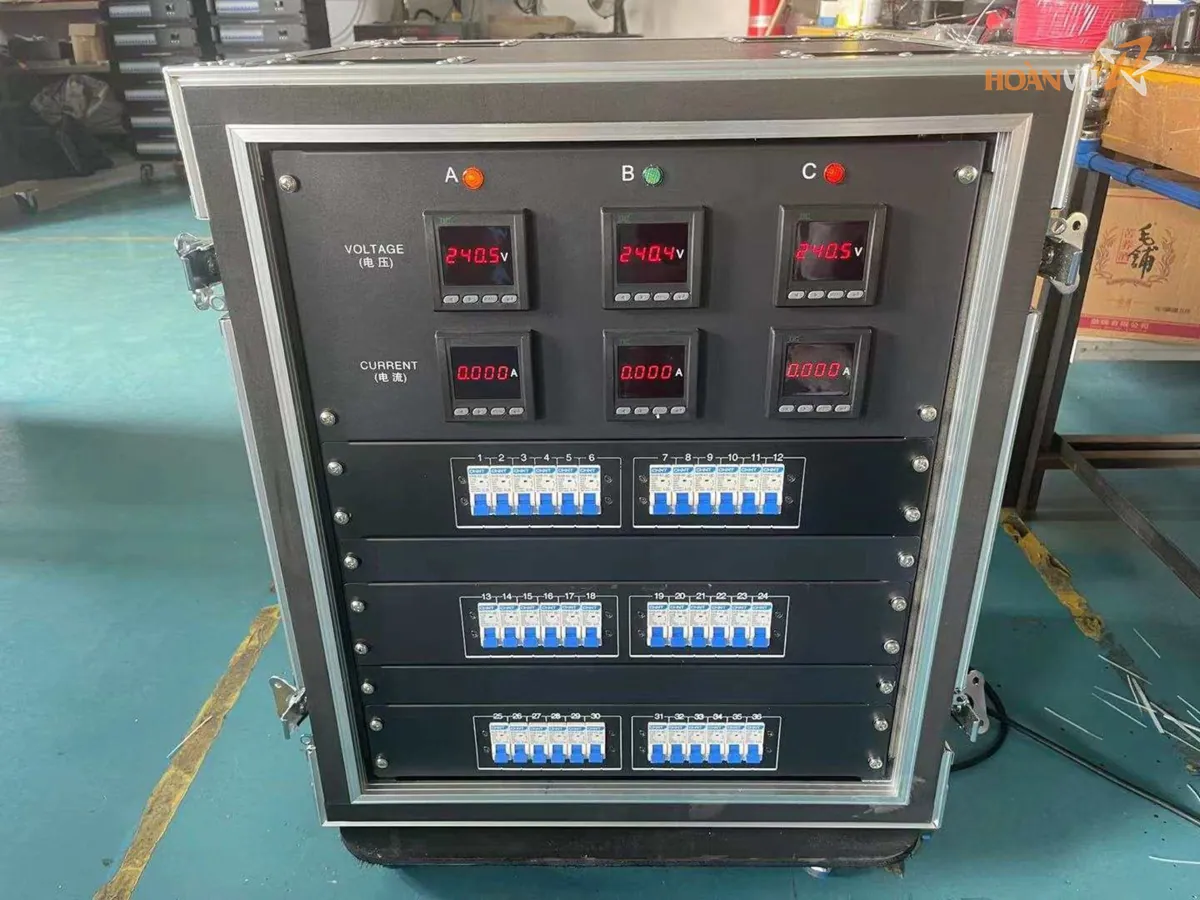
At Vietnamese grounds the equivalent work is the mobile distribution board and the way circuits are split. Split sensibly, a failed circuit darkens only a short run instead of pulling the whole band down with it.
Colour calibration and the pre-match test
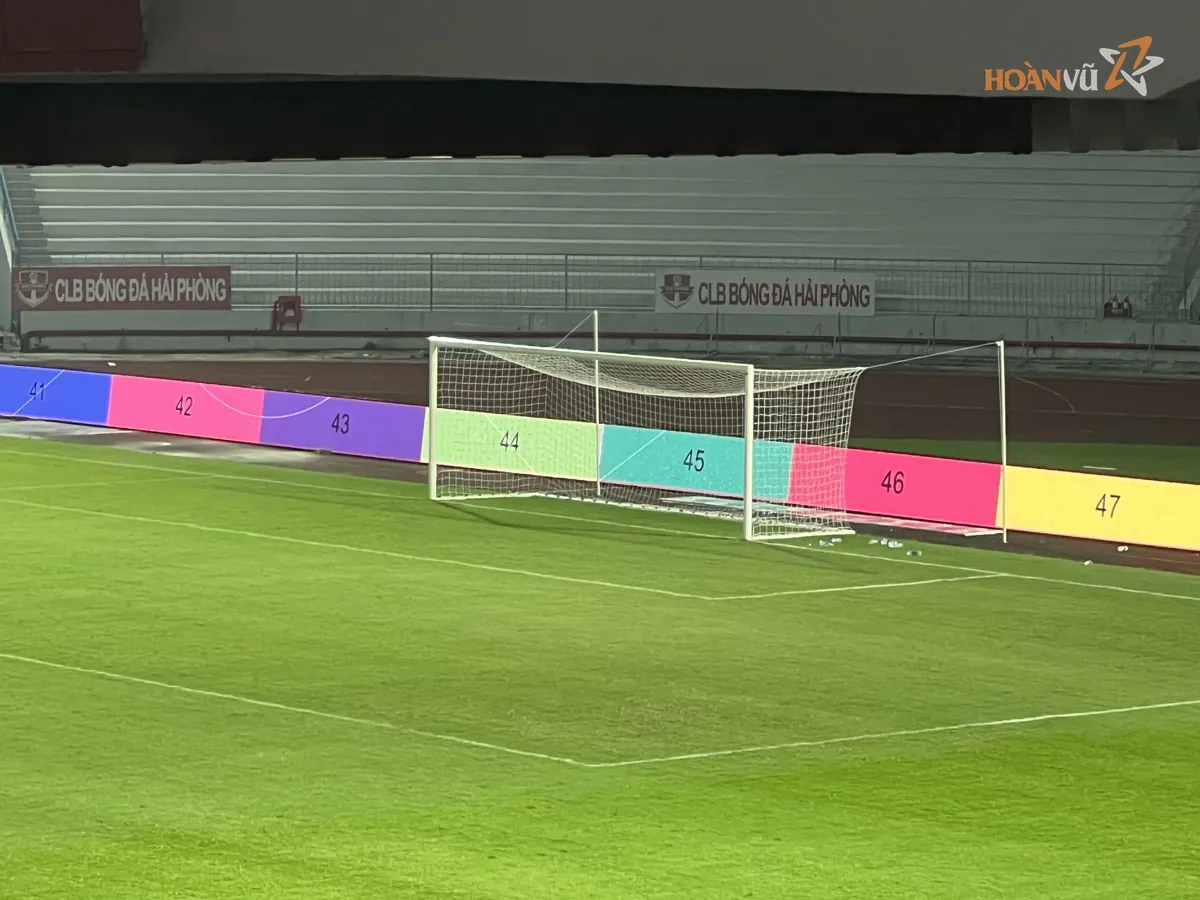
The UEFA regulations require content to be legible under floodlights, and set a colour-match and camera calibration test on the evening before the match, under full floodlight conditions. Boards must be fully visible from the main camera, ideally under the crossbar of each goal, and the crossbar should not bisect the board artwork.
At grounds in Vietnam the equivalent runs before every match: a colour test pattern cabinet by cabinet, a check for cabinets drifting in brightness so they can be swapped, then a brightness setting chosen for kick-off time. A 5 pm match in daylight and a 7.15 pm match under lights need two different levels. This connects straight to how the band looks on air, covered in Stadium LED on TV: brightness and refresh rate.
The crew and the post-match report
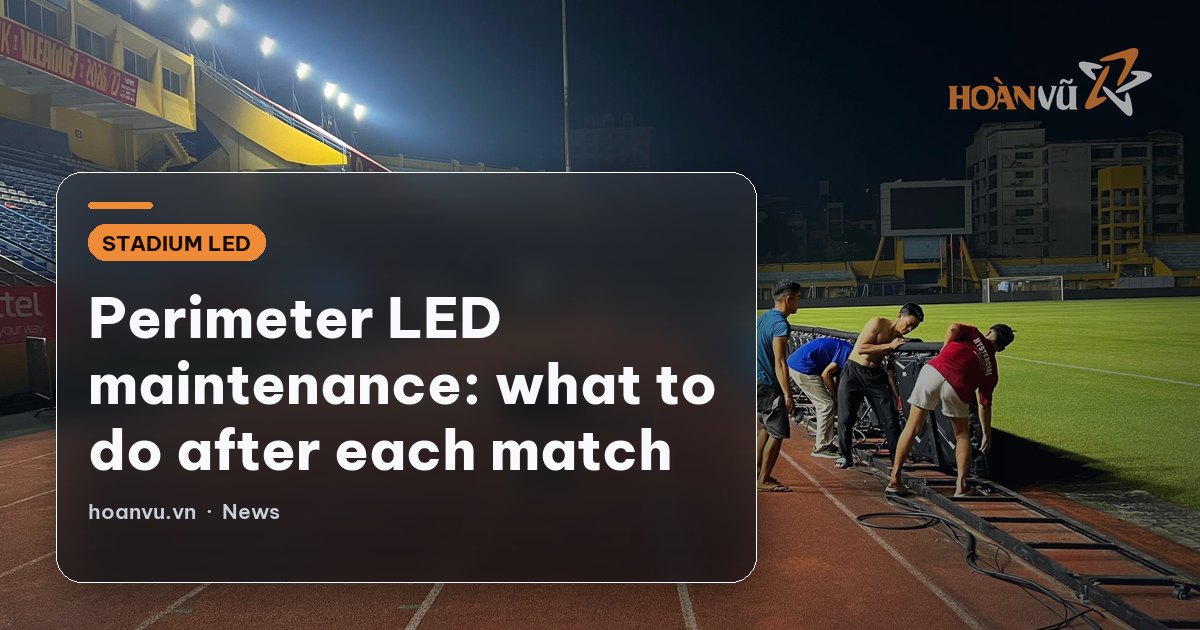
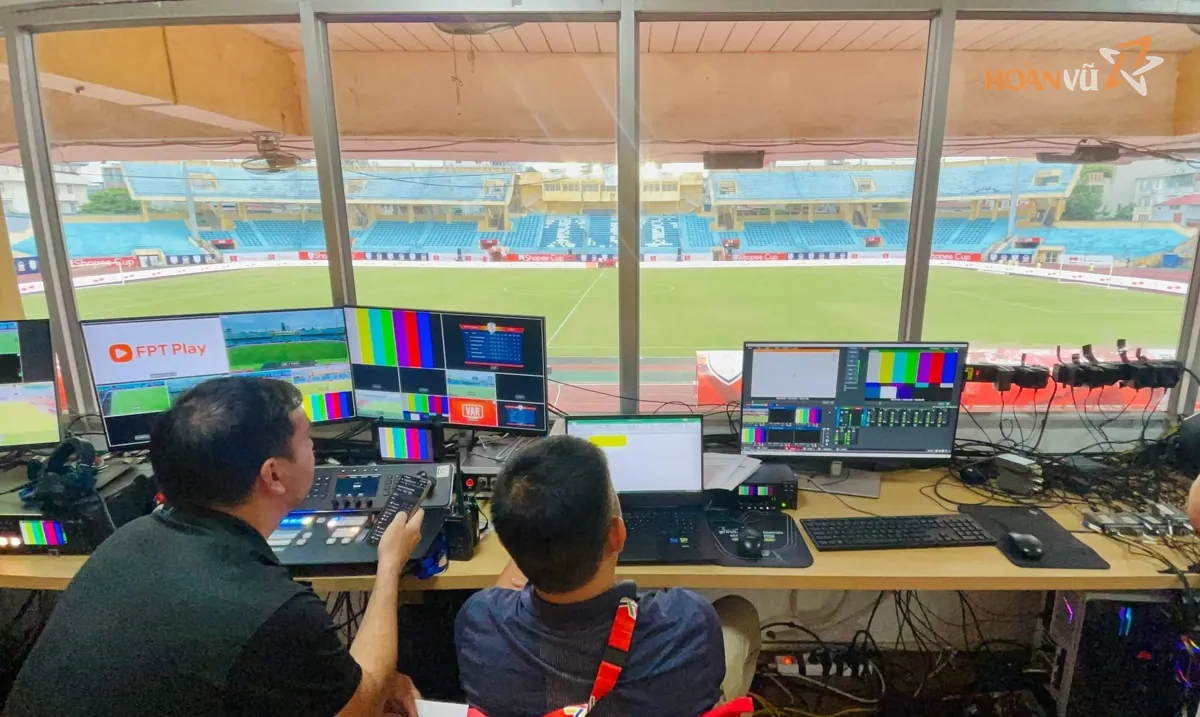
Backup equipment only helps when somebody is sitting there, sees the fault and switches to the backup path while the ball is still in play.
Hoan Vu has worked in advertising since 2001 and became a joint stock company in 2010. The company currently runs perimeter LED at four grounds, Hang Day, Lach Tray, Binh Phuoc and Pleiku, alongside six clubs and around 84 matches a season. Each match has a technical crew on site from rig to de-rig, and each match ends with an acceptance report carrying photos and video for the brand to check against. The delivery side is set out on the stadium LED solutions page.
Frequently asked questions
What happens if the signal drops mid-match?
The crew switches to the backup signal path, usually a second port or a second sending device configured in advance. If a cable is the cause, the closed loop keeps the cabinets beyond the break fed with data while the fault is traced.
If one cabinet goes dark, does the whole band go off?
No. Each cabinet has its own receiving card and power feed, so one faulty cabinet creates one dark gap. The job is to log the position, swap in a spare cabinet at the break if it is safe to do so, and repair after the match.
Does perimeter LED need its own generator?
It depends on the supply available at the ground. FIFA guidance favours mains supply with redundancy in place, while the UEFA regulations allow a dedicated generator when the pitchside supply lacks capacity or cannot be secured.
Conclusion
A perimeter LED band that runs cleanly for 90 minutes is the result of stacked redundancy: two signal paths, a closed cable loop, receiving cards with a backup card, split power circuits, and a crew that knows when to switch. Clubs, brands and venue owners weighing a perimeter LED system for their own ground can leave your details for a survey and a match-day operating plan.
Hoan Vu designs, installs and runs match-day LED, with co-investment options.