When a stadium is upgraded, the hardest question is rarely which screen to buy. It is how large the screen should be and where it should sit. Too small, and the stand opposite cannot read the score. Too large, and the frame, the wind load and the power supply grow past the first budget.
Sizing a stadium giant LED screen comes down to three inputs: the recognised stadium category, the distance to the nearest and furthest rows, and the positions the rules permit. This article follows that order, using AFC regulations, the domestic competition rules and manufacturer technical documents.
Giant screen, scoreboard and perimeter LED are not the same item
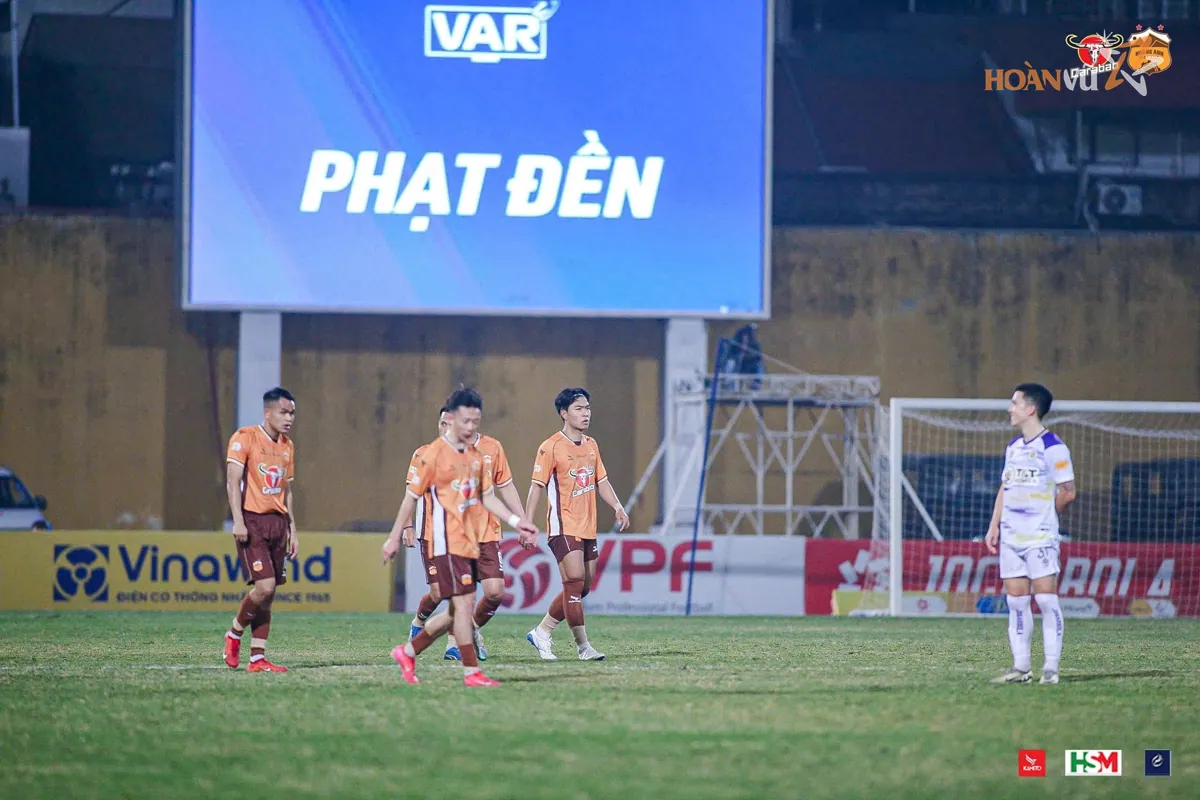
- A giant screen serves spectators inside the ground: match pictures, line-ups, sponsor content. It sits well back from the grass and is read from tens of metres out.
- A scoreboard shows only score and time. It can be a simple digit board with no video capability.
- Perimeter LED is the advertising ribbon around the pitch, about one metre high, seen mainly through cameras and sold in timed rotations.
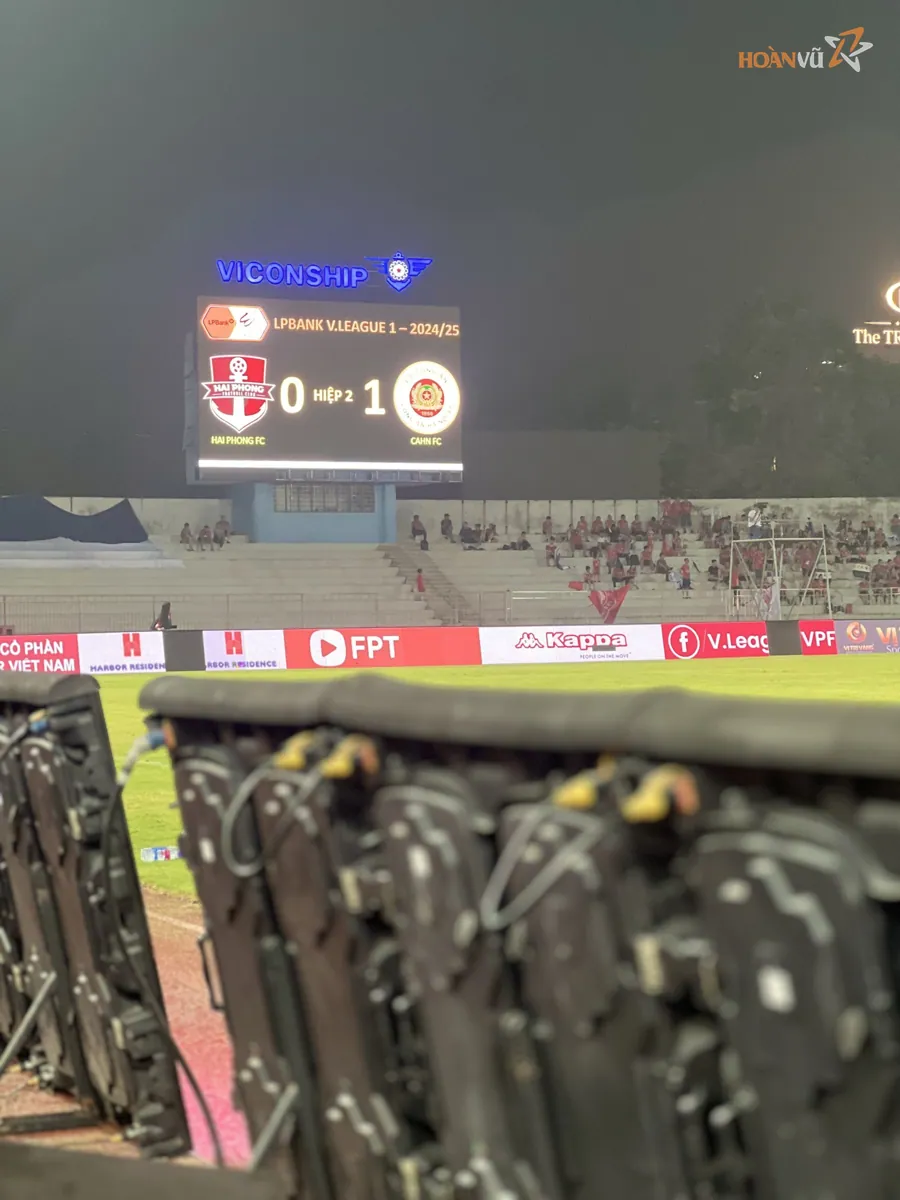
Separating the three at survey stage avoids buying a giant screen and still needing a scoreboard afterwards.
Minimum requirements by stadium category
The AFC Stadium Regulations, Edition 2026, give Article 10 to clocks, display boards and giant screens.
- Articles 10.1 and 10.4: the stadium must have a digital clock showing official playing time, and a scoreboard showing the score at all times, including extra time and penalties.
- Article 10.5: the minimum number of giant screens by stadium category.
- Article 10.6: screens must give optimal viewing and sound for all spectators, and sit where they pose no risk to spectators and no disturbance to play.
- Article 10.7: the video area is recommended to use a 16:9 aspect ratio, which may be extended sideways for scoring and substitution details.
| AFC stadium category | Minimum under Article 10.5 |
|---|---|
| A | Two fixed giant screens |
| B | One fixed giant screen |
| C | One fixed giant screen |
| D | One fixed or portable giant screen |
| E | One fixed or portable scoreboard |
Domestically, the 2026/27 National First Division regulations set no screen size, but they carry a clause on showing the match on an electronic screen at the venue: the club must notify its plan and follow the guidance on installation and operation. Pitch standards are referred to Article 77 of the Vietnam Football Regulations.
Sizing from the nearest row to the furthest
Two calculations run in opposite directions, and many projects do only one of them.
The first sets pixel pitch from the nearest spectator. Manufacturer technical material from Daktronics gives a rule of thumb: optimal viewing distance in feet is roughly three times the pixel pitch in millimetres. In metric terms, about 0.9 m for every 1 mm of pitch.
| Pixel pitch | Optimal viewing distance, three-times rule |
|---|---|
| P6 | from about 5.5 m |
| P8 | from about 7.3 m |
| P10 | from about 9.1 m |
A giant screen behind the goal usually sits tens of metres from the nearest row, so P6 to P10 is already fine enough. Manufacturer material treats that same band as the usual choice for outdoor giant screens.
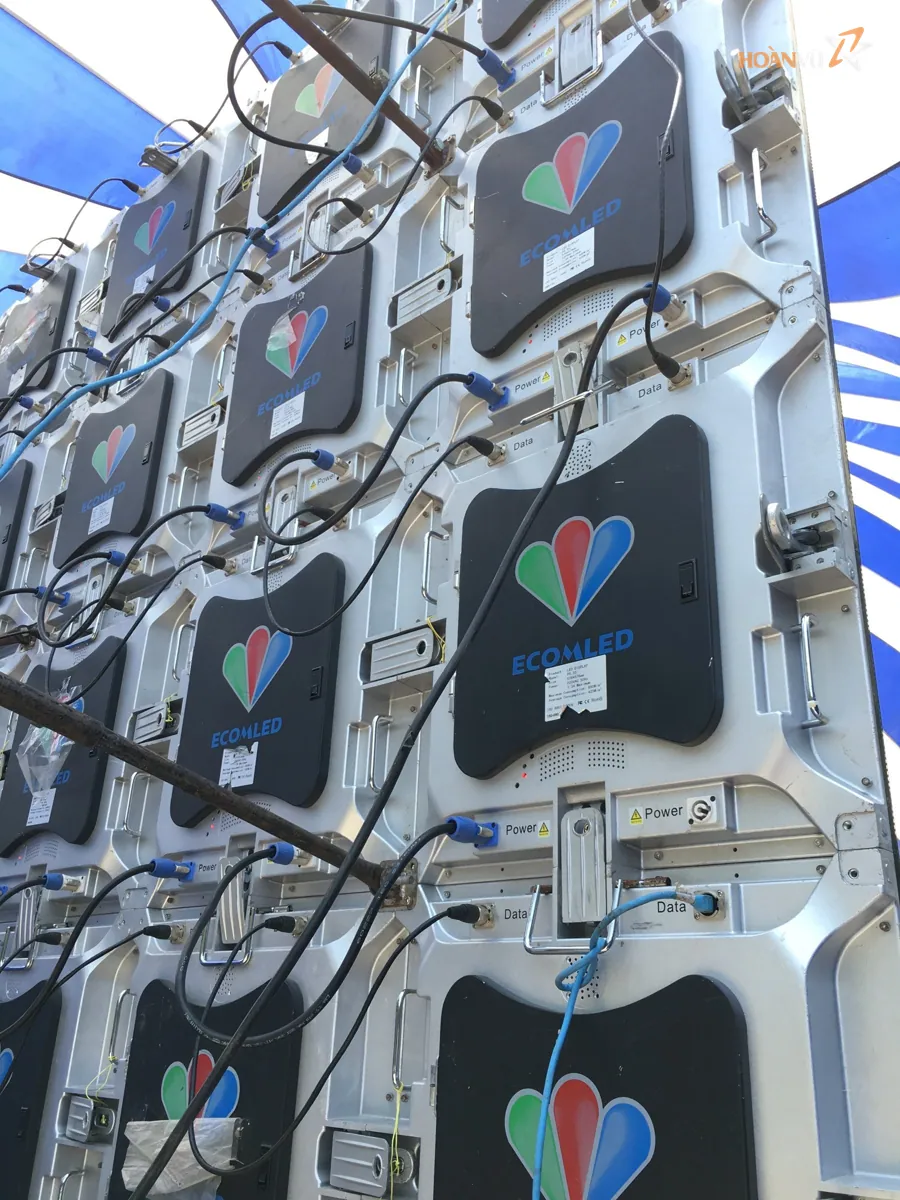
The second calculation sets physical size from the furthest spectator, where the deciding factor is whether text can be read. The same material gives a benchmark: text height of at least 1 inch for every 25 feet of viewing distance, with a 4-inch character readable from about 100 feet. Divide the distance to the furthest row by that benchmark and the minimum text height follows, and with it the picture height.
With both figures in hand, round to the cabinet, since width and height are always multiples of one. Keep the video area at 16:9 as Article 10.7 recommends, and put score details in extensions either side.
Choosing the position
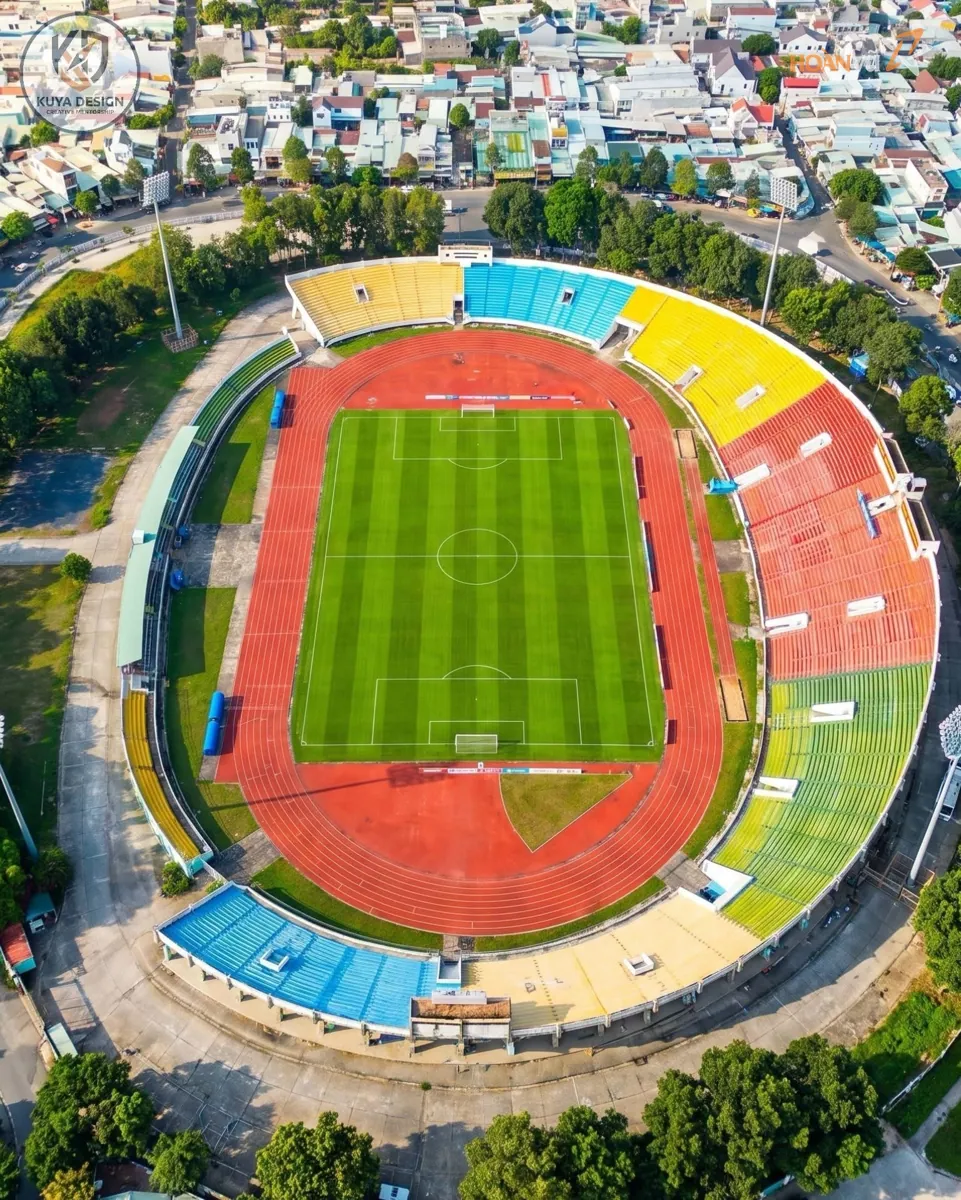
- Prefer a stand corner behind the goal, outside the running track, so the screen is clear of the field of play.
- Avoid an orientation that makes spectators look into the afternoon sun.
- Where two screens are required, place them diagonally in opposite corners so every stand sees at least one.
- Calculate wind load for the frame and foundation, especially for a screen mounted high on a stand roof.
- Survey the signal and power routes back to the control room, and the space for power cabinets.
AFC regulations also state that no physical structure should be lower than 21 metres above the field of play, so any plan to hang a screen over the grass needs a clearance check.
Brightness, refresh rate and broadcast cameras
An outdoor screen has to stay readable in sunlight, so brightness is not the place to economise. Manufacturer technical material cites 6,000 nits and above for outdoor screens in direct sun, roughly 800 to 2,500 nits indoors, IP65 protection outdoors and IP54 or above indoors.
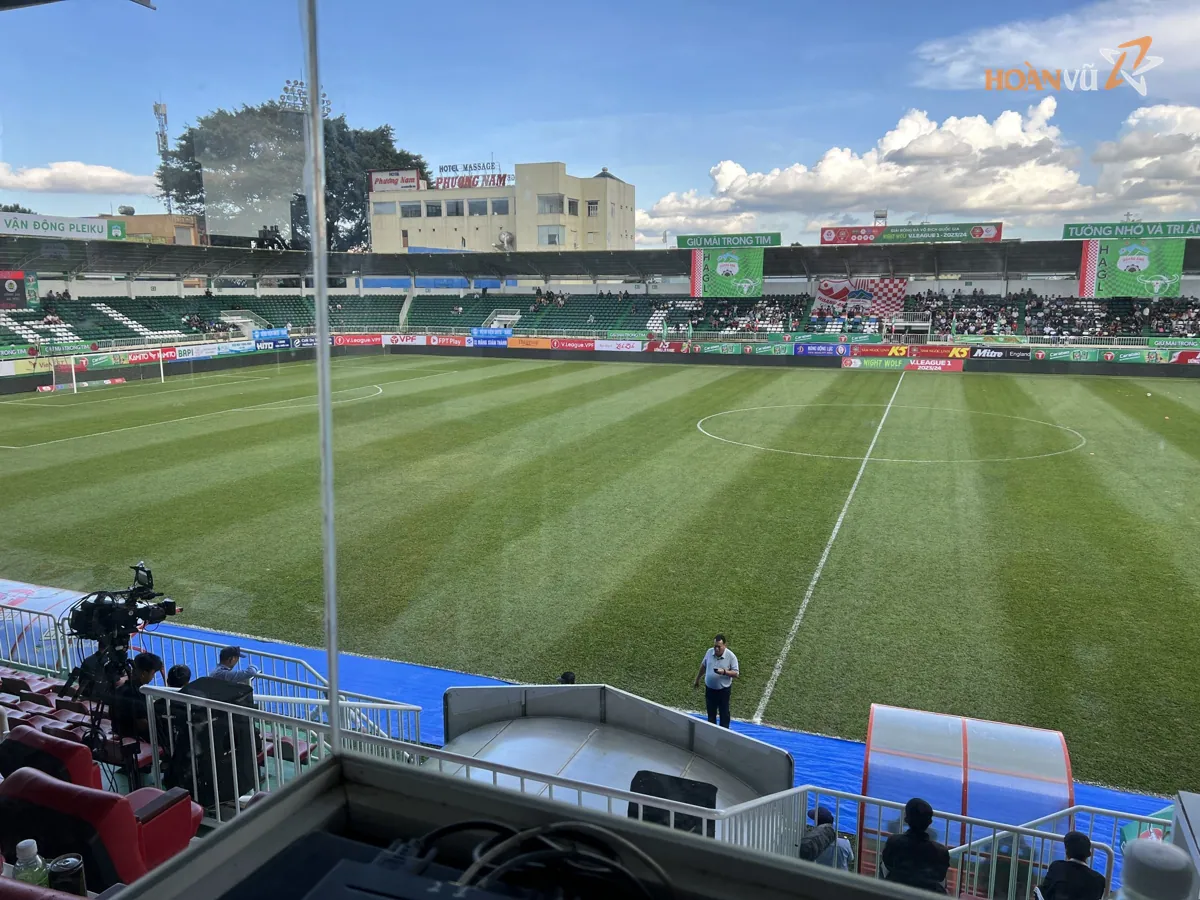
When the match is televised the giant screen is usually in frame, which makes refresh rate matter too. Many production crews ask for 3,840 Hz and above to reduce banding and flicker, and that figure has to be checked against camera frame rate and shutter settings. There is more on this in Stadium LED on TV: brightness and refresh rate.
Operation and sign-off, match by match
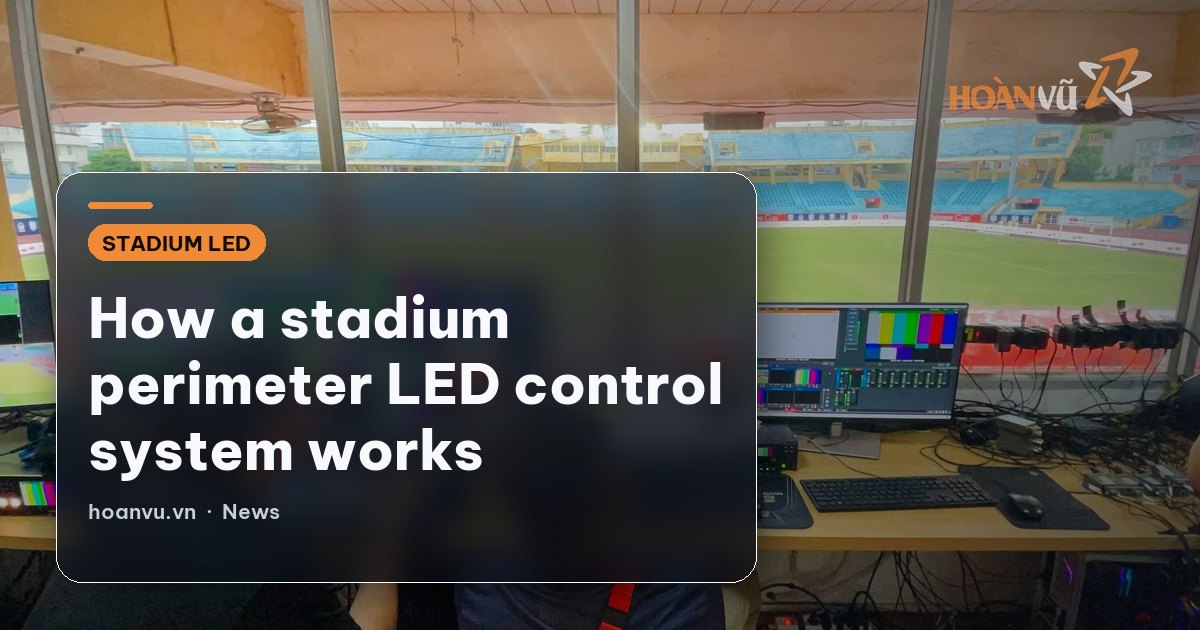
Installation is the shorter half. On a match day somebody still has to run the content, check signal before kick-off and record what was played.
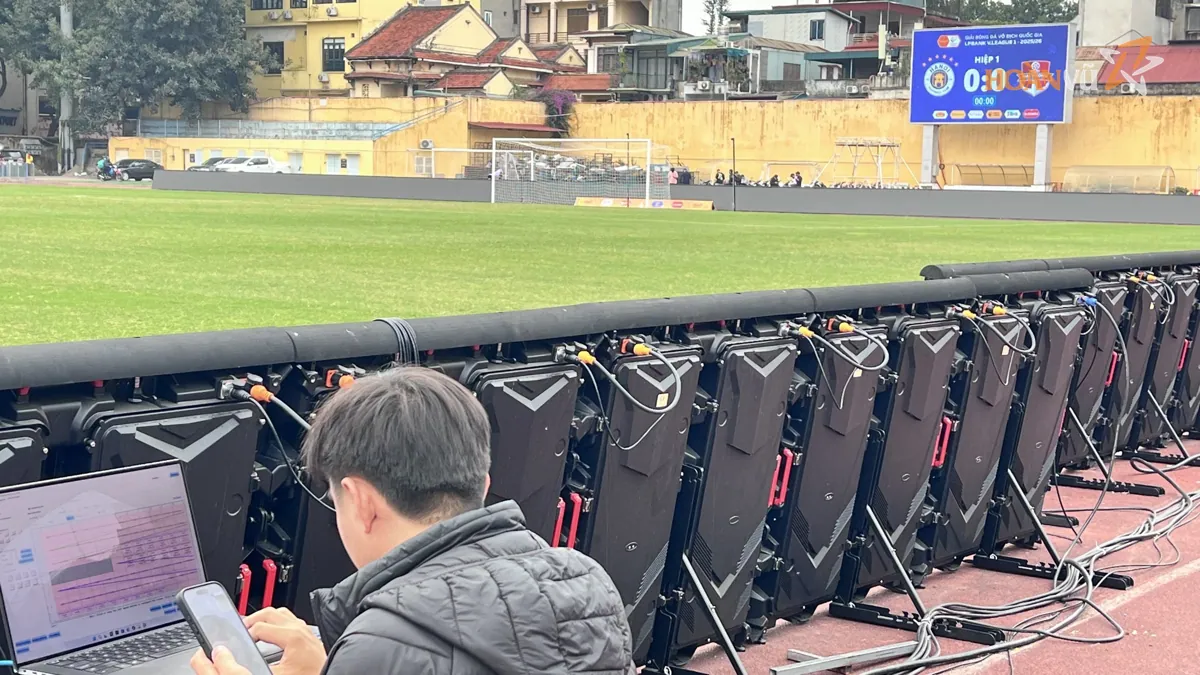
Hoan Vu has worked in advertising since 2001 and was incorporated as a joint stock company in 2010. It currently runs perimeter LED at four grounds, Hang Day, Lach Tray, Binh Phuoc and Pleiku, works with six clubs across roughly 84 matches a season, keeps a technical crew operating each match, and issues a post-match sign-off record with photos and video. Alongside the stadium work, Hoan Vu installs indoor and outdoor LED screens, billboards and signage, and produces events, live shows and livestreams with a green-screen studio. Details are under stadium LED solutions.
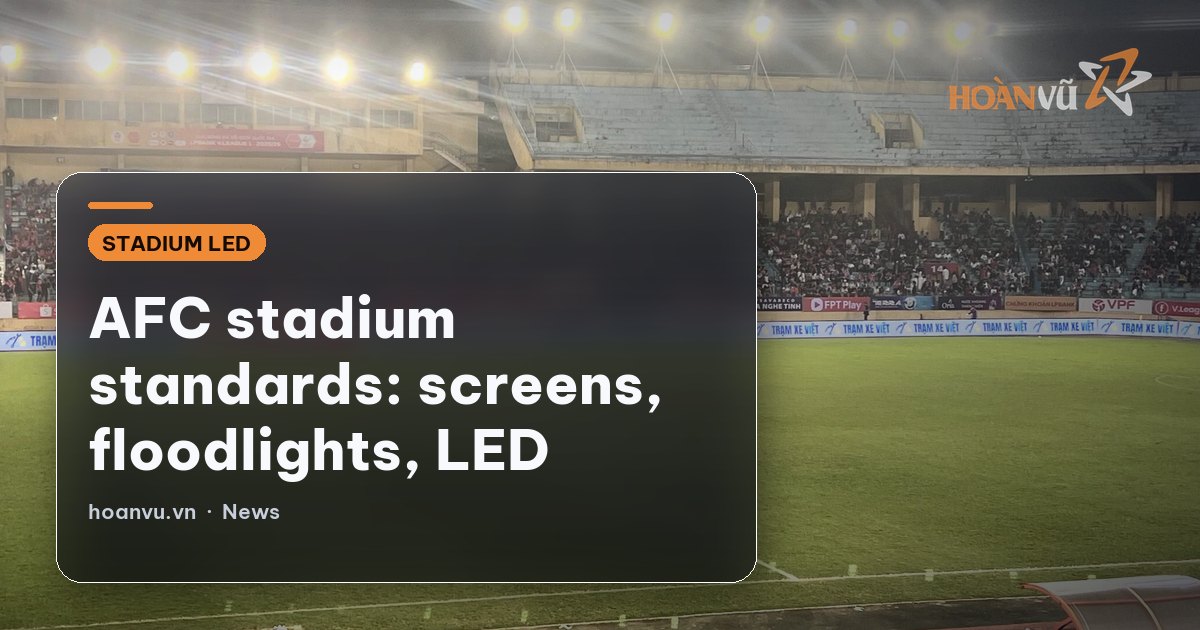
The wider standards picture for a ground is in AFC stadium standards: screens, floodlights, LED.
Frequently asked questions
Is a giant screen mandatory for a small ground?
Under Article 10.5 of the AFC Stadium Regulations, Edition 2026, the lowest category in the table needs only one fixed or portable scoreboard. A fixed giant screen is required for the higher categories.
Which pixel pitch suits an outdoor giant screen?
Manufacturer technical material treats P6 to P10 as the usual band for outdoor giant screens, chosen by how close the nearest row sits. The closer the audience, the finer the pitch needs to be.
Can a giant screen replace perimeter LED?
No, because the two serve different audiences. The giant screen serves spectators in the ground, while perimeter LED sits inside the camera frame and is sold by timed rotation.
Conclusion
The size of a giant screen is not a matter of feel. With the three inputs in hand, stadium category, spectator distance and permitted position, the equipment, structure and power plans line up from the first drawing.
If your ground is being surveyed or upgraded, leave your details or call the hotline on 0964 73 74 73 and the Hoan Vu crew will survey the site and put a plan together.
Hoan Vu designs, installs and runs match-day LED, with co-investment options.