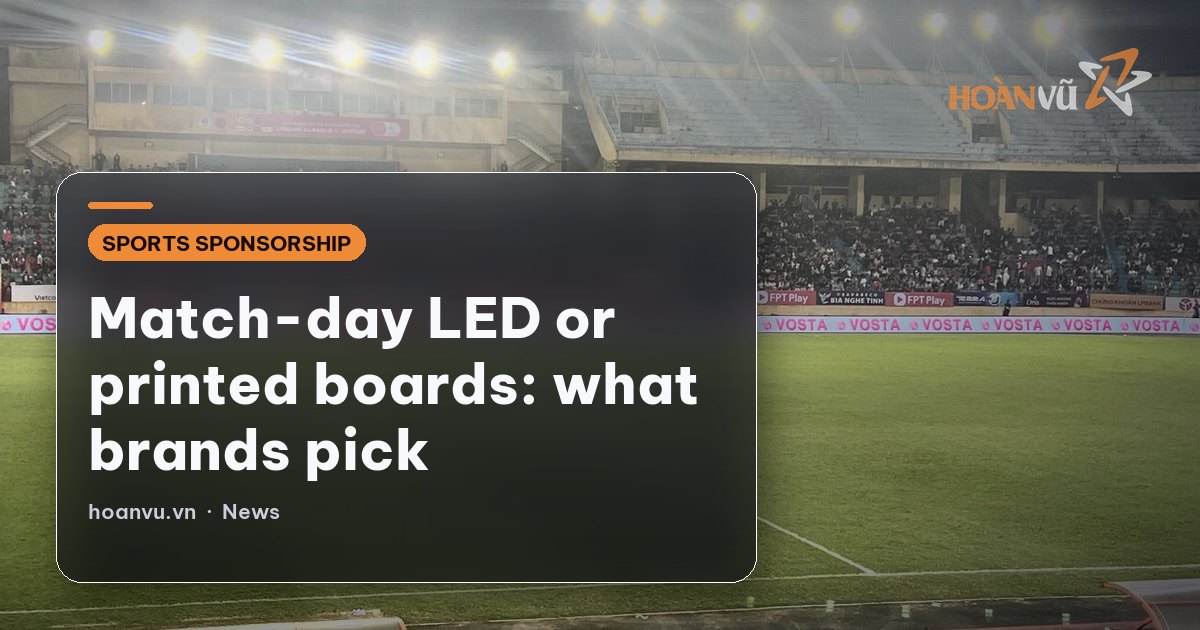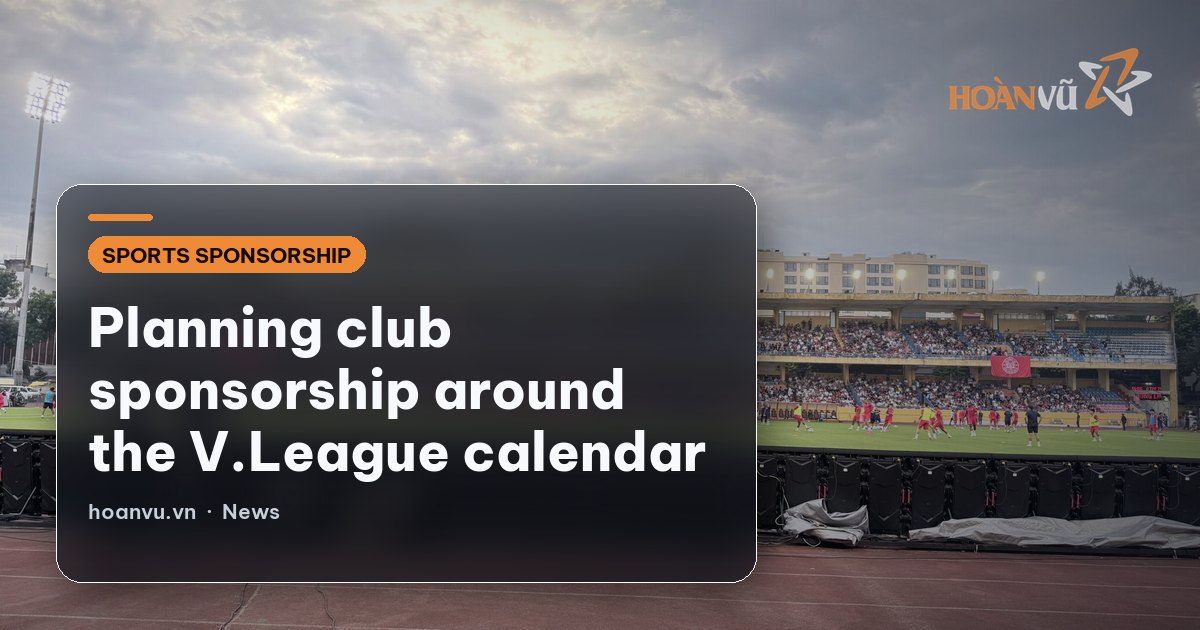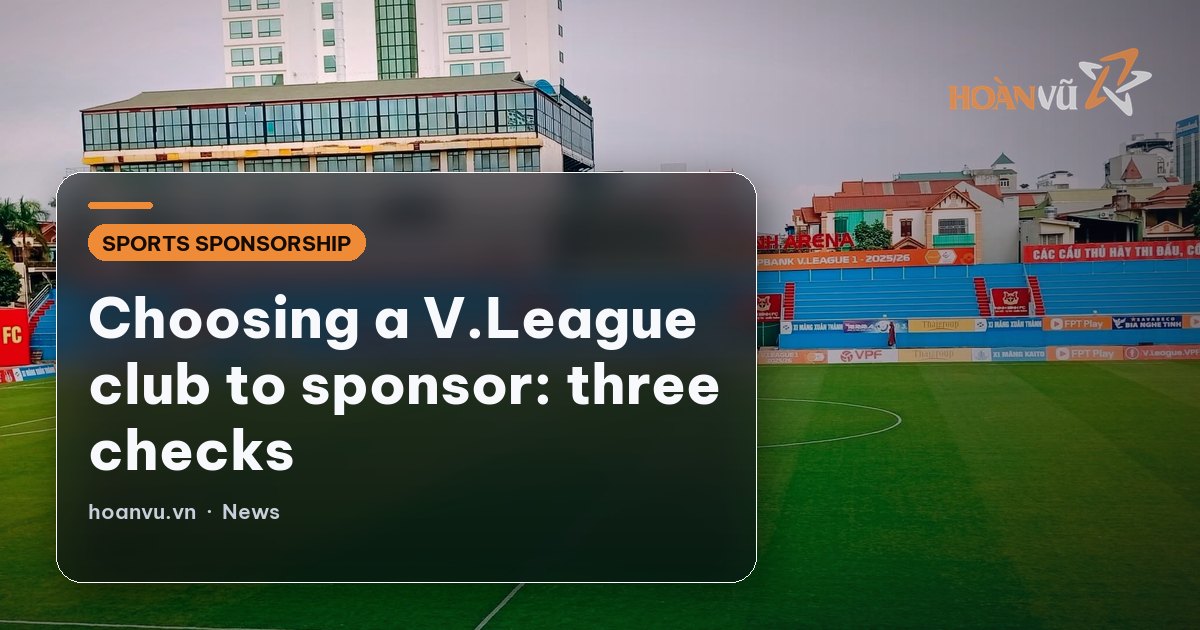
A brand signs the sponsorship deal, then the marketing team sends over a familiar artwork file: product shot, slogan, hotline number, website address. That file works on a billboard and on social media. Put it on a stadium perimeter LED strip and neither the crowd nor the camera can read it.
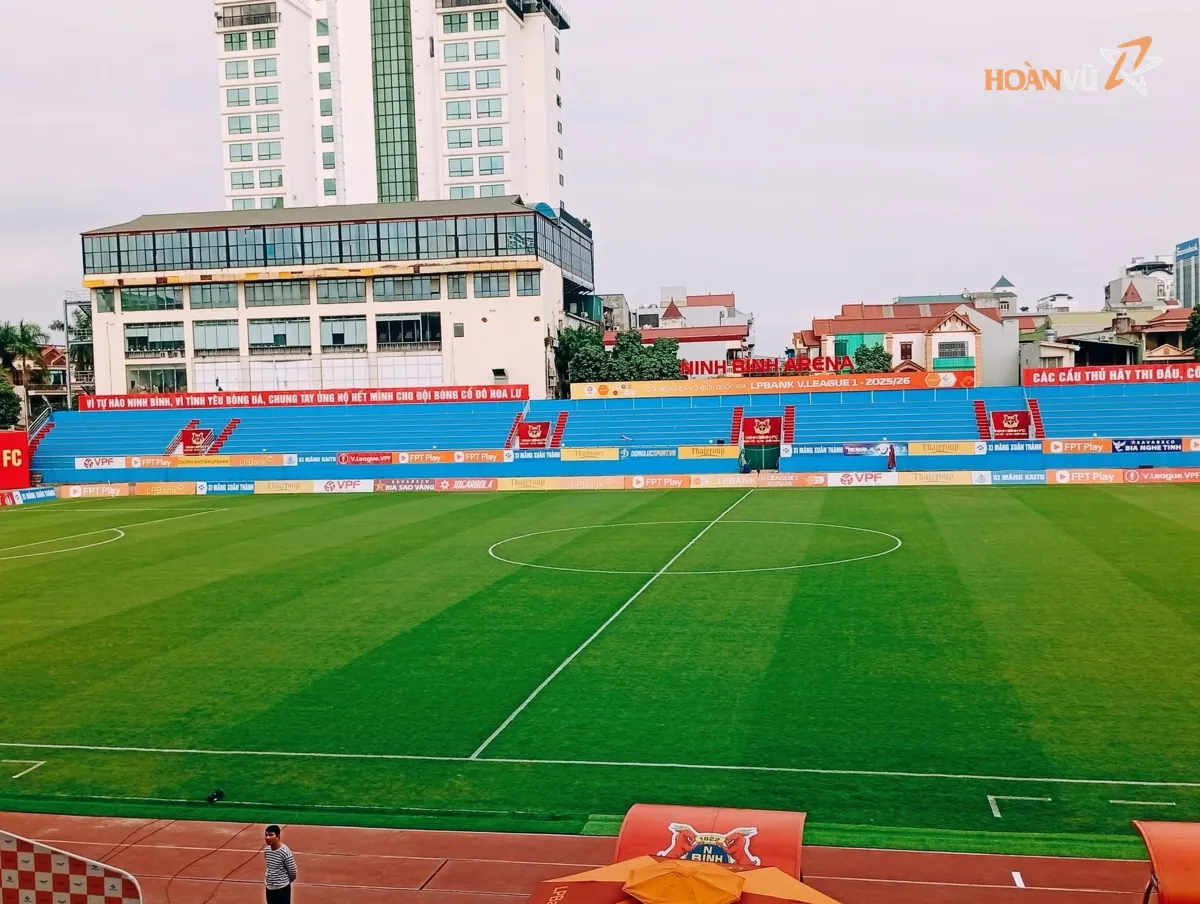
A perimeter LED strip is a very flat frame, tens of metres long and under a metre tall, running while cameras keep changing angle. Perimeter LED creative is therefore its own problem, not a shrunken billboard. Here is what a sponsor should prepare before the first match of the season.
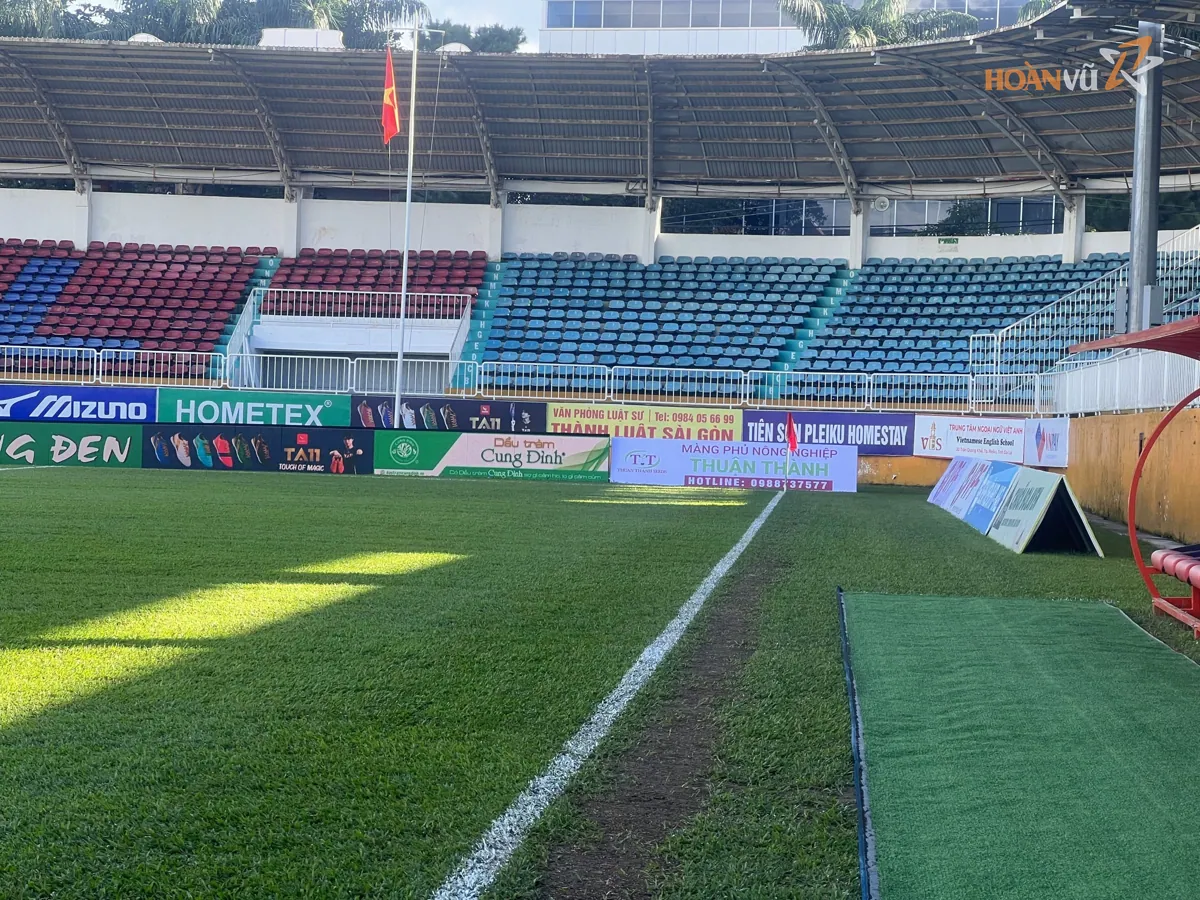
A perimeter strip is not a small billboard
A billboard is close to square, the viewer stands still and looks for a few seconds. A perimeter LED strip is the opposite: very long, very low, and its most important viewer is not the crowd in the stand but the broadcast camera.
One European competition's rules make the point. The perimeter LED system must be a single run, at least 80 cm high, fully visible from the main camera position, and the crossbar must not bisect the artwork. The competition also requires content to be legible under floodlights, with a test the evening before the match to match colours and calibrate the camera.
V.League does not apply that rulebook, but the craft logic is the same: content that cannot be read from the main camera loses part of the budget's value. Three things to drop from the file straight away are long descriptive copy, long phone numbers and product shots full of small detail.
Frame, type size and the numbers that matter
| Item | Reference | What it means for the file |
|---|---|---|
| Strip height | at least 80 cm under the European competition rules | a very flat frame, room for one or two lines of type |
| Pixel pitch | 6.25 mm on one stadium cabinet model | each metre of length equals about 160 pixels across |
| Sample cabinet | 1,600 × 960 mm, 1,600 × 900 mm display area, 256 × 144 pixels | ten cabinets give 16 m at 2,560 × 144 pixels |
| Brightness | up to 6,000 nits after calibration on that cabinet model | a large white field burns out easily on broadcast |
| Refresh rate | 7,680 Hz on that cabinet model | reduces banding and blur when a camera picks up the strip |
| Content rotation | around 30 seconds per slot by market practice | the viewer must finish reading in the first few seconds |
How to read the table: a 16 m run built from ten cabinets is only 144 pixels tall. A line of type that reads on television needs roughly half that height. So each frame holds one logo and one short phrase.
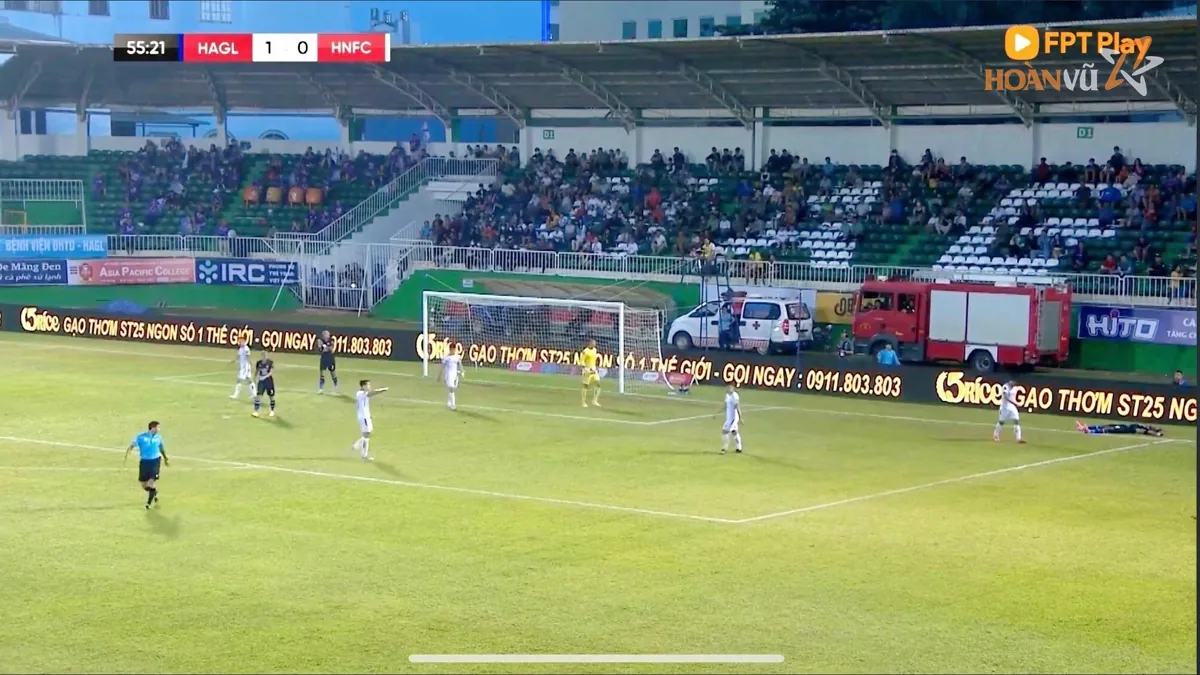
Rotation and sharing one strip between sponsors
In sports sponsorship, each display slot usually runs about 30 seconds. The strip can carry one brand across the full frame, split in two, split in four, or break down to as many as fourteen brands appearing together in every sequence.
The finer the split, the more brands get on screen, but each share of the frame narrows until only a logo fits. Pick the format from the objective: a brand reminder works in a small split, a new product needs the full frame.
Our article Football club sponsorship: rights packages and how to measure results covers the rights attached to each package in more detail.
Colour and brightness decide how it looks on air
The cabinet model above reaches 6,000 nits after calibration. That is enough to hold up in midday sun, and also enough for a large white field to burn out on an evening broadcast.
A few rules that are easy to apply:
- Avoid filling the frame with white, prefer a brand colour or a dark ground.
- Keep type and ground clearly separated, never thin type over a busy photo.
- Have a brand colour build calibrated for LED, because print colour and LED colour do not match.
- Keep transitions slow and avoid constant flashing, which smears on camera.
Refresh rate plays a part too: the cabinet model above runs at 7,680 Hz, which reduces banding and blur when a camera picks up the strip.
The content has to follow advertising law
Vietnam's amended Advertising Law was passed on 16 June 2025 and takes effect on 1 January 2026. It requires advertising content to be truthful, accurate and clear, and not misleading about features, quality or benefits. Notes, advisories and warnings must contrast with the background and must not be set smaller than the main content. Decree 342/2025/ND-CP sets out the detail for special product groups.
On a perimeter strip, the warning type-size clause is the hardest part. The frame is only a few tens of centimetres tall, so a product that must carry a warning leaves almost no room for the main message, which is why the strip is better used for brand identity.
Handing over content across the season
V.League 2026/27 has 14 clubs playing a double round robin over 26 rounds and 182 matches, from 4 September 2026 to 22 May 2027. A season-long sponsor therefore has dozens of appearances across nearly nine months, and the handover schedule should follow that rhythm.
- Before the season: send master identity files in vector form, a colour build calibrated for LED, and two content versions for daylight matches and floodlit matches.
- Before each block: send the match playlist, with the order and duration of each piece set out.
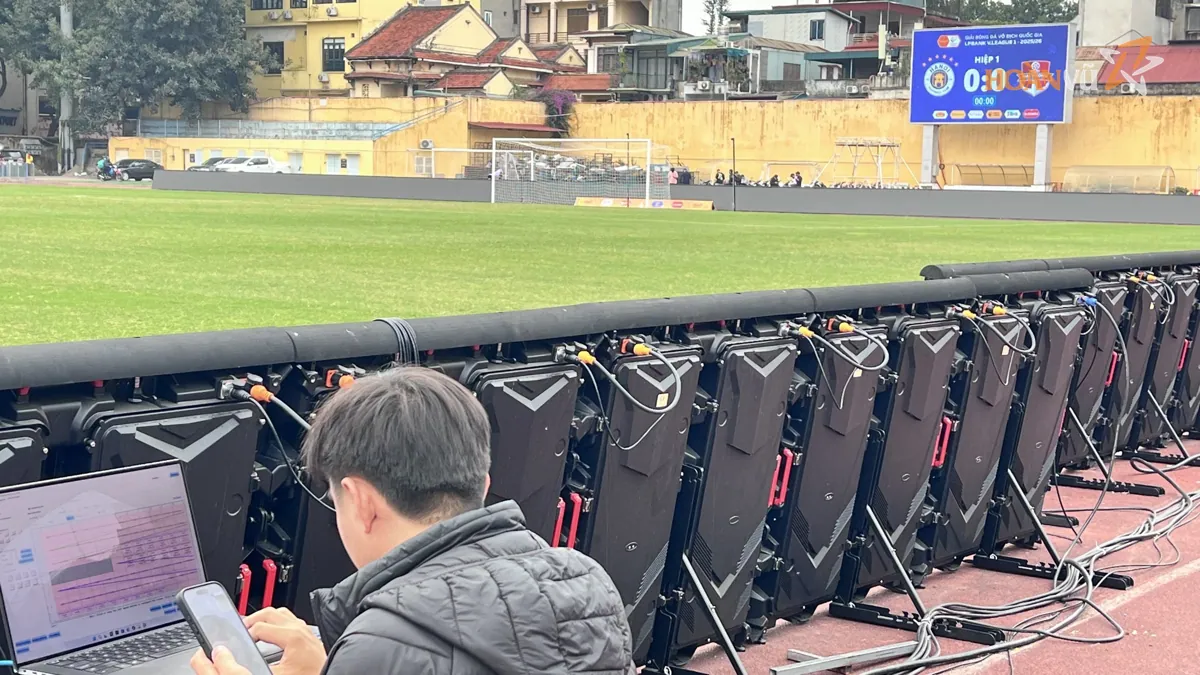
- Before the match: the technical crew loads the content, runs it on the actual strip, and photographs the frame for the brand to confirm.
- After the match: receive the acceptance record with photos and video of the content that ran.
Hoan Vu has worked in advertising since 2001, was incorporated as a joint stock company in 2010, and currently operates perimeter LED at four stadiums, Hang Day, Lach Tray, Binh Phuoc and Pleiku, working with six clubs across roughly 84 matches a season. Every match has a technical crew on site and an acceptance record with photos and video afterwards, so a brand can see exactly what ran. More under stadium LED solutions.
Frequently asked questions
How long should perimeter LED content be?
Market practice puts each display slot at around 30 seconds, and the viewer should finish the message in the first few seconds.
Do we need separate files for daylight and floodlit matches?
Yes. A brightness level that reads well in daylight looks harsh on an evening broadcast, so the crew needs a darker version for floodlit matches.
What file format should we send?
Send the logo in vector form plus video at that stadium's strip resolution, together with brand colour information. The technical crew rebuilds it to the real cabinet count of each venue.
Conclusion
A perimeter LED strip gives back exactly what the content puts into it: a flat frame, large type, solid colour, slow movement. Prepare properly before the season and each match is only a playlist load and an acceptance check. Brands or clubs wanting their content set reviewed before the next round can leave their details or call 0964 73 74 73.
Hoan Vu connects brands with clubs, builds packages and reports match by match.