At the start of each season, a brand's marketing team usually receives several club sponsorship proposals. Every deck looks good: a logo on the shirt, advertising boards, invitation tickets. The problem is that the budget covers one club, and whoever signs has to explain the choice.
This article does not rank clubs. It sets out three groups of checks a brand can verify before signing: home stadium infrastructure, attendance, and the match calendar together with broadcast coverage. These three decide most of the occasions on which a brand is actually seen.
Fix the objective before fixing the club
Sports sponsorship serves different objectives, and each objective points to a different club.
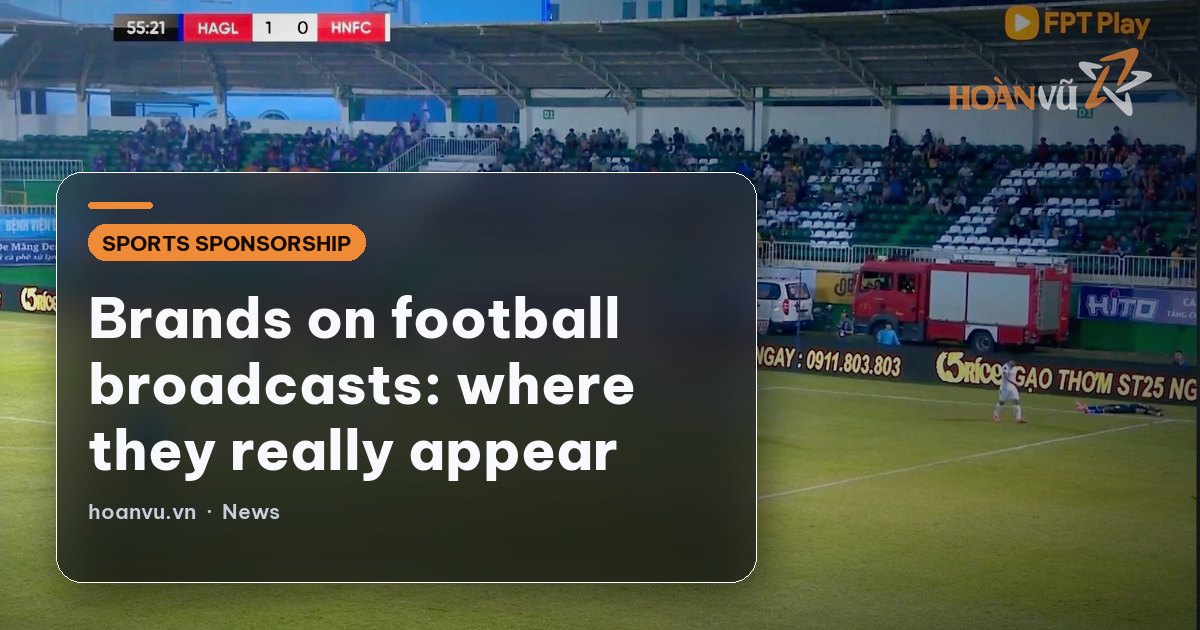
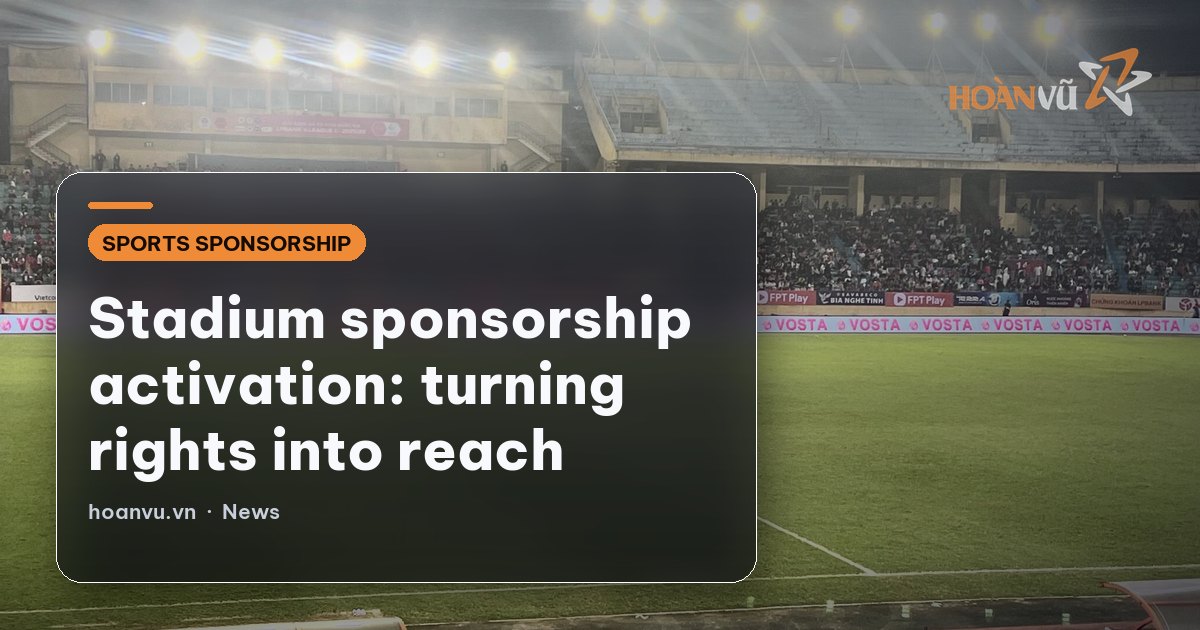
- National brand coverage: favour a club with more matches on widely distributed channels and clean perimeter LED inside the camera frame.
- Sales in one province or region: favour a club with steady attendance and room for activation around the ground.
- Recruitment and local relations: favour a club embedded in its community with regular community activity.
- Hosting partners: favour a stadium with VIP seating, a lounge and workable parking.
Write the objective in one line before reading any proposal. With that line in place, most of the later internal debate gets shorter.
Home stadium infrastructure decides most of the imagery
A rights package only has value when the home ground can deliver it. Things worth seeing in person rather than reading in a deck:
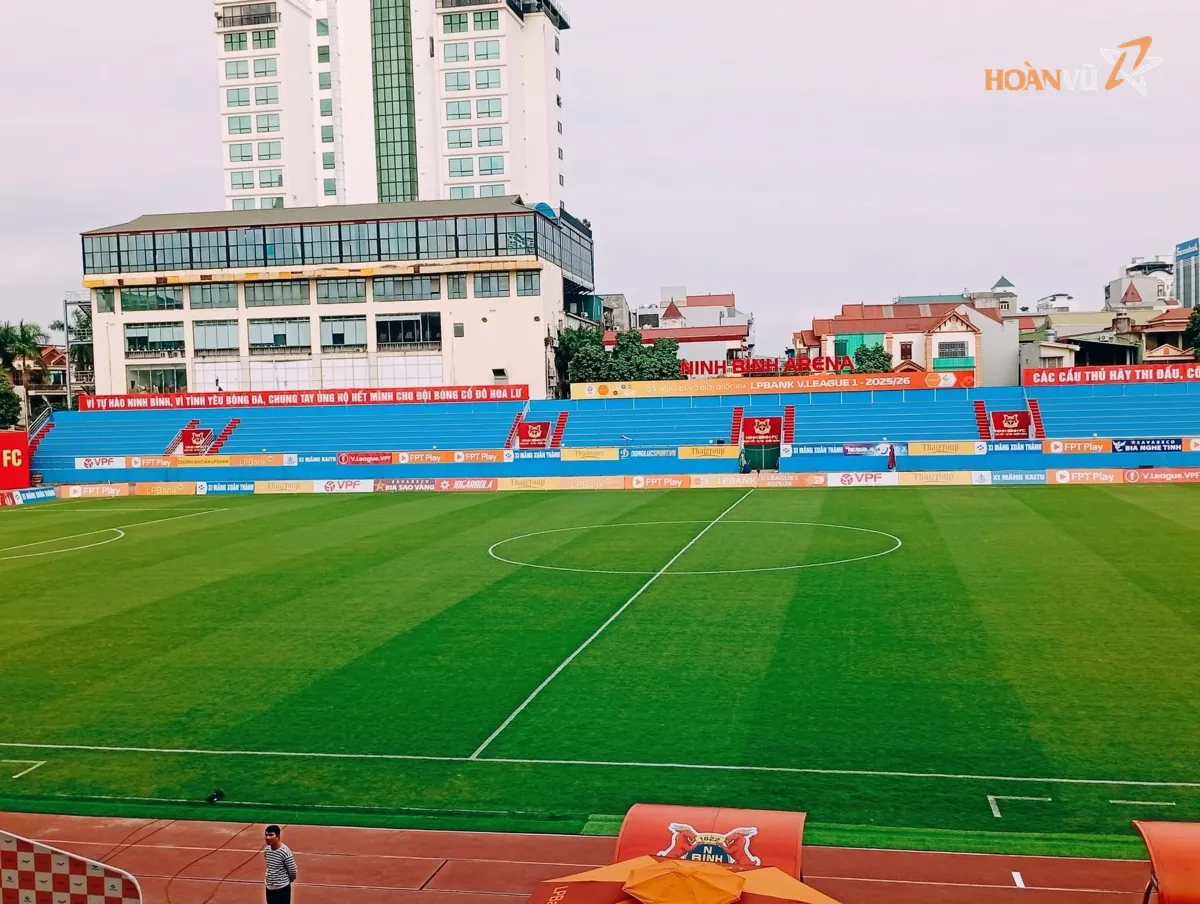
- Whether the running track around the pitch is wide and flat enough for a continuous perimeter LED run.
- Whether power at the ground is stable, with a dedicated panel for the display system rather than a temporary feed.
- Which stand the main camera sits in, and which LED run falls inside that camera's frame.
- Whether the scoreboard and big screen still work, and who operates the content on them.
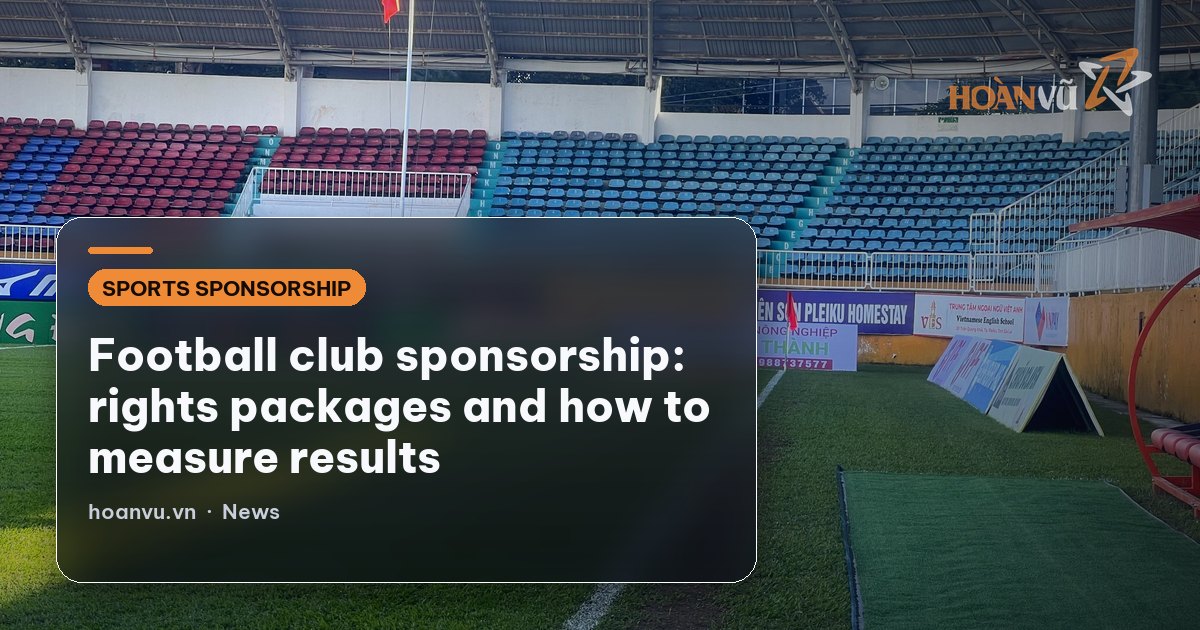
- How far the roof covers the stands, because weather directly affects how many people stay to the final whistle.
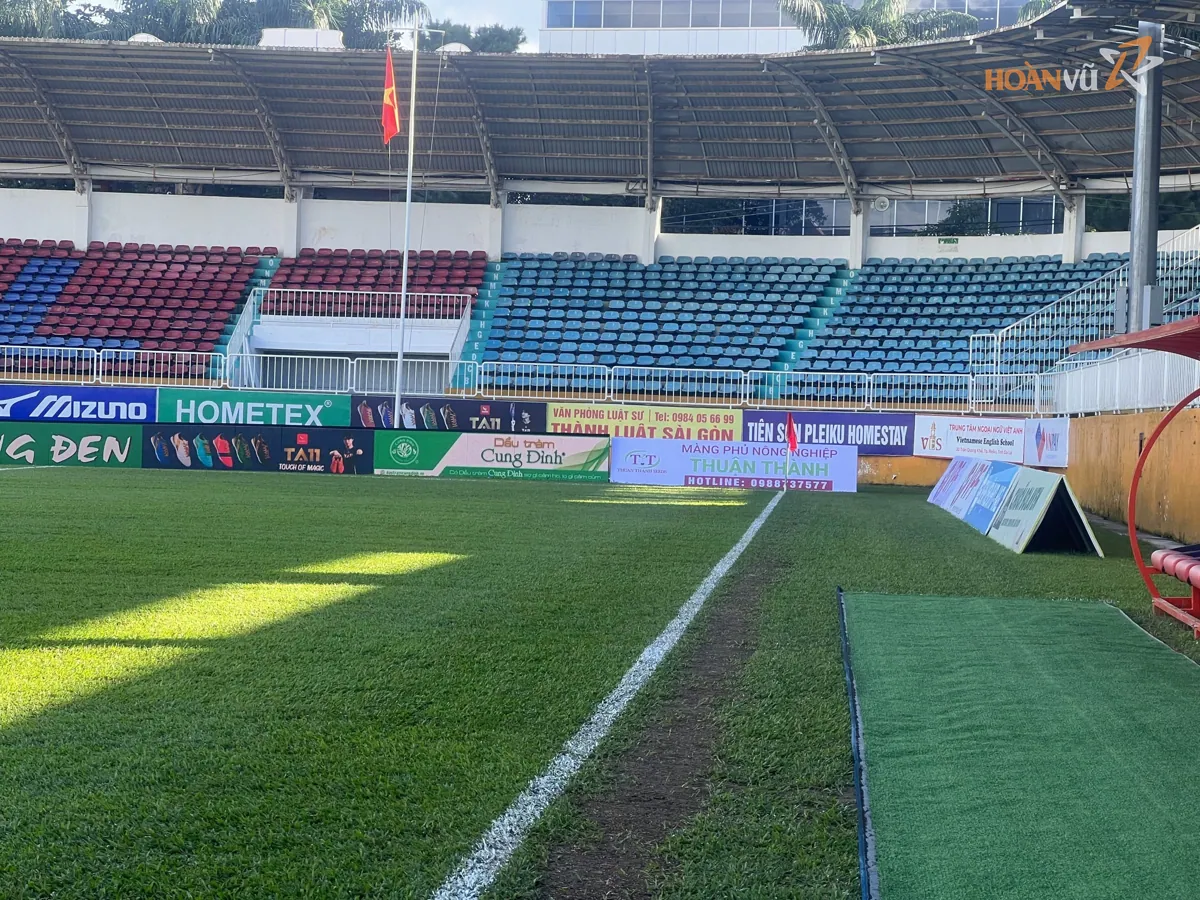
A ground with good infrastructure returns more impressions for the same budget. A ground without it makes the brand pay for temporary rigging, and that part produces no imagery.
Attendance: read the figures from the most recent season
Published league figures give a baseline for comparison. In the 2024-2025 season, V.League played 182 matches with a total of 945,000 spectators, an average of 5,192 per match; the best-attended match was Nam Dinh against Hong Linh Ha Tinh in the final round, with 25,000 people at Thien Truong. In the 2025-2026 season, round 23 recorded 37,500 spectators across 7 matches, more than 5,300 per match on average.
| Benchmark | Published figure |
|---|---|
| 2024-2025 season, total matches | 182 matches |
| 2024-2025 season, total attendance | 945,000 people |
| 2024-2025 season, average per match | 5,192 people |
| 2024-2025 season, best-attended match | 25,000 at Thien Truong |
| 2025-2026 season, round 23 | 37,500 across 7 matches |
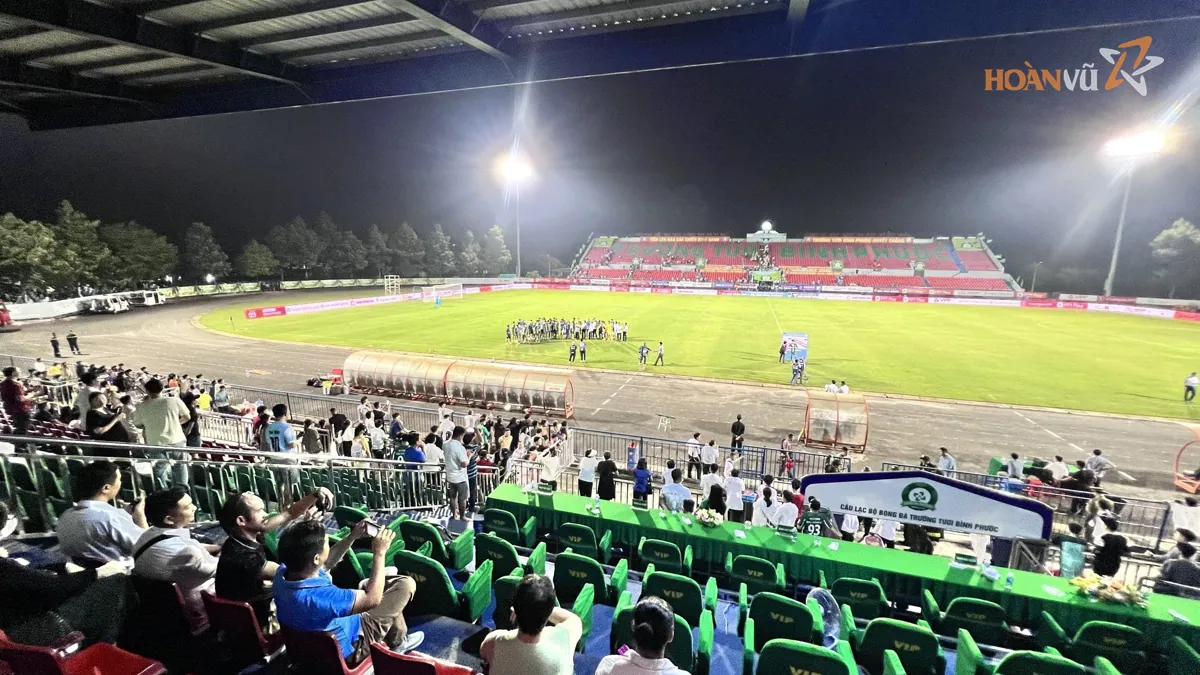
It is worth asking for a few numbers the club holds itself: occupancy by stand, the age profile of its crowd, and followers across its own channels. Those do not appear in league-wide statistics.
Match calendar and broadcast coverage
Most brand impressions come not from people in the stands but from people watching a screen. The match calendar is therefore part of the rights package.
The 2026-2027 season has 14 teams, opening on 4 September 2026 and closing on 22 May 2027. Each team may field up to 4 foreign players, two places are relegated directly, and VPF has 5 VAR units for the league. In round 1, every match was shown on FPT Play, with 2 matches also on HTV The thao and 1 also on VTV6; the 18:00 slot covered most of the fixtures.
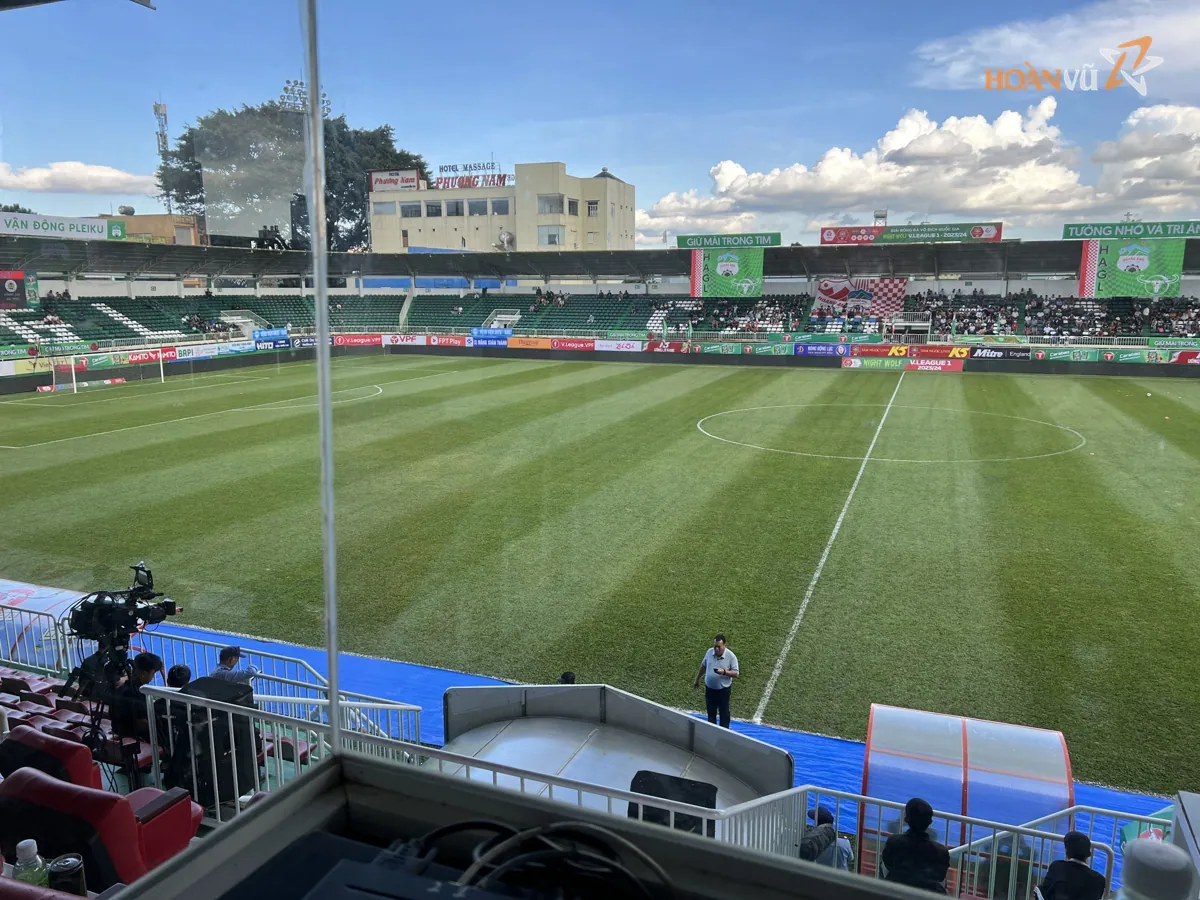
Three questions to put to each club:
- How many of its matches last season were carried on a widely distributed channel.
- Which slots its home matches usually fall into, weekend or midweek.
- Whether it has continental or national cup fixtures, which normally draw higher viewership.
A comparison table across clubs
When the choice is between two or three clubs, the cleanest approach is a table filled in with the same set of questions for each.
| Criterion | What to check | Where it comes from |
|---|---|---|
| Stadium infrastructure | Running track, power, scoreboard | On-site survey |
| In-frame visibility | Which LED run enters the main camera | Last season's match footage |
| Attendance | Recent-season average and spread | League figures, club statistics |
| Broadcast | Matches on wide channels, time slots | Last season's broadcast schedule |
| Club digital channels | Follower count, engagement level | The club's official pages |
| Activation space | Booth positions, spectator flow | Stadium layout, survey |
| Post-match reporting | Photos, video, acceptance records | Contract and annexes |
The table also works as an internal document. Budget approvers rarely argue about instinct, but they will ask about each line in a table.
What to settle before signing
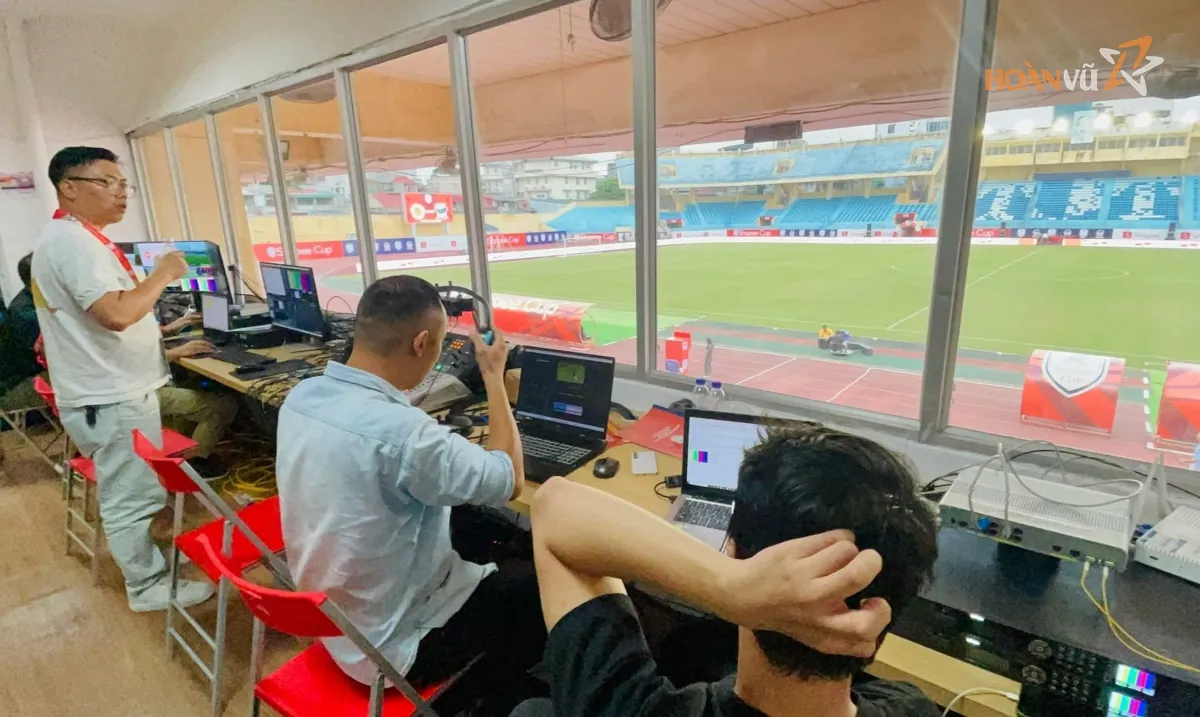
The part most often skipped in a sponsorship contract is how delivery of the rights gets confirmed. Settle who operates the display system, who keeps the evidence, and how soon after each match the report arrives.
Hoan Vu has worked in advertising since 2001 and became a joint stock company in 2010. It currently operates perimeter LED at 4 grounds, Hang Day, Lach Tray, Binh Phuoc and Pleiku, working with 6 clubs across roughly 84 matches a season. Each match has a technical crew on site, and after the match there is an acceptance record with photos and video. Brands can look at the stadium LED solution to see how the display side is organised, and read football club sponsorship: rights packages and how to measure results to compare against the package on offer.
Frequently asked questions
Should we pick the club with better results or the bigger crowd?
The two do not always go together. If the objective is local sales, attendance and activation space usually matter more than league position.
Do we need to visit the stadium before signing?
Yes. A proposal describes the rights, but the running track, the power supply and the camera positions can only be judged in person.
How do we know the rights were delivered in full?
Put a post-match reporting requirement into the contract, covering photos, video and an acceptance record, with a deadline for delivery. Without that clause, checking afterwards is very hard.
Conclusion
Choosing a club to sponsor is a matter of reading figures and walking the ground, not instinct. Stadium infrastructure, attendance and broadcast exposure are enough to compare proposals on the same basis. For advice on the display side at a stadium, brands can leave their details or call the hotline 0964 73 74 73.
Hoan Vu connects brands with clubs, builds packages and reports match by match.