Brands sign club sponsorship by the season: so many matches, so many advertising rotations, so many broadcast slots. A V.League season rarely runs exactly as the plan signed in August. Home grounds can change, matches can move a day, and a whole second half of the season can shift by weeks. That is where football club sponsorship risk actually sits, and most of it can be handled if the contract anticipates it. Below are the three operational risks brands meet most often, based on current regulations and on what has already happened in the 2026/27 season.
Three risks brands meet most often
| Risk | What it looks like | Effect on the brand | How to handle it |
|---|---|---|---|
| Venue change | Match moves to another ground, possibly another province | Different crowd at the ground, different stand visibility | Write down how rotations are made up and signed off |
| Date or time change | Match slips a day, or kick-off moves for broadcast | Seasonal creative falls out of step, activation staff rebooked | Set a minimum notice period and the right to swap creative |
| Calendar shift | Second half of the season runs earlier or later than planned | Budget lands in another quarter, campaign misses the sales season | Count delivery by matches actually played, not by month |
Changing the home ground: what the rules say
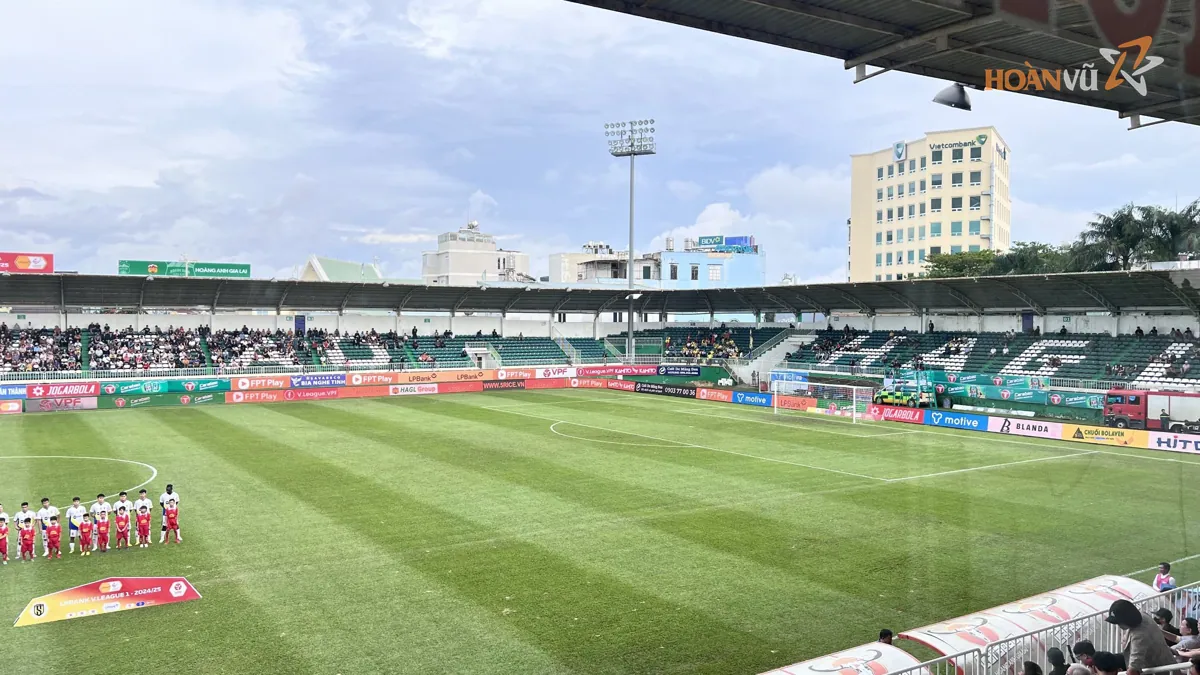
Under the National First Division (V.League 2) Regulations 2026/27, issued by VPF on 26 August 2026, each club registers one home stadium in the same province or city as its head office. Using a ground outside that province requires a written explanation sent to the Vietnam Football Federation, and a change of ground only happens with the approval of VPF and the Federation.
Article 22.3 is explicit: if a ground fails the standard, is suspended, or cannot meet conditions because of natural disaster or weather, the club must find another ground itself and must be cleared by the Competition Organising Committee. Any defects must be fixed no later than 07 days before the first match.
V.League 1 has its own regulations, issued the same day in the same decision package, so a sponsorship contract should be read against the regulations of the competition the club actually plays in.
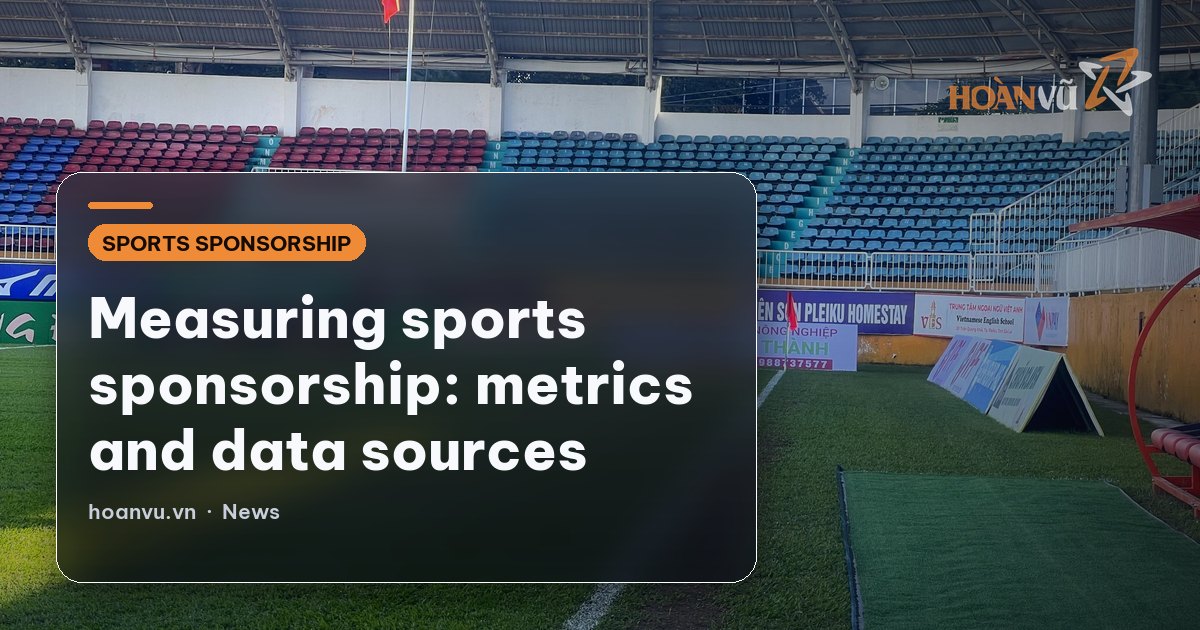
The 2026/27 season already has a clear example. Prolonged heavy rain left the Pleiku pitch in poor condition, so Hoang Anh Gia Lai's National Cup qualifying match against Hung Yen on 20 September 2026 was moved to Quy Nhon stadium. The round 3 V.League match against SHB Da Nang at 17:00 on 10 October 2026 was also played in Quy Nhon, after the Competition Organising Committee accepted the club's proposal.
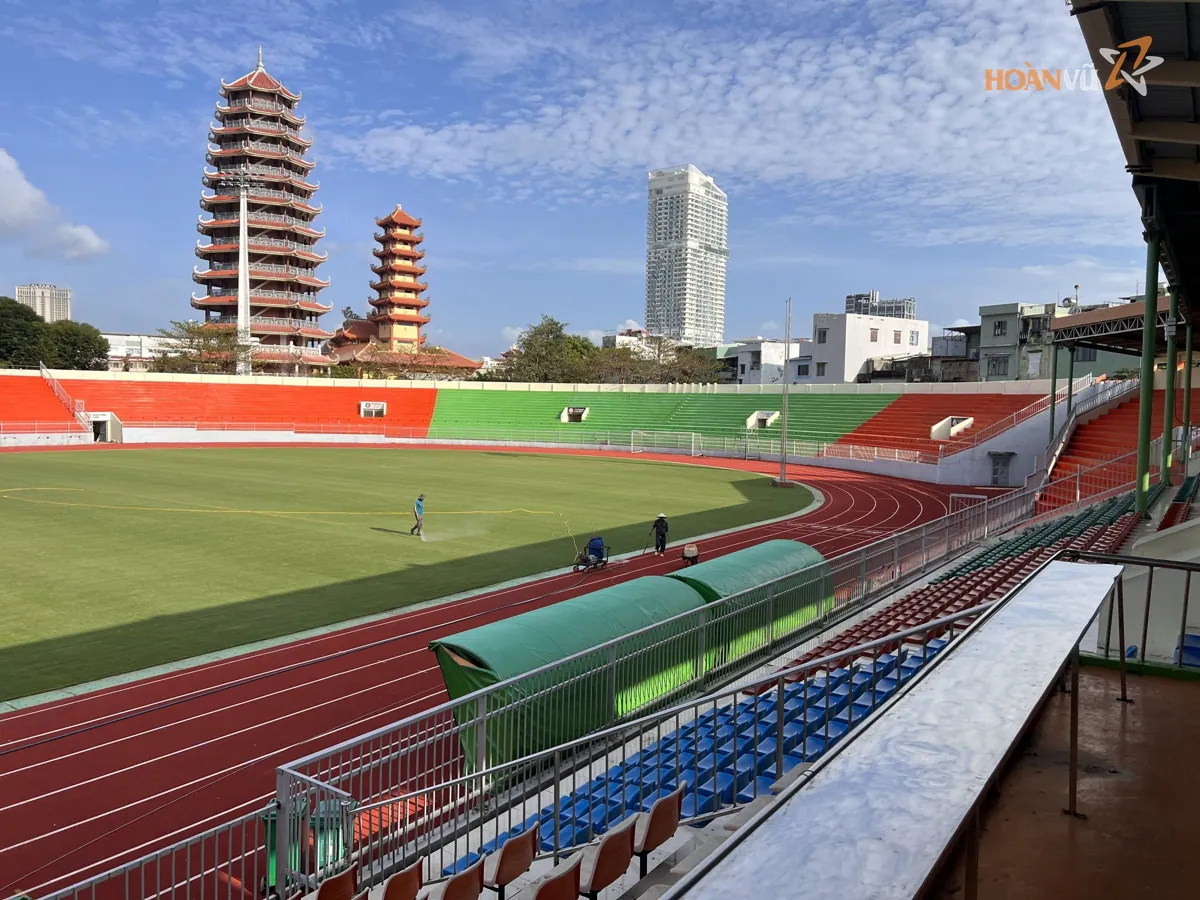
For a brand, a relocated match does not remove the rights, but the setting changes: different stands, different capacity, different home support. A contract that only states a number of advertising rotations, with nothing about venue, leaves both sides renegotiating mid-season.
Postponed matches and whole-phase calendar shifts
Article 20 gives the Competition Organising Committee the right to move individual matches to fit the national team calendar, live broadcast scheduling, or other necessary cases. The new schedule replaces the old one.
Kick-off times also sit in a window: grounds without floodlights play from 15:30, or from 15:00 in poor weather, grounds with approved floodlights play from 16:00, and only the Competition Organising Committee may adjust this.
On a larger scale, an entire phase can move. On 12 November 2026 VPF circulated a proposal to adjust the final 13 rounds, because AFC changed the timing of the 2027 Asian Cup finals. Under that proposal the V.League second half would run from 9 January 2027 to 9 May 2027, around two weeks earlier than the 22 May 2027 end date in the old calendar, with clubs asked to comment before 19 November 2026. This is still a proposal, so brands should follow the official announcement rather than locking budget to calendar months.
Last season also saw a move for a non-football event: The Cong Viettel against Becamex HCMC slipped from 29 August 2025 to 19:15 on 30 August 2025, tied to the National Day parade.
On the operations side, every move means building again
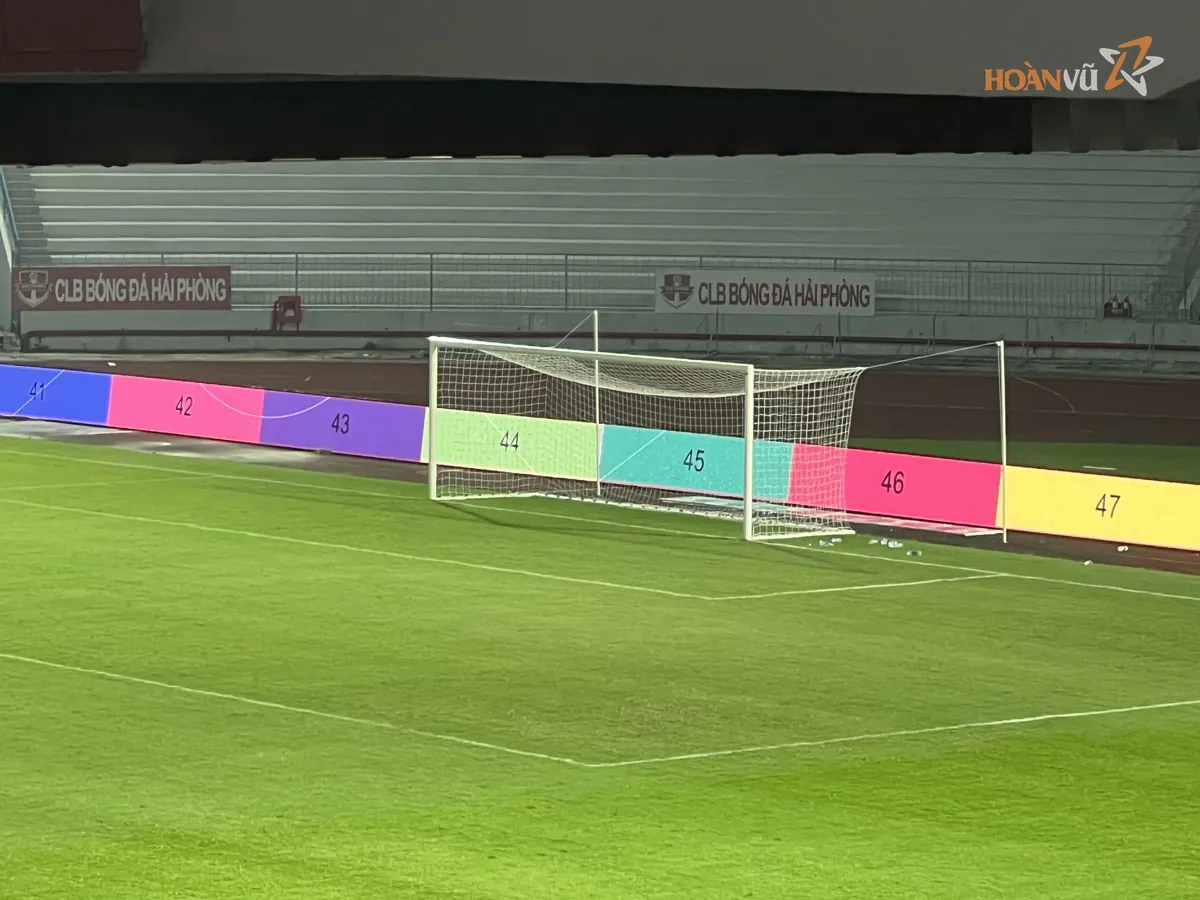
A relocated match is not just a new line on a schedule. The perimeter LED strip has to be dismantled, packed, transported, rebuilt, powered, checked cabinet by cabinet, then test-run with the content at the new ground. The regulations require ground preparation to be complete by 10:00 on match day, with match service items finished no later than 120 minutes before kick-off. That window is tight when the equipment has just travelled a long way.
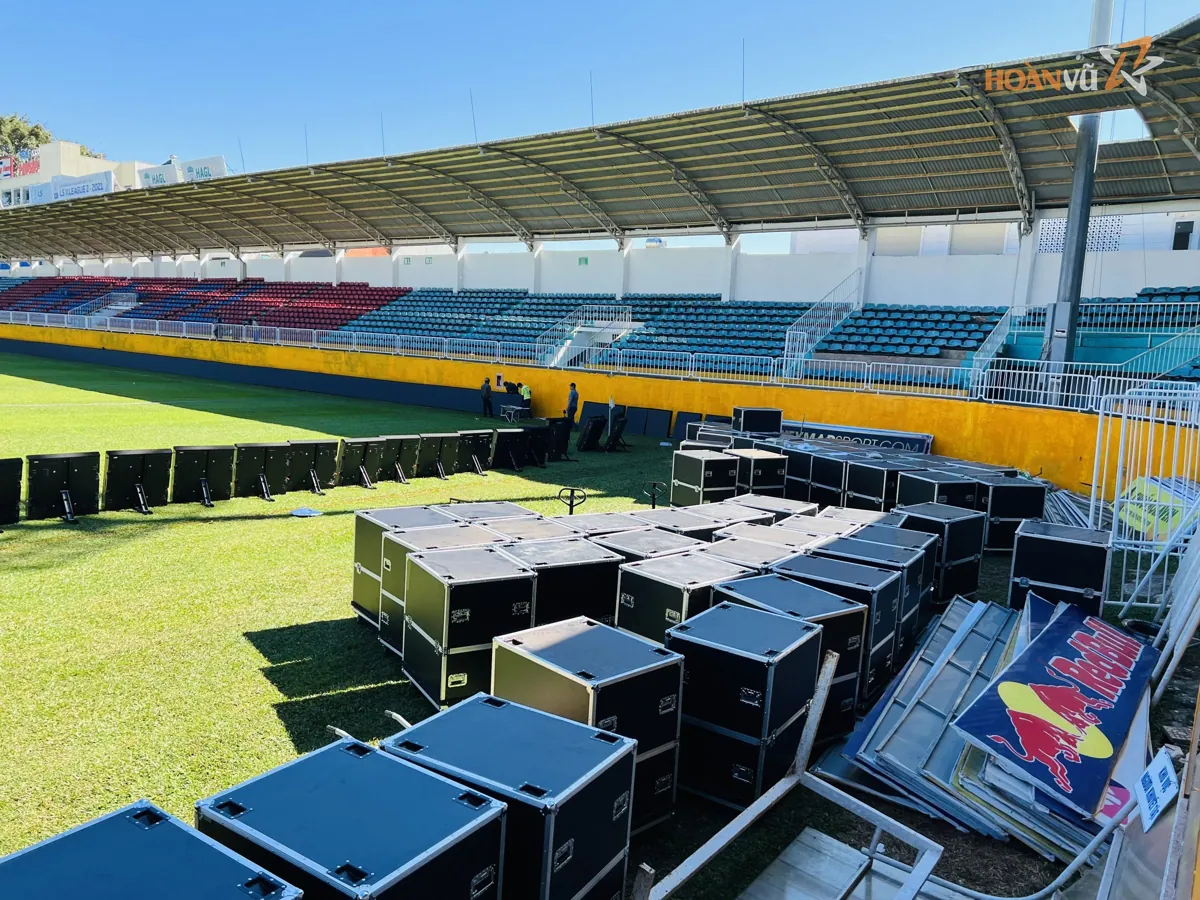
Hoan Vu has worked in advertising since 2001 and became a joint stock company in 2010. It currently runs perimeter LED at four grounds, Hang Day, Lach Tray, Binh Phuoc and Pleiku, alongside six clubs and around 84 matches a season. Each match has a technical crew on site, and each match ends with a sign-off record including photos and video, which is what a brand checks against when a match is relocated or moved. See stadium LED solutions.
Clauses worth settling before signing
- Unit of delivery: count by matches actually played in the season, not by calendar month.
- Venue change: how rights are preserved, who carries the extra cost, what record signs the work off.
- Notice period: the minimum days a club must give when a match moves date or kick-off time.
- Right to swap creative: if the calendar shifts into another quarter, the brand may change the content to match its season.
- Make-good: if a match cannot be played, which match or which channel carries the rotations instead.
- Category exclusivity: the First Division regulations state a club may not place advertising in the same product category as the principal advertiser without VPF approval.
For more detail, see football club sponsorship contract clauses to settle.
Frequently asked questions
Does a sponsor lose advertising rotations when a match is relocated?
In principle the rights stand, because the match is still played. What changes is the setting and the operating cost, so the contract should state the treatment in advance.
How much notice must a club give before changing ground?
The regulations set no single deadline for every situation, only that the Competition Organising Committee must clear the change. The notice period therefore belongs in the sponsorship contract itself.
If the calendar shifts, how should budget be recalculated?
The safe approach is to tie budget to matches actually played and allow creative to be swapped by quarter.
Conclusion
Football club sponsorship risk is mostly operational risk, not a question of media value. Changed grounds, moved dates and shifted calendars all have precedent this season, and all of them can be handled with a few clauses and a tight enough sign-off file. To work through it for next season, leave your details or call the hotline 0964 73 74 73.
Hoan Vu connects brands with clubs, builds packages and reports match by match.