Many brands treat a club sponsorship as finished the moment the contract is signed. At the end of the season, the question of what the money bought has no numerical answer. Measuring sports sponsorship is therefore not a reporting formality. It decides whether the deal is renewed, at what level, and which rights get traded for which.
This article covers three things: which metrics to fix up front, where reliable data actually comes from, and the rhythm a report should follow.
Why the data field is usually blank
This is not a Vietnam-only problem. McKinsey, in Is sports sponsorship worth it? dated 1 June 2014, cites industry research indicating that roughly one third to one half of US companies have no comprehensive system for measuring sponsorship returns.
The Marketing Accountability Standards Board, or MASB, published Sponsorship Accountability Guidance in August 2019 with a survey of 182 practitioners: 37% reported a standardised measurement process, 53% reported none, and 10% were unsure.
Three common reasons. Metrics get discussed after signing, so nobody collects baseline data. The numbers come from the rights seller with no independent check. And both sides look only at a single media-equivalency figure, which says nothing about revenue.
Four tiers of sponsorship data reliability
MASB ranks sponsorship data reliability in four tiers, from property-provided numbers up to financial attribution. The table below reads those tiers for a club sponsorship in Vietnam.
| Tier | Where the data comes from | What it answers | Weakness |
|---|---|---|---|
| 1. Property provided | The club or rights operator reports it | How many impressions | No cross-check |
| 2. Independently verified | Sign-off records, play logs, post-match photos and video | Whether those impressions were real | Costly to collect each match |
| 3. Media equivalency | Compared with buying equivalent advertising | What it would cost elsewhere | Says nothing about revenue |
| 4. Financial attribution | Sponsorship data joined to sales data | What the money turned into | Needs long data and a model |
MASB describes tier four as the hardest and least common. A sponsorship does not have to reach it in year one. But staying at tier one means that when renewal talks come, neither side holds anything but impressions of impressions.
Five metrics to fix before signing
McKinsey proposes five metrics. Translated for sponsoring a V.League club:
- Cost per reach. Total spend divided by the number of people who actually saw it, with total spend including both rights fees and activation. McKinsey recommends a quarterly review, and favouring the right target group over a large headline number.
- Unaided awareness per reach. Survey before and after the season, without prompting the brand name, on the same population.
- Sales or gross margin per unit spent. McKinsey offers two routes: tie spend to qualitative measures such as unaided awareness and purchase intent, then track their effect on sales; or build an econometric model on a long data series to separate sponsorship from other marketing activity.
- Long-term brand attributes. A qualitative read on which attributes the association with a club is building, such as local roots or persistence.
- Indirect benefits. Partner hospitality, local relationships, balance-of-trade commitments. McKinsey notes this part is often either neglected or overstated.
One more figure from the McKinsey piece is worth putting in the budget: for every USD 1 spent on rights, companies typically spend another USD 0.50 to USD 1.60 on activation, per IEG data from 2011. With zero activation budget, every metric reads badly, and the club is not the reason.
Data sources that exist in the V.League
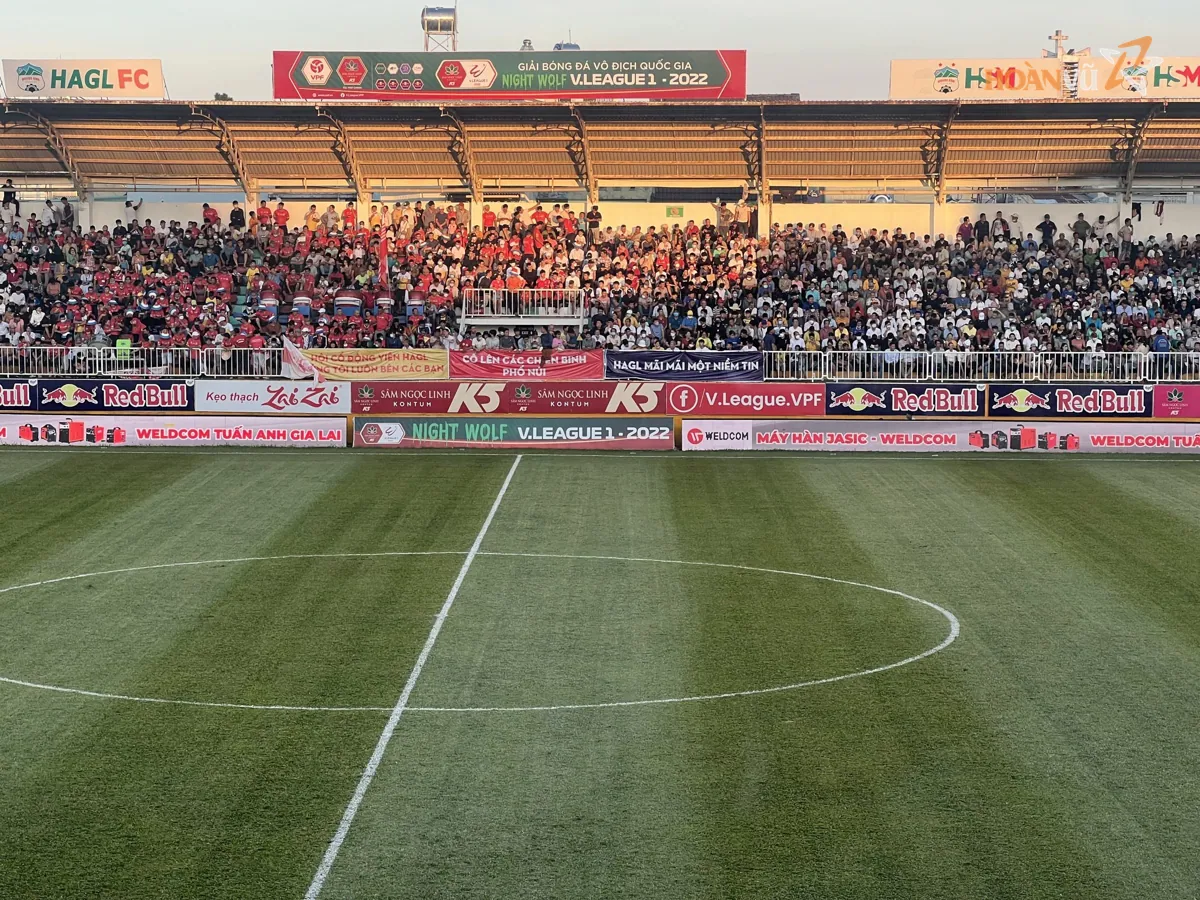
Stadium attendance. Round 1 of V.League 2026/27 had 7 matches and about 64,000 spectators, an average of 9,142 per match, per Bao Phap luat Viet Nam on 7 September 2026. Bao Van hoa on 9 September 2026 gave the same total and a figure above 9,100 per match. The match at Vinh stadium was the best attended in that round, at about 12,000. Viet Nam News on 24 August 2026 quoted a broadcast partner representative saying total stadium attendance last season passed one million.
That is enough to compute cost per in-stadium reach. It also shows the spread between venues is wide, so applying a league average to one specific club is wrong from the start. The number to use is the number from the venue the contract actually runs at.
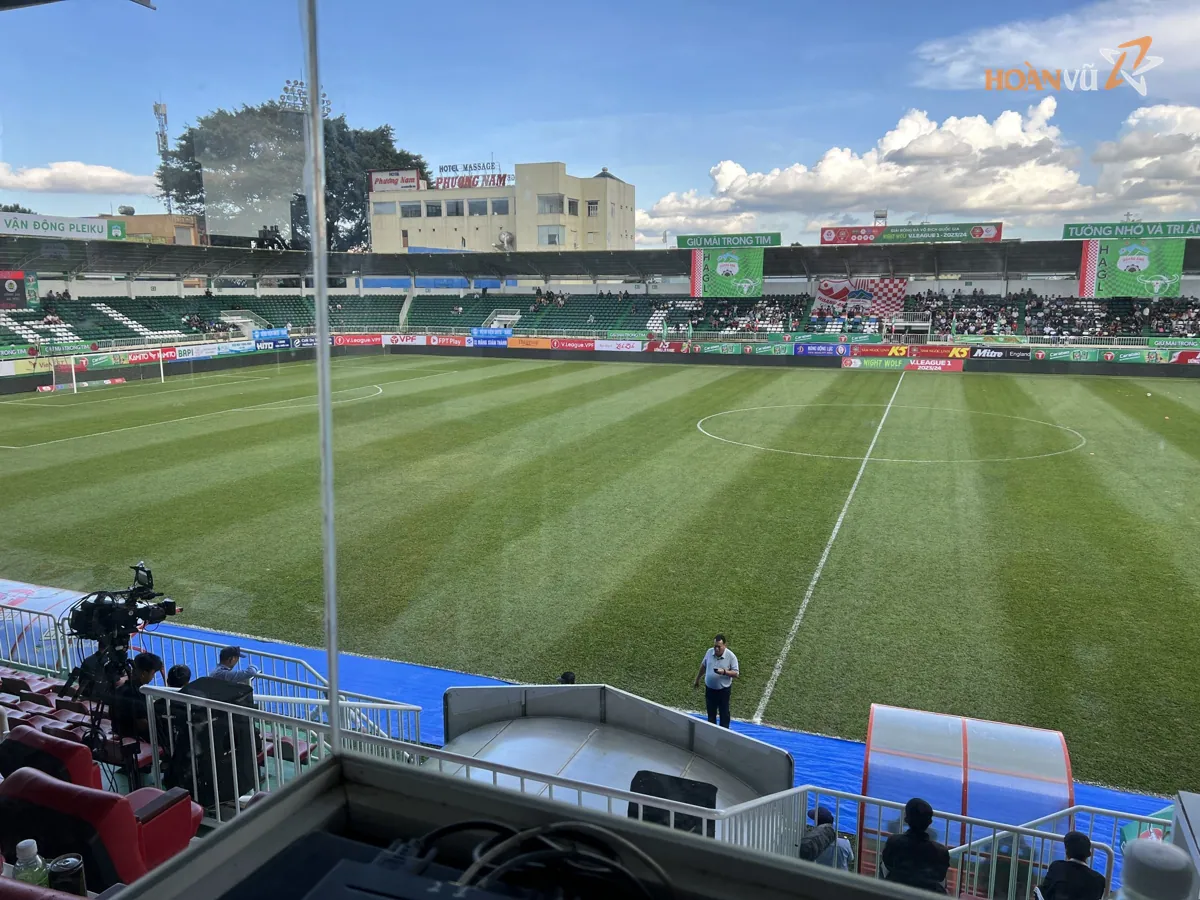
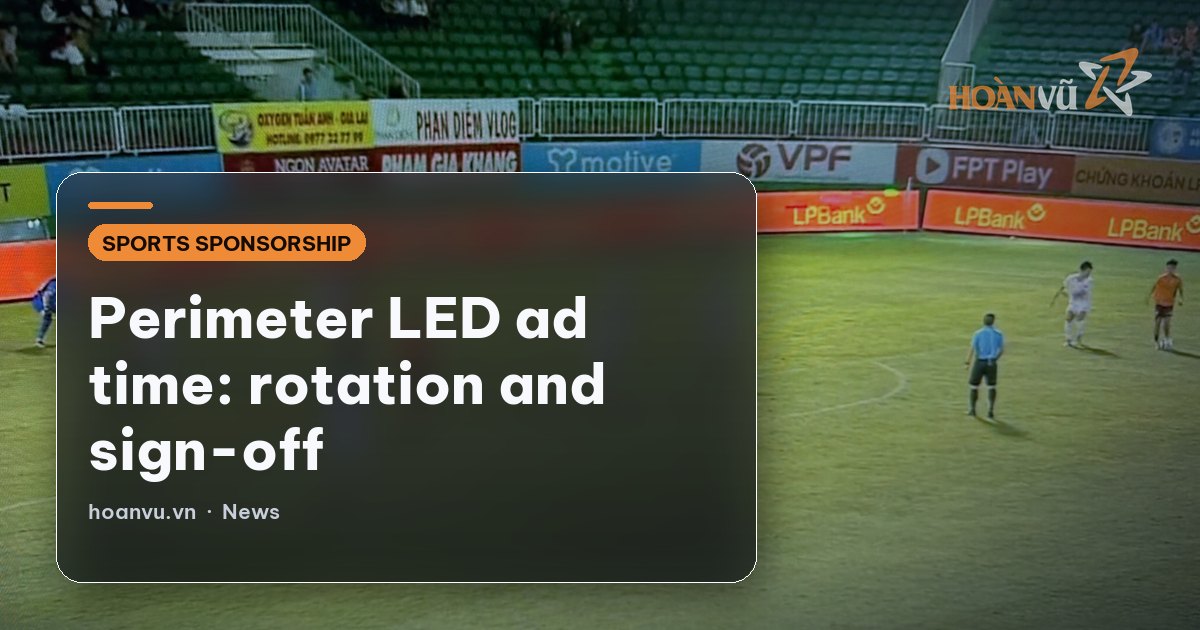
Broadcast and digital. For 2026/27, LPBank is the main sponsor of V.League 1 and FPT Play is the broadcast partner, per Viet Nam News on 24 August 2026; the season runs from 4 September 2026 to 22 May 2027. For a brand, broadcast needs its own count: how many matches were carried, and how long the creative was genuinely inside the frame. Both differ from total board time.
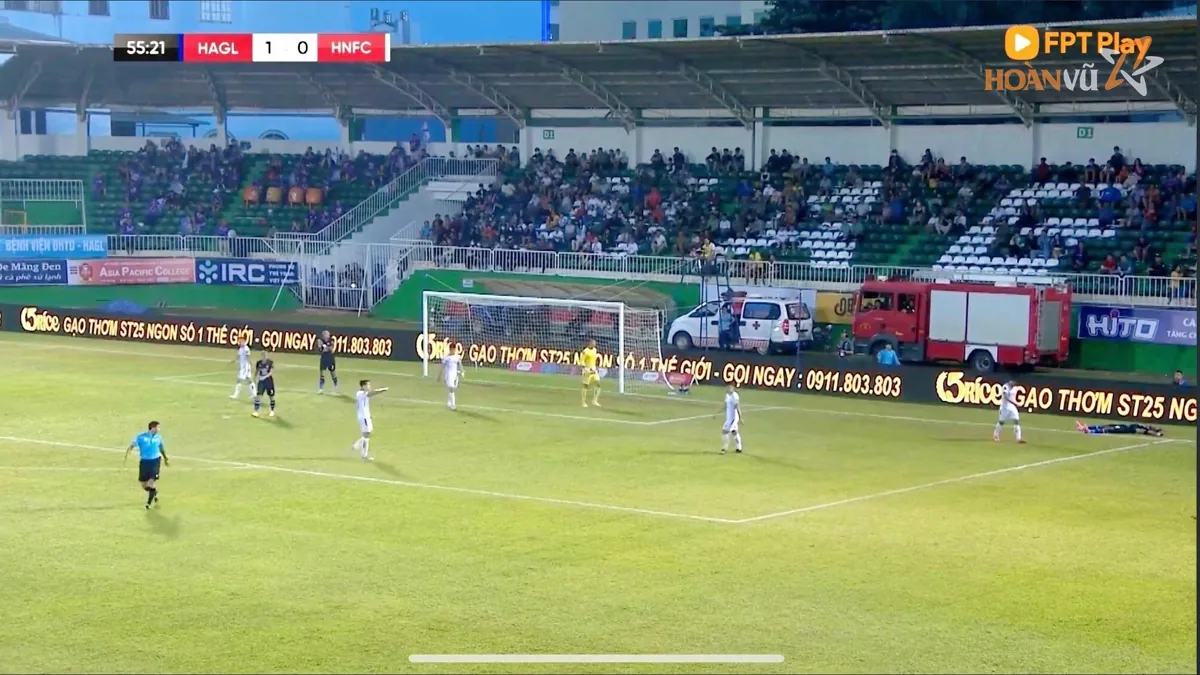
Match-day operations data. This is the part a brand can verify most tightly, because it has physical evidence: the rotation schedule for each match, the control system play log, and photos and video of what went on the boards. If that set arrives complete after every match, the contract already sits at tier two with no extra measurement cost.
A reporting rhythm for the season
| Point | What to do | Output |
|---|---|---|
| Pre-season | Fix metrics, take baselines, run the awareness survey | Metric sheet and baseline data |
| After each match | Collect play logs, photos, video, that match's attendance | Per-match sign-off record |
| End of first half | Total the impressions, compute cost per reach, review creative | Mid-season report and adjustments |
| Season end | Repeat the survey, compare sales by territory | Season report and renewal basis |
The rhythm matters because it forces data collection to happen alongside the match. Going looking for photos and logs at the end of the season means most of the evidence is gone.
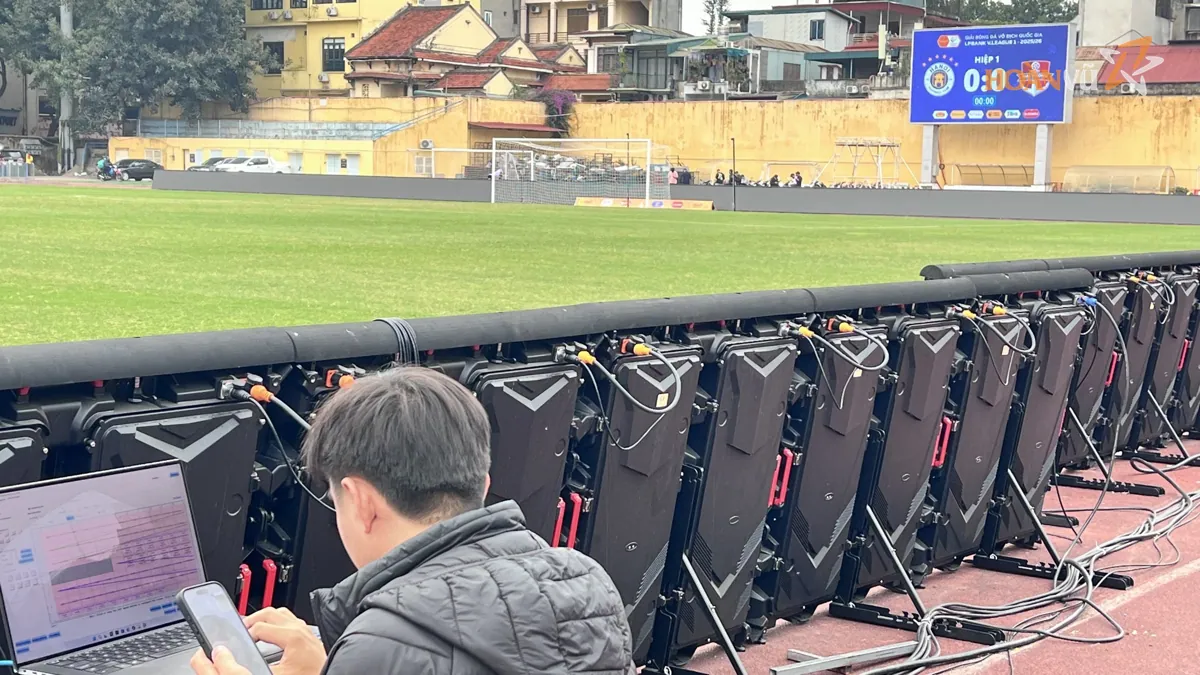
Hoan Vu has worked in advertising since 2001 and became a joint stock company in 2010. It currently operates perimeter LED at four venues, Hang Day, Lach Tray, Binh Phuoc and Pleiku, works with six clubs across roughly 84 matches a season, and puts a technical crew on every match with a post-match sign-off record including photos and video. That operations record is exactly where a brand builds tier two, instead of receiving one unverifiable total at season end. Technical detail sits under stadium LED solutions, and how rights are structured is covered in club sponsorship rights packages.
Frequently asked questions
When should sponsorship measurement start?
Before signing. Baseline data on brand awareness and sales by territory is what makes the end-of-season figure mean anything. Fixing metrics after signing leaves no starting point.
Is media equivalency value trustworthy?
It answers one narrow question: what equivalent exposure would cost on another channel. MASB places it below financial attribution, so it works as a reference point and not as a final result.
What should a brand require after each match?
The rotation schedule as run, the control system play log, photos and video of what appeared on the boards, and that match's attendance. Those four belong in the contract as reporting obligations rather than goodwill.
Conclusion
Measuring sports sponsorship does not need a complex model in year one. It needs three things: metrics fixed before signing, evidence collected during the match, and numbers read at their actual tier of reliability. Brands or clubs wanting to build a measurement framework for next season can leave your details or call the hotline 0964 73 74 73.
Hoan Vu connects brands with clubs, builds packages and reports match by match.