Many brands sign a football club sponsorship and only then notice the contract covers perimeter LED, a shirt logo and a few tickets. The club's digital channels, where fans stay long after the final whistle, are left blank. When the internal report is due, marketing has little to show beyond photos of an advertising board.
This piece gathers the digital rights worth putting on the table, which of them a club can actually sell, and what the new advertising law requires once sponsored content runs online.
Digital is no longer a side benefit
DataReportal's Digital 2026 report puts Vietnam at 85.6 million internet users at the end of 2025, or 84.2% of the population, and 79.0 million social media user identities as of October 2025. On advertising reach, the published figures are 79.0 million for Facebook, 62.1 million for YouTube and 76.1 million adults aged 18 and over for TikTok. The report states these are platform advertising-reach numbers, not active user counts, so they serve only as an estimate of coverage.
On the league side, V.League 2026-2027 has 14 teams playing a double round robin over 26 rounds, broadcast live on the FPT Play system including its app and fptplay.vn, with some matches also on HTV Thao or VTV6. The season runs from 4 September 2026 to 22 May 2027, with FPT Play as broadcast partner and LPBank as title sponsor.
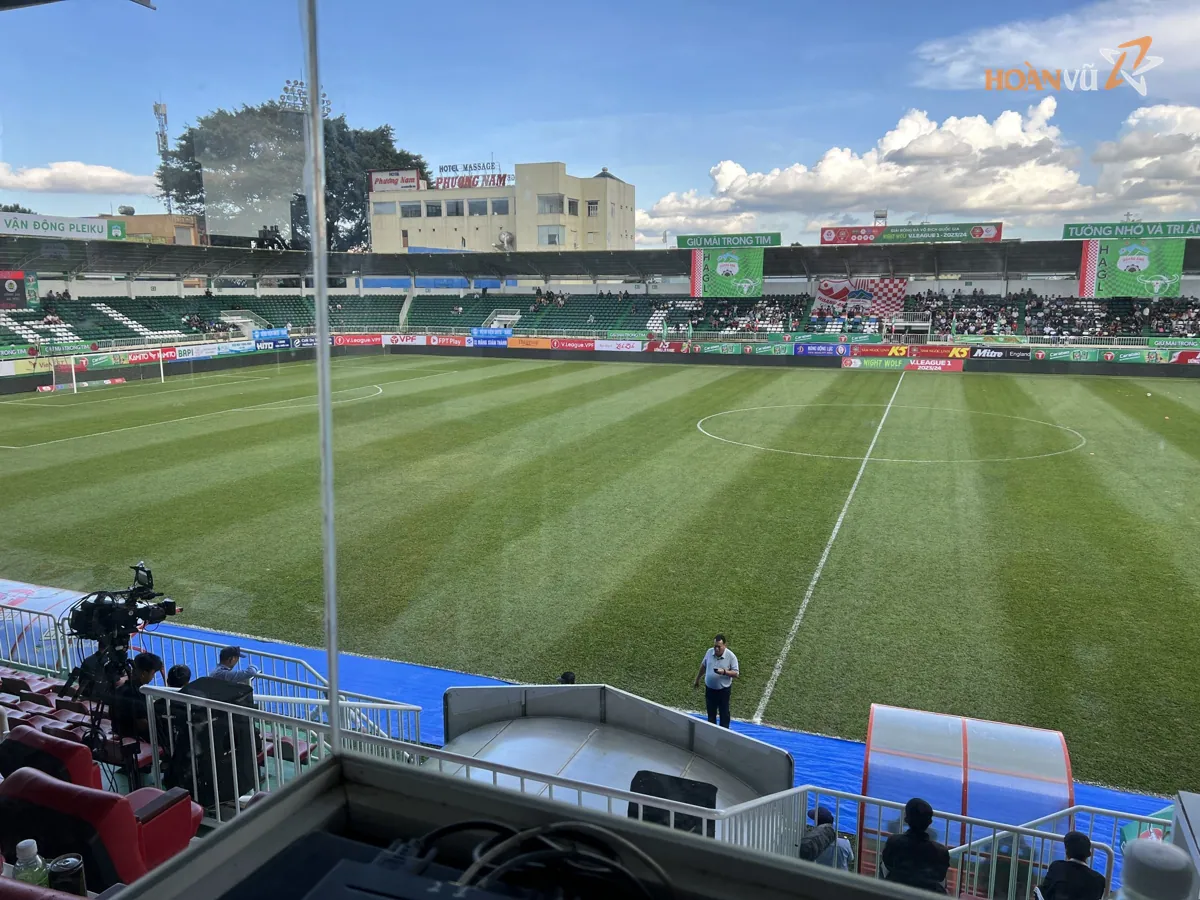
So one match now produces three layers of audience: people in the stadium, people on the live stream, and people watching short cut-downs on social platforms. A contract that speaks only to the first layer leaves the other two unused.
Digital rights to put in the contract
Most post-signature arguments come from the two sides reading the same sentence differently. The cleanest fix is to split digital rights into groups and attach numbers to each.
| Rights group | Usual format | Spell out |
|---|---|---|
| Club community page | Sponsor introduction posts, logo posts, match-day posts | Posts per month, posting window, who approves |
| Club video channel | Opening or closing logo board, highlights, behind the scenes | Logo position, on-screen duration, which videos |
| Club livestream | Press conferences, signing ceremonies, content with the squad | Number of sessions, who produces, who keeps masters |
| Content shot at the ground | Photos and clips of the LED board, crowd atmosphere | Who shoots, delivery deadline, file formats |
| Advertising inside the feed | Insert boards, overlays on the league signal | Sits with the rights holder, ask before promising |
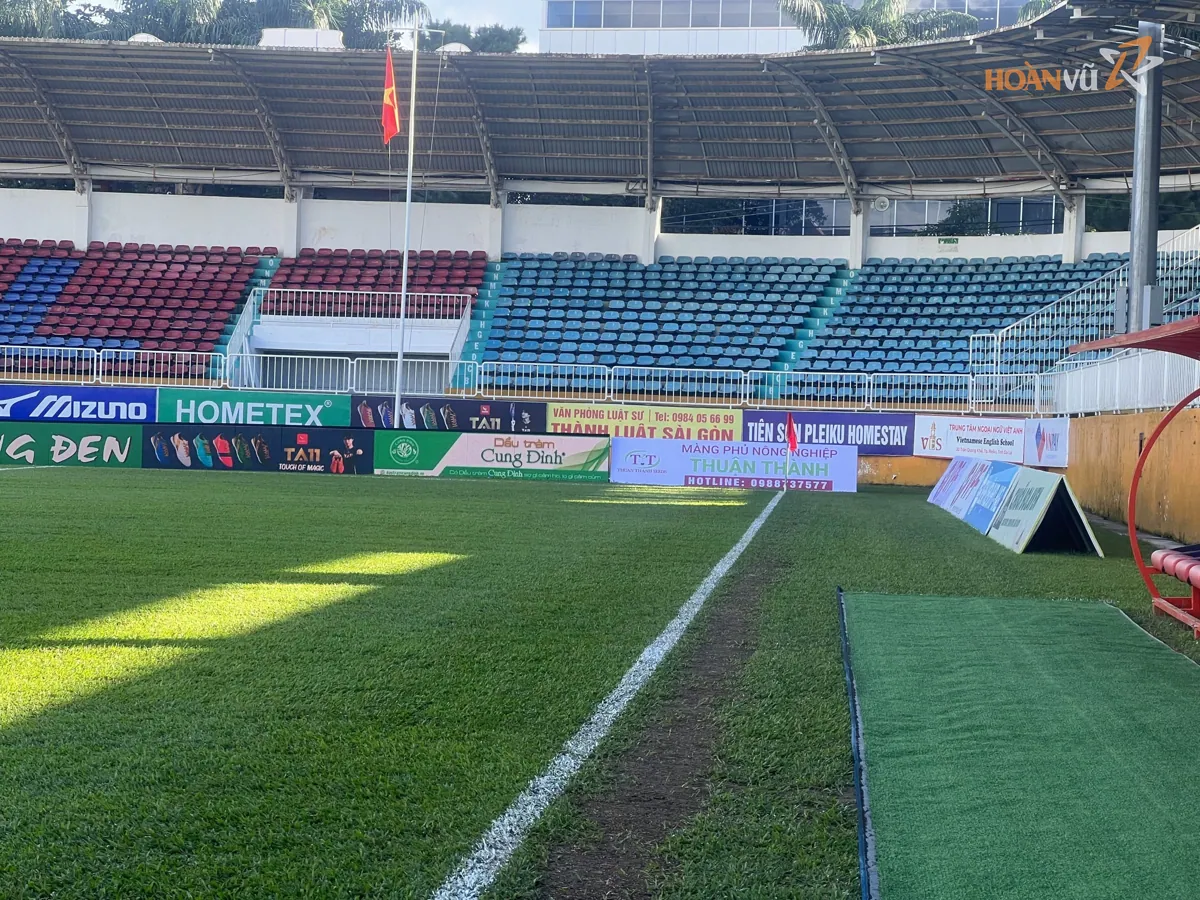
A line such as "promotion across club channels" cannot be measured. Replace it with "four posts per month on the community page, two of them within 24 hours of a home match" and both sides know what they owe.
What the club can sell, what belongs to the league
This is where plans tend to break. Rights on club channels are the club's to grant. The match signal, the live pictures and the right to re-use that signal sit with the league's rights holder. A brand that wants an overlay inside the feed, or wants to cut its own highlights from the signal, has to go through the rights holder, not the club alone.
The safest and most measurable part for a brand remains content produced by the club and the sponsor themselves: photos, short clips, interviews, behind-the-scenes material. None of it depends on the league signal, it can be made all year, and it can be reused on the brand's own channels.
The new advertising law and sponsored content online
The law amending and supplementing the Advertising Law was passed on 16 June 2025 and took effect on 1 January 2026. According to an analysis in the People's Court Journal, the online advertising provisions carry a few points that bear directly on sponsored content:
- Online advertising must carry a clear identifying marker, in text, symbol, image or sound, so viewers can tell it apart from non-advertising content.
- Advertising outside a fixed area must offer a feature or icon letting viewers close it, decline it, or report violating content.
- Social media users who publish advertising must mark it as distinct from the other content they post.
- Violating advertising must be taken down within 24 hours of a request from the competent authority.
For a sponsorship contract, those four points translate into three tasks: agree how sponsored posts are marked, name who is responsible for content on which channel, and settle the takedown procedure in advance. Leave the procedure vague and a request will cost several days of asking around.
Who produces it and how it is handed over
Digital rights only pay off when someone makes the content on time. At the ground, that work usually falls to the match-day technical crew, because they are already there and know the run of play.
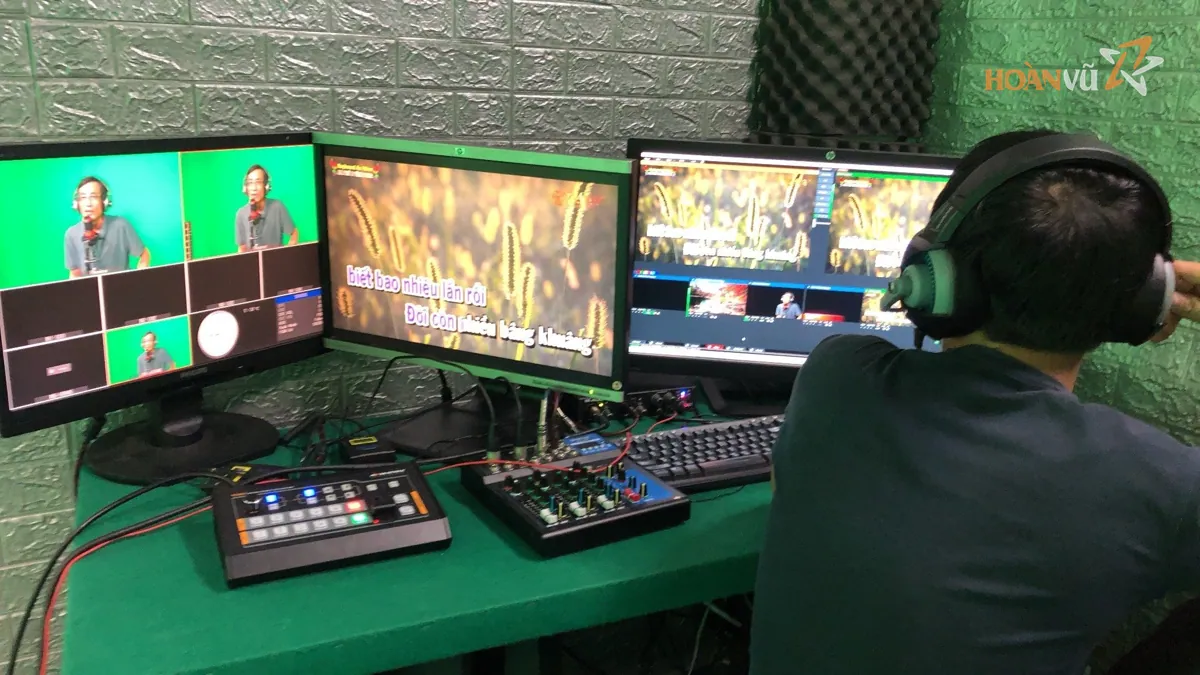
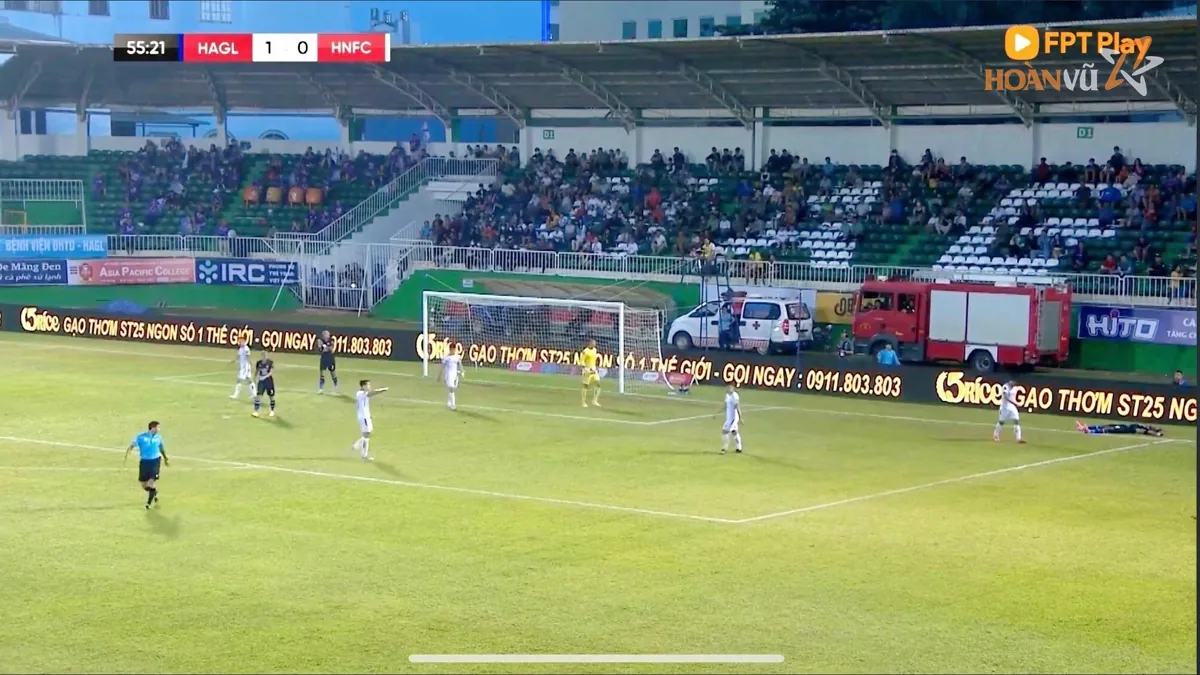
Hoan Vu has worked in advertising since 2001 and became a joint stock company in 2010. It currently operates perimeter LED at four grounds, Hang Day, Lach Tray, Binh Phuoc and Pleiku, alongside six clubs across roughly 84 matches a season. Each match has a technical crew on duty, and each match ends with a sign-off record including photos and video. That record is exactly the material a brand needs for the digital side. Beyond football, the event, liveshow and livestream lines include a green-screen studio used to produce signing, interview and product content. Details sit under stadium LED solutions.
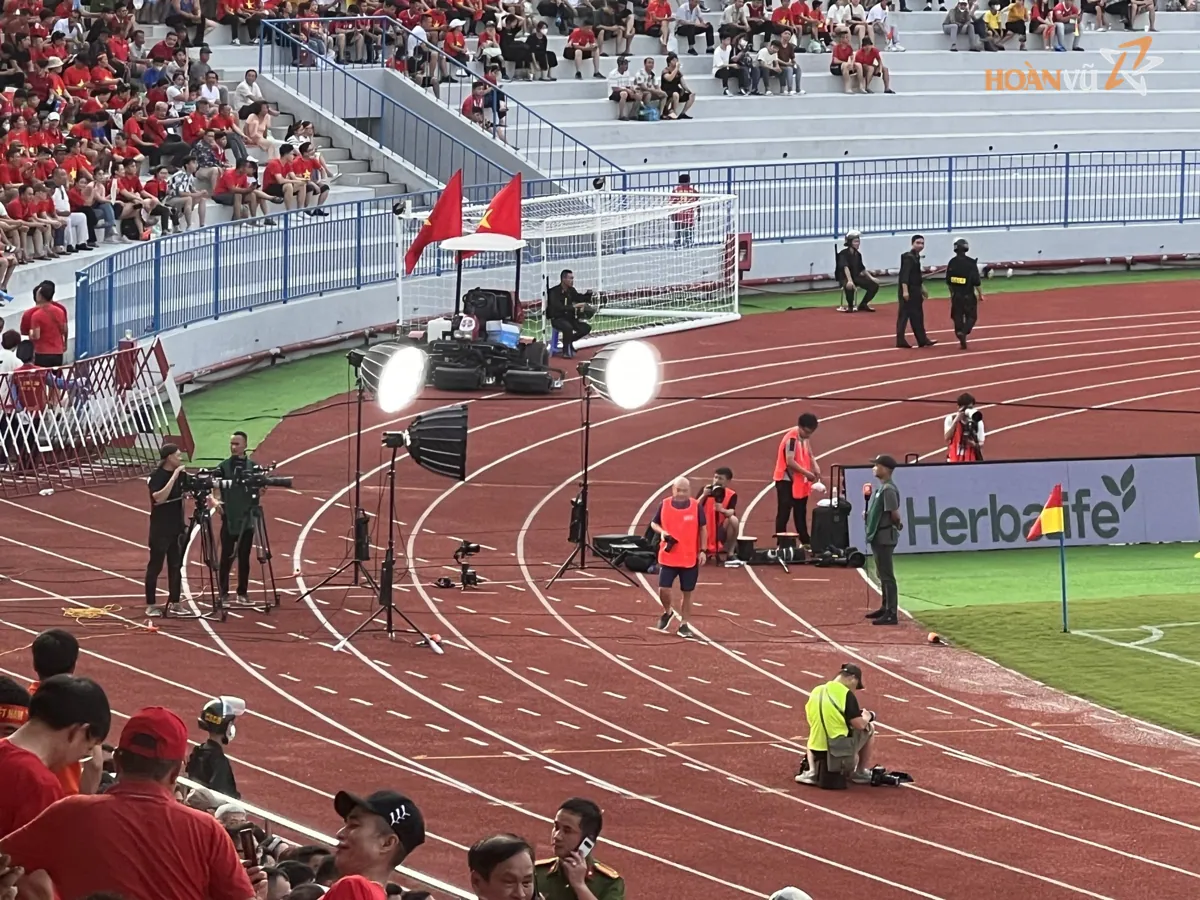
On handover, fix three points: how soon raw files arrive after the match, who edits the published version, and what the report contains. Written once into the contract, they save a season of reminders.
Frequently asked questions
Can digital rights replace perimeter LED at the ground?
No, the two serve different purposes. Perimeter LED is tied to the match and the broadcast signal, while digital channels hold the audience after the whistle. Brands usually run both, with the digital content drawing on the match itself.
Who owns the rights to match footage?
The match signal and the right to re-use it belong to the league's rights holder, not the club. Photos and clips shot at the ground by the club's or the sponsor's own crew are agreed separately, but still follow the organiser's rules on filming inside the stadium.
Which metrics should digital rights be measured by?
Agree on a few metrics with a checkable source, such as posts published, video views and logo on-screen duration. How to choose metrics and data sources is covered in Measuring sports sponsorship: metrics and data sources.
Conclusion
The digital section of a sponsorship contract is not difficult, it just has to be written in numbers rather than adjectives: how many posts, on which channel, produced by whom, delivered when, measured how. Add the advertising marker and takedown procedure required since the start of 2026, and the contract gets shorter and quieter.
To review the digital rights in your own sponsorship plan, leave your details or call the hotline 0964 73 74 73 so the crew can go through it ground by ground.
Hoan Vu connects brands with clubs, builds packages and reports match by match.