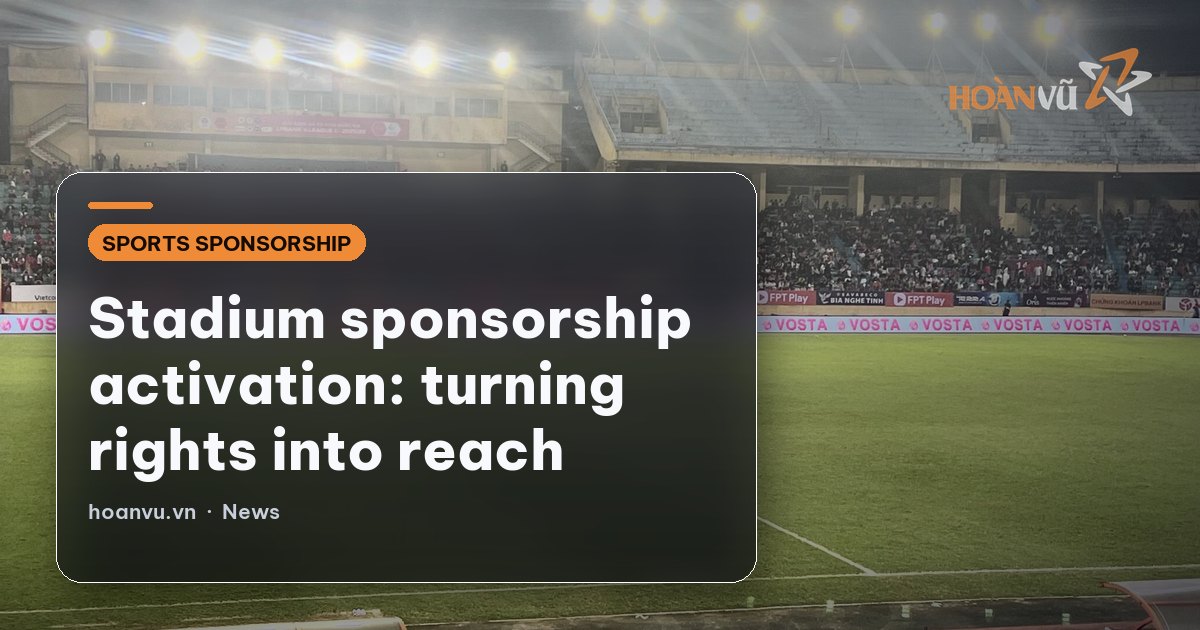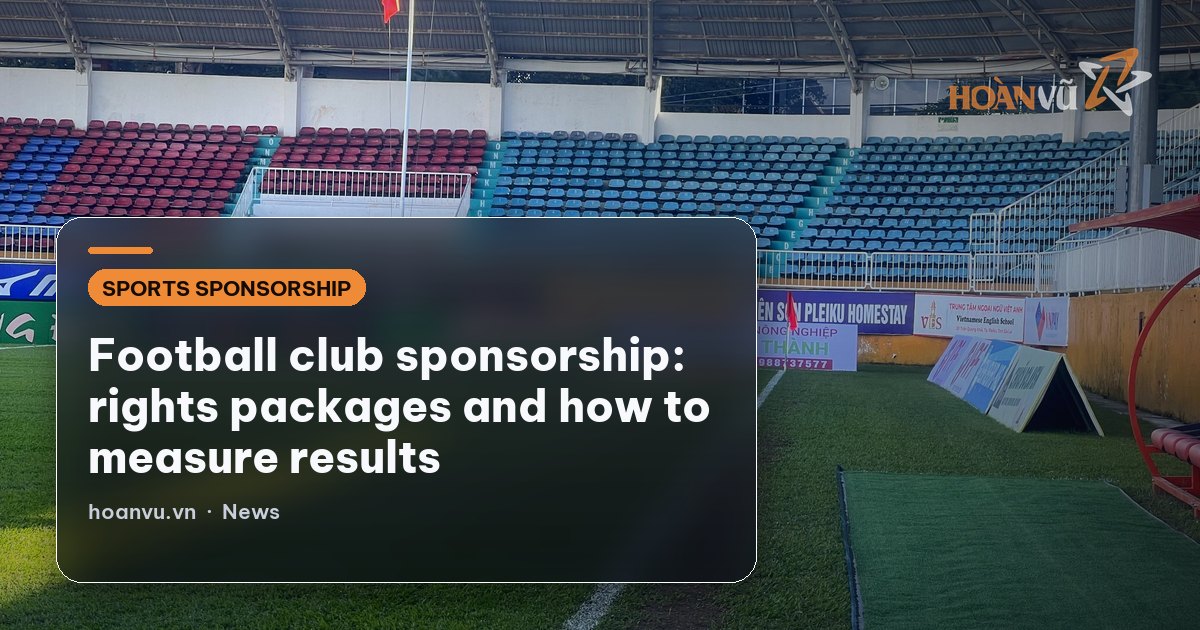
Many brands sign a sponsorship deal and only then ask the obvious question: during a live match, where does our name actually appear, for how long, and can a viewer at home read it. The question is fair. The budget buys rights inside the stadium, yet most of the people who meet the brand are not in the stands. The broadcast frame is what decides how brands on football broadcasts are seen.
In the 2026-2027 season, V.League 1 has 14 clubs playing a double round robin over 26 rounds, running from 4 September 2026 to 22 May 2027. Matches air live on the FPT Play system, with some also carried by HTV Thao and VTV. Each round is therefore a long piece of content, replayed and clipped through the week that follows.
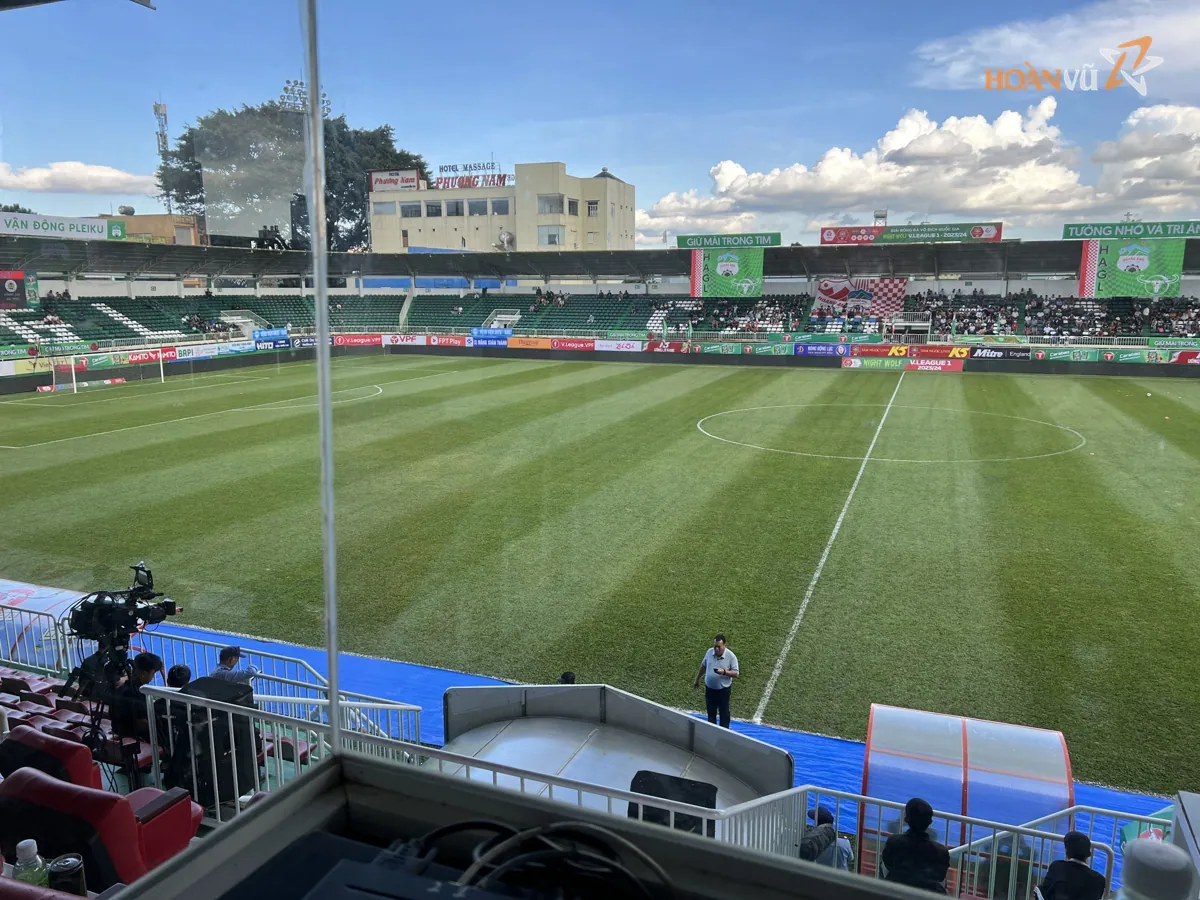
The frame decides what gets seen
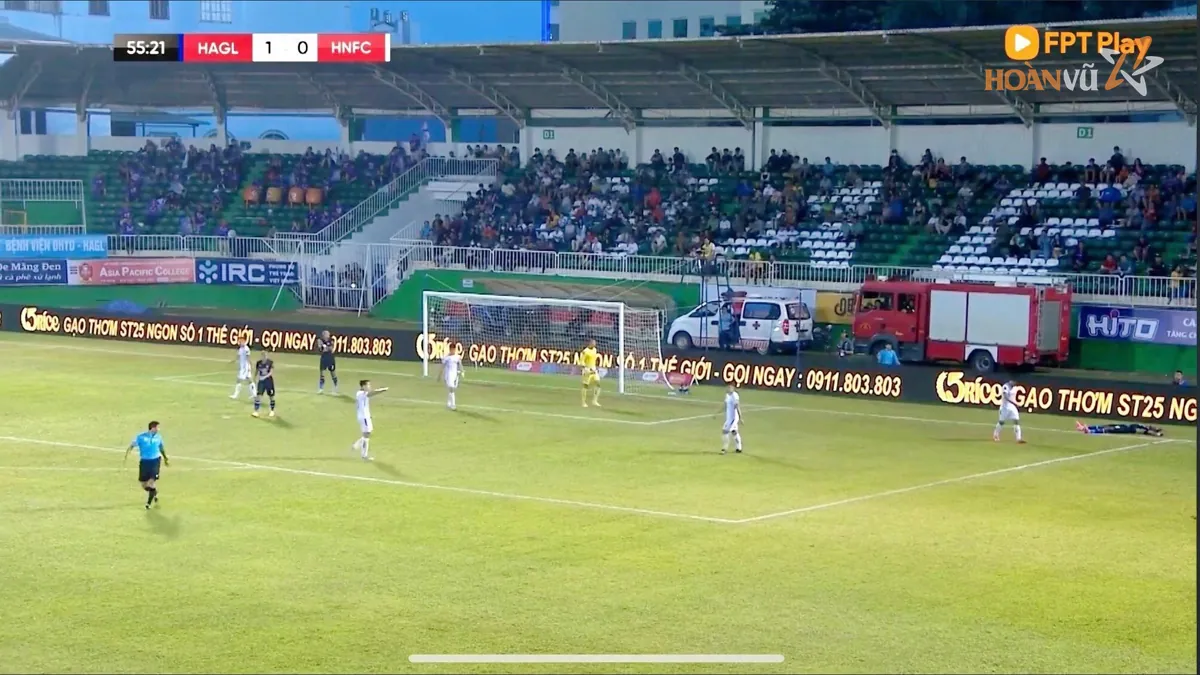
The main match camera usually sits in the middle of the main stand, above pitch level, looking across at an angle. From there, the advertising run on the far side is in frame almost whenever the ball is in the far half. Other positions appear by situation: player close ups, behind the goal, celebrations, post match interviews.
The consequence is practical. The value of a position comes from how often it enters the frame, not from its surface area. A narrow LED run facing the main camera usually airs more than a large board hung behind the opposite stand. When rights are discussed, ask how often a position is in frame, not only how many metres wide it is.
Where brands appear
| Position in the stadium | When it enters the frame | Character |
|---|---|---|
| Perimeter LED facing main camera | Almost continuous when the ball is in the far half | Content can change minute by minute |
| Perimeter LED behind the goal | Attacks, corners, goals | Concentrated in the peaks of the match |
| Scoreboard and large screen | Half time, substitutions, goals | Tied to match information |
| Interview and press backdrop | Before and after the match | Close frame, longer text is readable |
| Stands and dugout area | Wide shots, bench close ups | Supporting, hard to control |
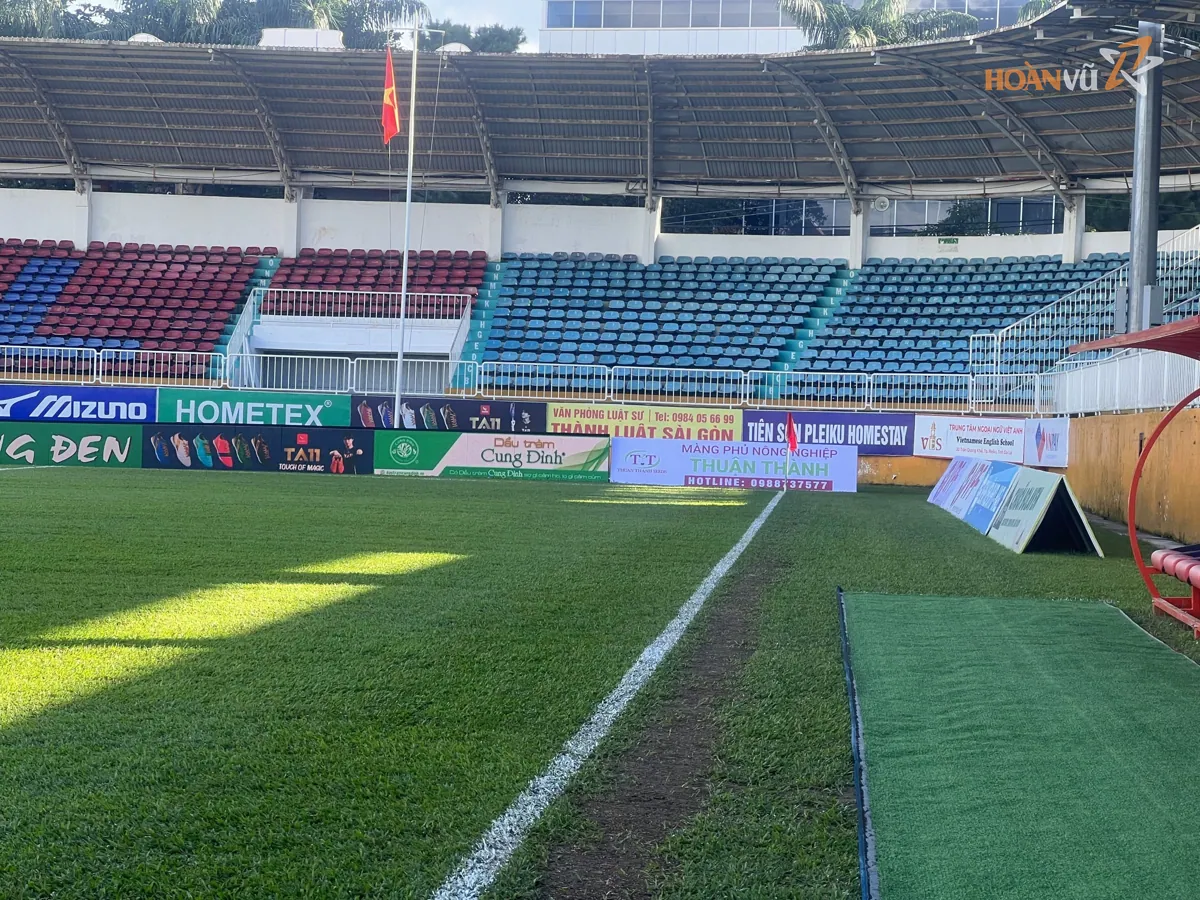
The table does not rank one position above another. It shows that each serves a different purpose: the perimeter run repeats a name, behind the goal rides the emotion, the backdrop carries a longer message.
Sharp or smeared: the specs that decide
A spectator in the stand and a camera see two different things. A camera captures frames with a very short exposure, so a board with a low refresh rate shows banding or flicker on air even when the naked eye in the stand sees nothing wrong.
Technical documents for LED lines built for stadium use quote refresh rates above 3,840 Hz, brightness around 6,000 to 10,000 nits, ingress protection from IP65 to IP69K, and pixel pitch commonly between 6.25 mm and 10 mm. Those three numbers explain a great deal:
- Refresh rate decides whether the picture bands on air.
- Brightness decides whether the board stays readable in late afternoon sun.
- Pixel pitch decides how small text can be and still look sharp at camera distance.
So when a brand reviews a sponsorship proposal, the equipment section deserves to be read alongside the rights section. Details on stadium equipment sit in stadium LED solutions.
In match is not the same as a commercial break
Spot advertising on air carries time limits. Vietnam's advertising law provides that advertising on television must not exceed 10% of a broadcaster's total daily programme time, with 5% for pay television channels, and that a feature film may not be interrupted for advertising more than twice, each break no longer than 5 minutes.
Stadium advertising sits in a different group. It is part of the picture of the match, moving with the play rather than inserted between halves. That is why many brands use stadium rights for steady name recall and keep spots for longer messages.
Preparing content and running it match by match
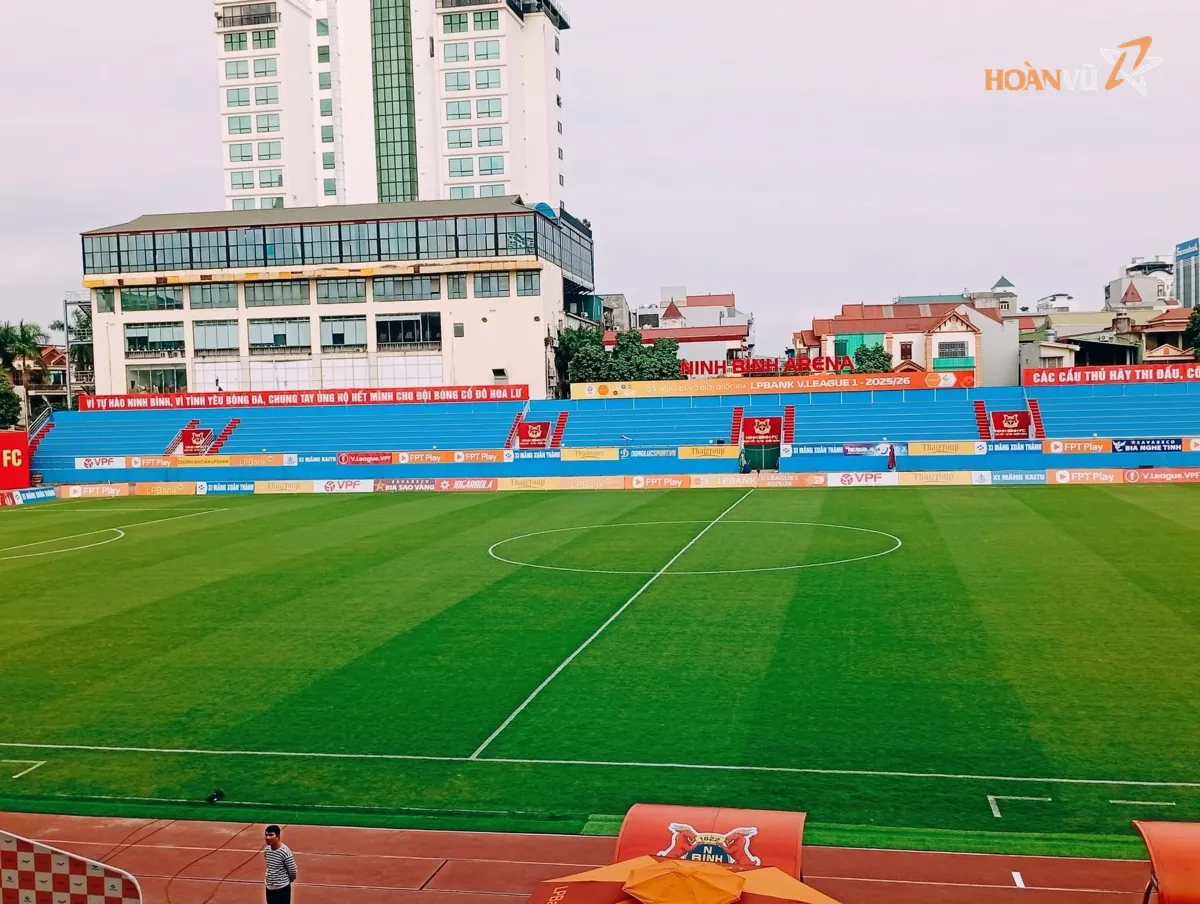
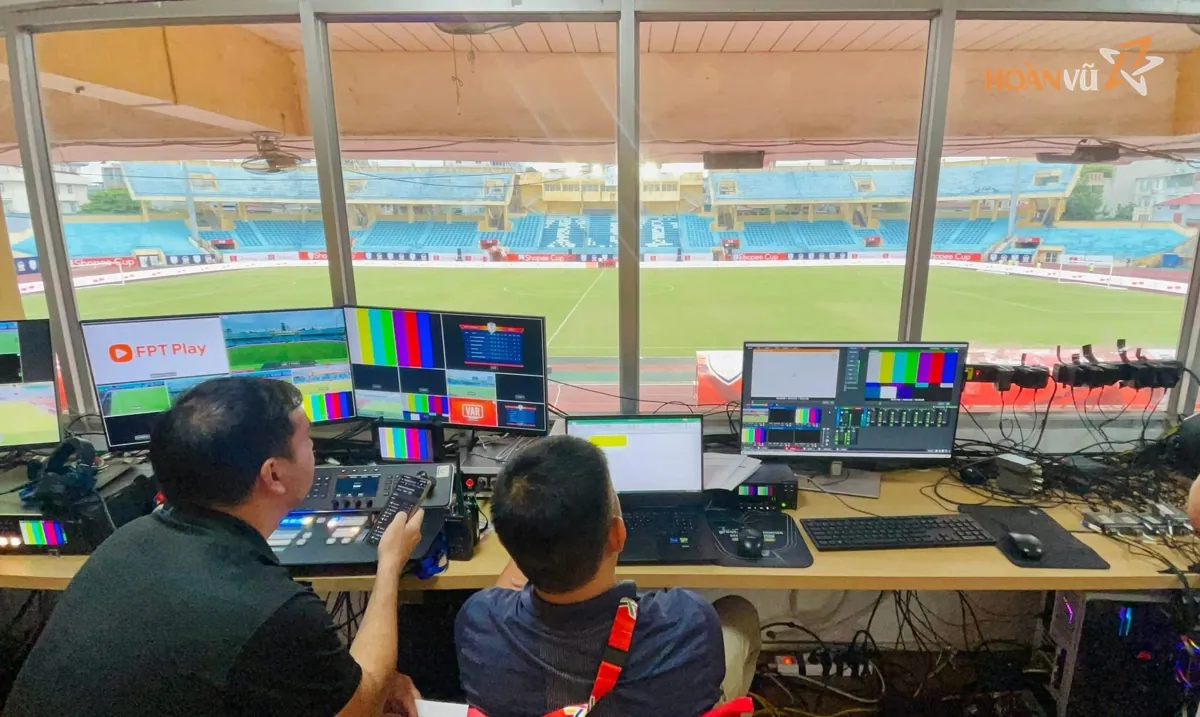
A sound sponsorship proposal always comes with a content plan: how many rotations each brand gets, how many seconds per rotation, at which minute content changes, which brand takes the peak minutes. That work needs someone in the control room for the whole match, not a timer left running.
Hoan Vu has worked in advertising since 2001 and became a joint stock company in 2010. The company currently runs perimeter LED at four stadiums, Hang Day, Lach Tray, Binh Phuoc and Pleiku, alongside six clubs and around 84 matches a season. Each match has a technical crew on site, and after the match an acceptance record with photos and video lets the brand check what actually ran. Rights packages are covered in football club sponsorship: rights packages and how to measure results.
Frequently asked questions
Which position airs most during a match?
The perimeter LED run facing the main camera is usually in frame most, because the main camera sits in the stand and shoots across to the far half. Other positions appear according to how the match unfolds.
Why does an LED board show banding on television?
The common cause is a refresh rate too low for the camera capture speed. Sports LED manufacturer documents typically quote above 3,840 Hz for broadcast filming needs.
Should content be prepared for the season or for each match?
Keep a base set for the season and a version adjusted per match. A fixture against a strong opponent, a final round, or a match with a pre kick off ceremony each need their own script.
Conclusion
Brands on football broadcasts do not depend on whether a board is large or small. They depend on whether the position sits inside the frame, whether the equipment meets what the camera needs, and whether content is run with the flow of the match. Those three points belong in the conversation before signing, not after the first match.
To review positions and configuration for the coming season, leave your details or call the hotline 0964 73 74 73.
Hoan Vu connects brands with clubs, builds packages and reports match by match.