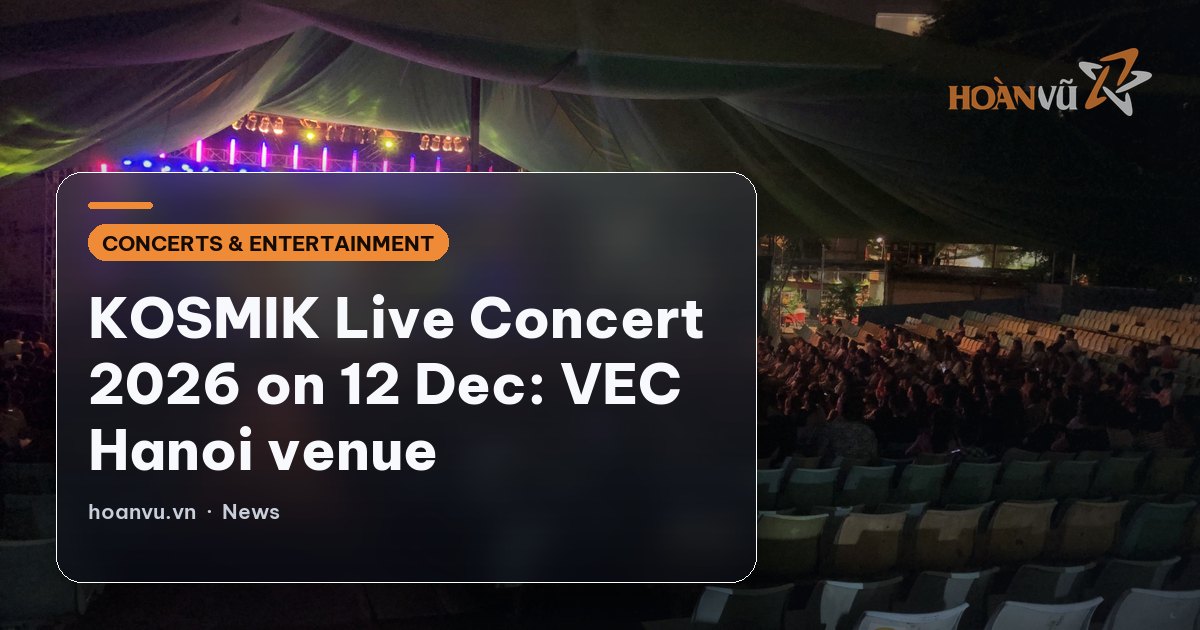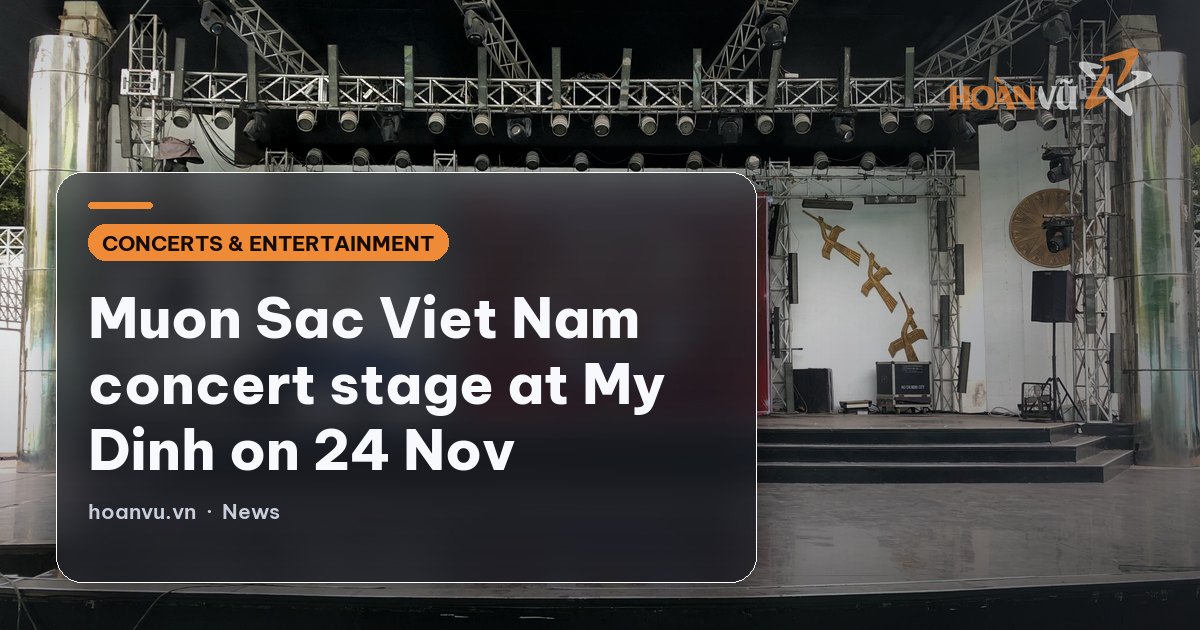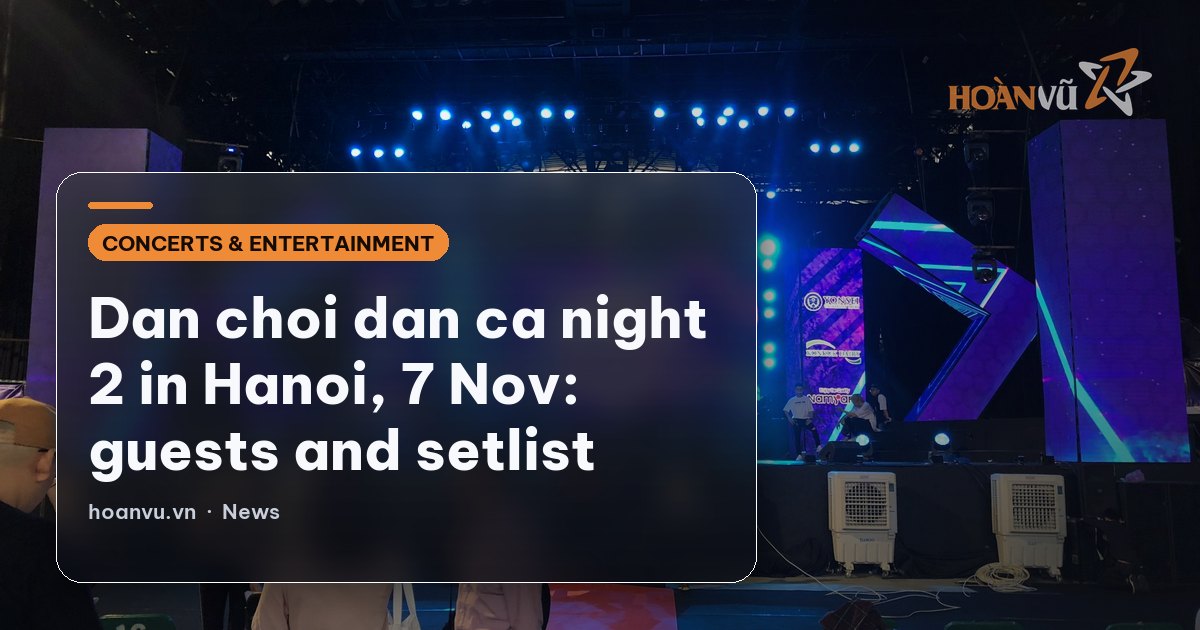
On the afternoon of 12 November a talk titled "Tu concert den con tim" took place in Hanoi, returning to an old question in the trade: why do so many domestic music nights still start later than the time printed on the ticket. Musician Huu Vuong, music director of several large programmes, said local concert crews need stronger capacity, discipline and professionalism to come closer to international practice. In his view a show takes months of preparation, and transport, ticket scanning, audience arrival and technical operation all feed directly into the programme. The larger the crowd, the heavier the load on the crew.
Figures cited at the talk show the size of the market. In 2025 the country held more than 810 music events and festivals of varying scale. In early November 2026, two programmes in Thai Nguyen drew around 58,000 attendances. Pham Thi Kim Oanh, Deputy Director of the Department of Cultural Industries and Copyright, said concerts should be viewed within a wider economic ecosystem covering accommodation, food, tourism and advertising, not ticket revenue alone. She also pointed to copyright protection and investment in performance infrastructure, while a draft Law on Cultural Industry Development is under consideration.
Key information
| Item | Detail |
|---|---|
| Talk | "Tu concert den con tim", afternoon of 12 November, Hanoi |
| Speakers named in press reports | Musician Huu Vuong; Pham Thi Kim Oanh, Deputy Director of the Department of Cultural Industries and Copyright; People's Artist Tran Ly Ly; singer Den Vau |
| Music events in 2025 | More than 810 |
| Thai Nguyen, early November 2026 | Around 58,000 attendances across two programmes |
| Shows in the same week | Tinh ha say hi concert nights 3 and 4, on 14 and 15 November, Vietnam Exhibition Center (VEC), Dong Anh, Hanoi |
| Tickets | The cited reports did not publish ticket prices |
In the same week as the talk, Hanoi hosted two Tinh ha say hi concert nights at the Vietnam Exhibition Center in Dong Anh, on 14 and 15 November. Tien Phong reported that the programme brought together 24 artists, among them Duong Domic, Phap Kieu and Quang Hung MasterD, with a central stage and catwalks running through the audience area, a large LED screen system, and a full rehearsal held on 12 November. VnExpress reported that the 14 November night included segments using live horses, aerial bungee work and a rain effect. Attendance figures for the two nights have not been published, so this article states none.
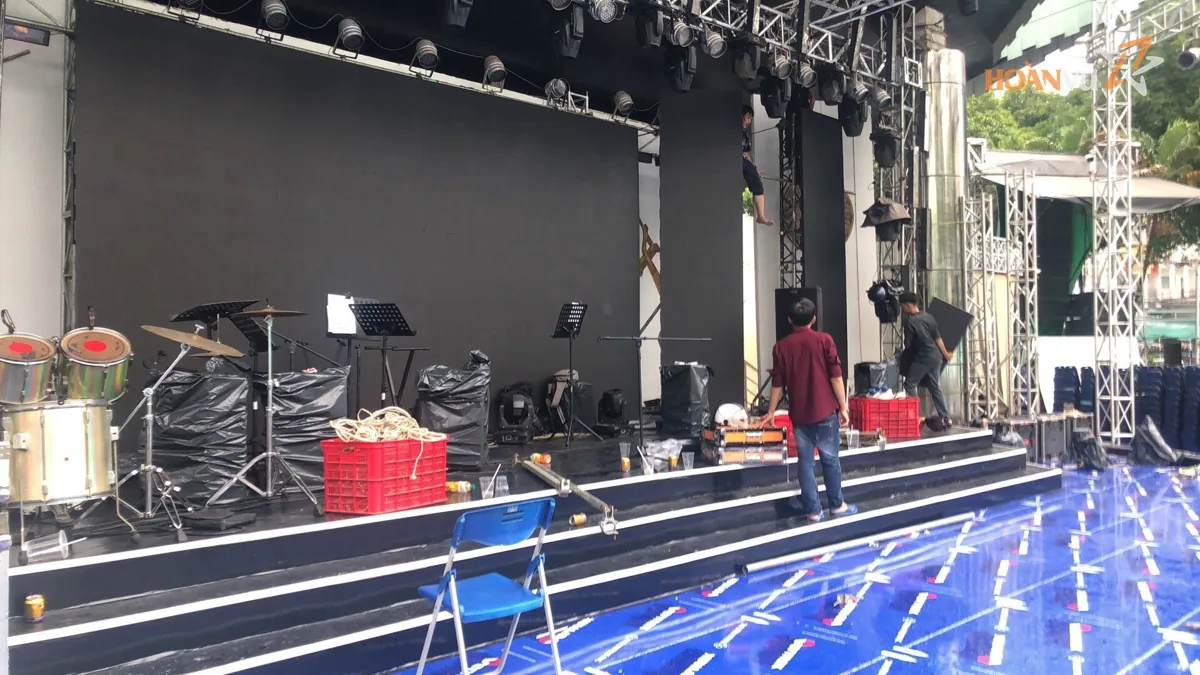
A view from staging, audio, lighting, LED screens and crowd operations
Seen from the build-and-run side, show time is not a standalone marker. It is the end of a chain: site handover, truss and deck build, speaker rigging, LED cabinet assembly, power connection, load measurement, signal runs, audio tuning, lighting focus, then full rehearsal. Each step that slips an hour pushes the next one along with it, and the last link in the chain is always the audience standing outside the gate.
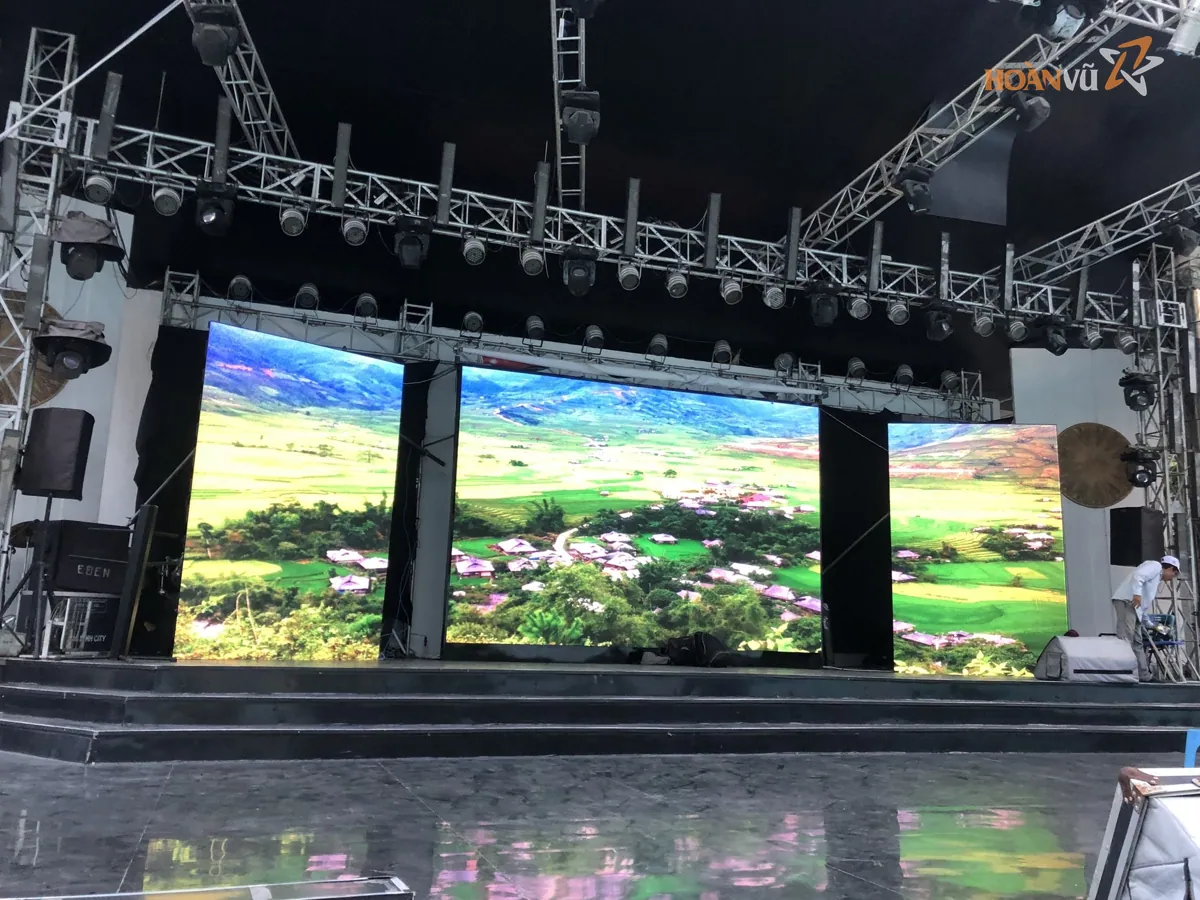
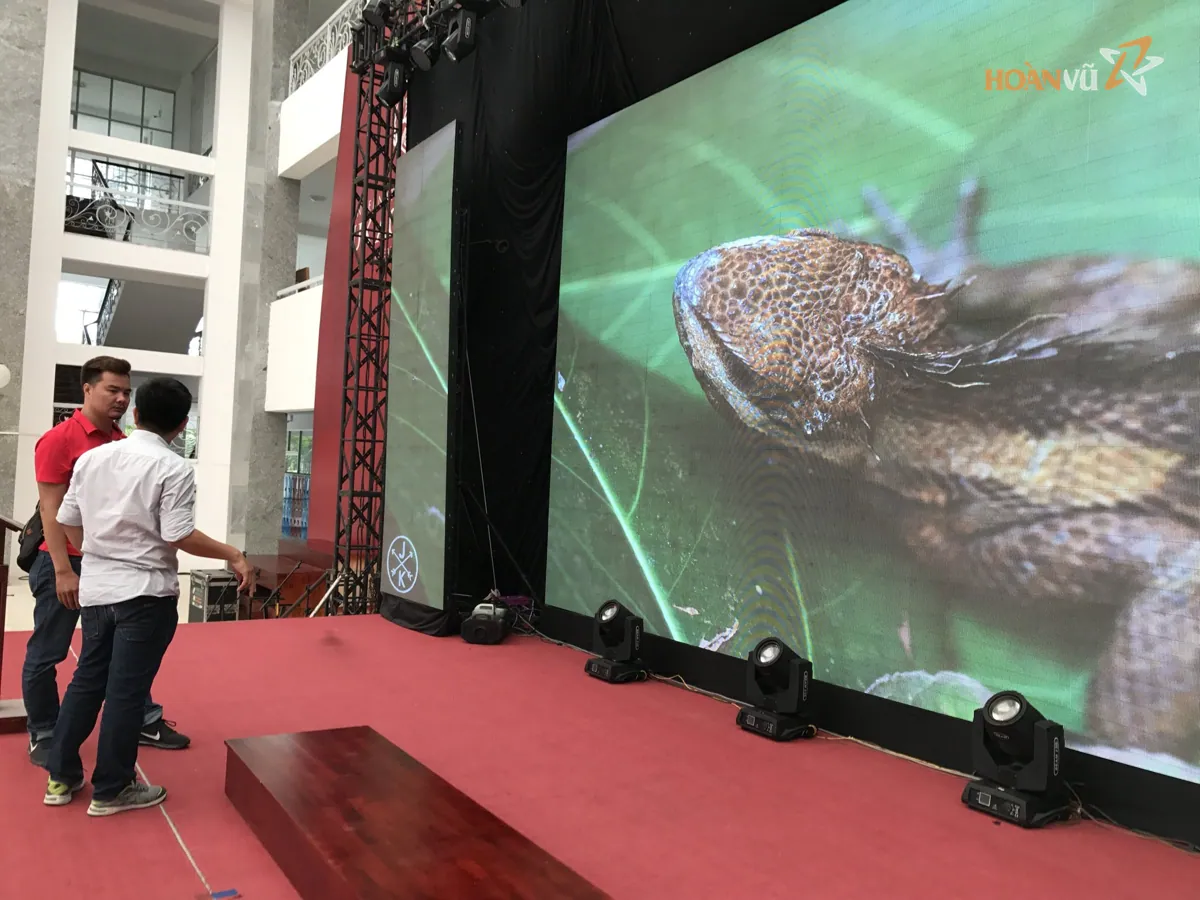
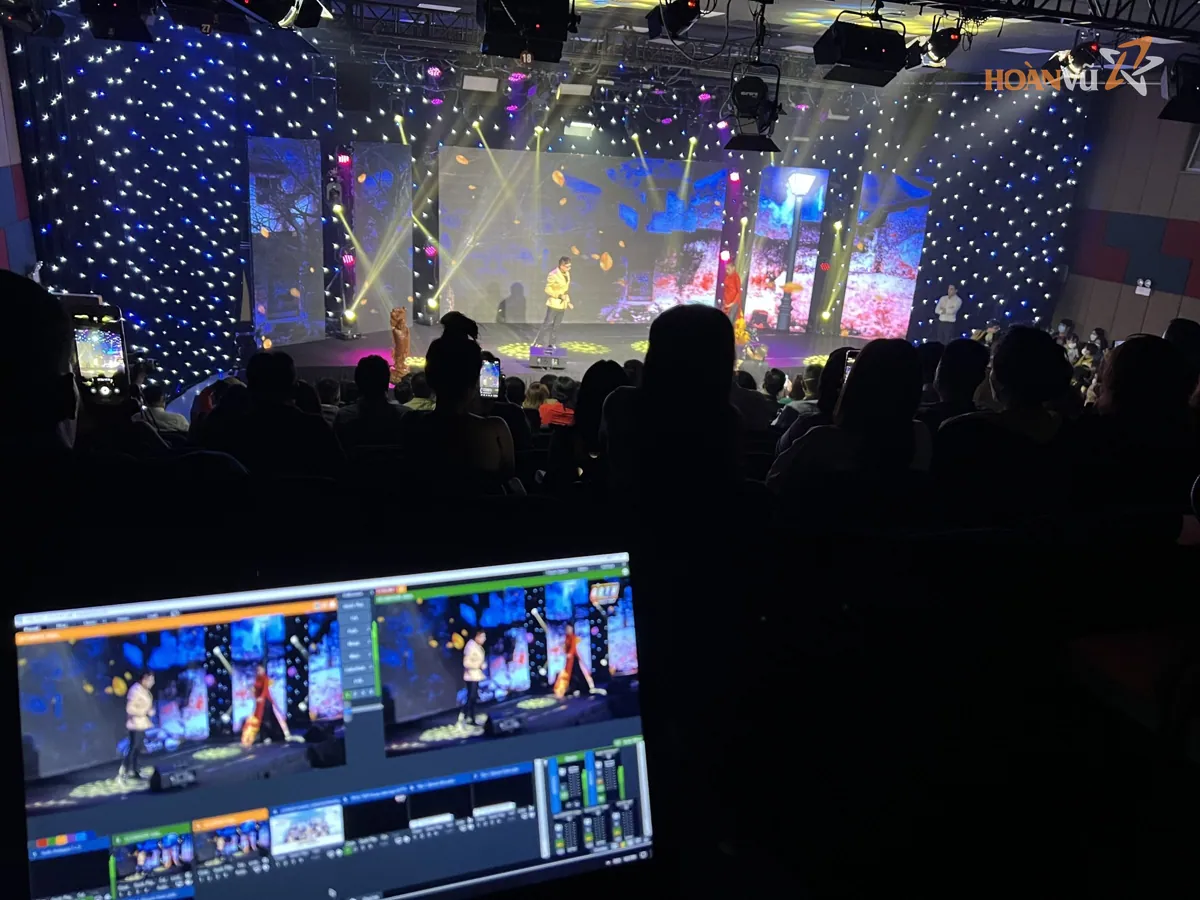
With LED screens, picture quality is decided by viewing distance and pixel pitch rather than by the panel. Outdoor stages with audiences standing far back usually take a coarser pitch with high brightness so late afternoon light does not wash the image out; indoor stages, where people sit close, need a finer pitch and careful colour matching between cabinets. When the screen runs pre-recorded content, the video team matches the director's cue sheet second by second.
Audio for a large crowd is a coverage problem. Flown line arrays are angled so sound reaches the back row without slapping into the stands, and delay stacks out in the field let distant listeners hear in time with those up front. Lighting follows a different logic: moving heads handle the space, follow spots handle the people, and both run on the same timecode as video and pyro effects.
The least visible part holds up the whole night: power and redundancy. A large stage usually runs two sources with automatic transfer, a generator on standby for critical equipment, and an intercom tying the stage manager, video desk, audio desk, lighting and the safety team into one conversation.
Crowd operations sit closer to a flow problem than a capacity problem. Gate count, scanner count, corridor width, exit direction at the end and assembly points for evacuation all need to be set when the site plan is drawn.
Notes for audiences
Tien Phong reported that on the afternoon of 14 November crowds were already heading to the Vietnam Exhibition Center area in Dong Anh well before show time, and that the programme ran across 14 and 15 November. For music nights of similar scale, audiences are better off following the gate opening times and zone maps published by the organiser, since the inbound and outbound flow is calculated from those. Exact gate times, ticket check locations and traffic guidance should come from the organiser's official channels.
Frequently asked questions
When and where was the "Tu concert den con tim" talk held?
It was held on the afternoon of 12 November in Hanoi, focused on organisation and operating standards for domestic concerts and on the direction of the cultural industry.
Why do domestic concerts often start late?
According to views expressed at the talk, the cause lies in coordination discipline and schedule compliance across audience arrival, ticket scanning and technical operation, rather than in any single department.
How many music events did Vietnam hold in 2025?
The figure cited at the talk is more than 810 music events and festivals of varying scale in 2025.
Conclusion
Hoan Vu builds stages, LED screens, audio and lighting and runs livestreams for music programmes, festivals and corporate events, so the scheduling and operating work described above is our daily job, and our event production team can set the build timeline with organisers from the day the site is handed over.
Hoan Vu handles stage, screens, filming, streaming and ticketing end to end.