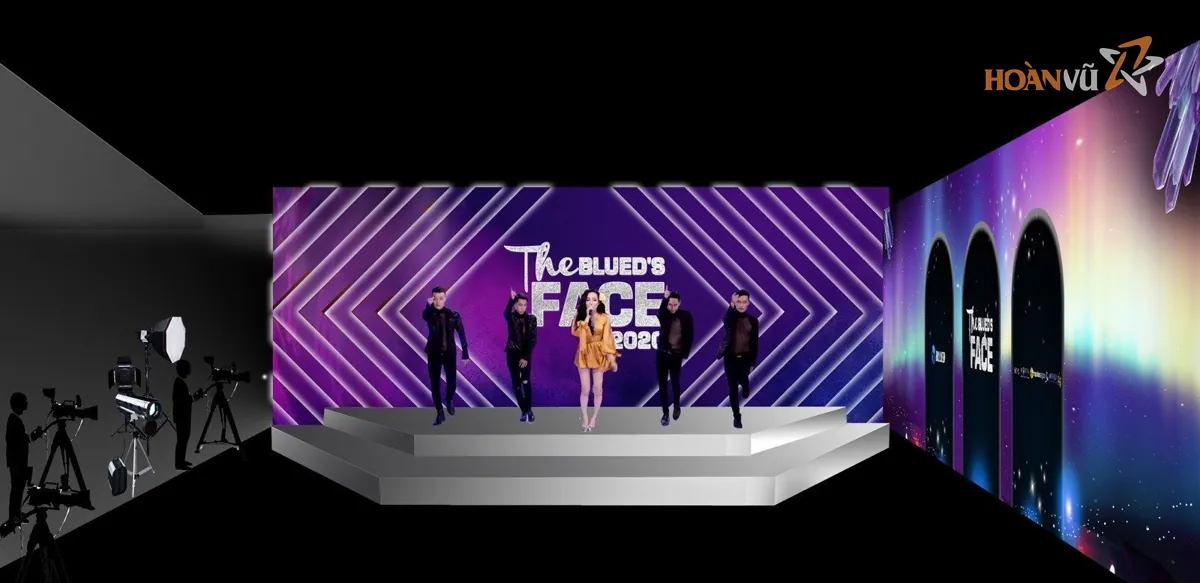
On 9 November, organisers released the design concept for the stage of the national concert "Muon Sac Viet Nam", a programme marking Vietnam Culture Day, to be held on the evening of 24 November at My Dinh National Stadium. Under the concept, a bronze drum motif sits at the centre, linked to a large screen system, with an extended stage and a circular performance floor reaching into the audience area. Lac bird imagery and ancient patterns are rendered through light, visuals and motion rather than built scenery.
This remains a design concept. Organisers have not released stage dimensions, screen area or technical specifications, and have not published a line-up.
Key information
| Item | Detail |
|---|---|
| Time | 8pm on 24 November 2026, around 120 minutes of performance |
| Venue | My Dinh National Stadium, Hanoi |
| Expected scale | Around 50,000 audience members |
| Tickets | 38,000 tickets given to residents by the city of Hanoi, free of charge; about 7,000 of them distributed through an online platform |
| Presided over by | Hanoi Party Committee, People's Council, People's Committee and Vietnam Fatherland Front Committee of Hanoi |
| Produced by | Hanoi Radio, Television and Newspaper Agency |
| Broadcast | Live on Vietnam Television |
The programme carries the theme "Culture lights the way - The nation in harmony". The performance is planned to close with a large ensemble scene titled "Vietnam shines across five continents", joined by artisans, artists and performing units, with the audience singing the chorus and following a few simple movements. A 15-minute fireworks display follows immediately after.
Registration details for the online tickets and the platform used will be announced later by the organisers. Those interested should follow the official channels of the producing agency rather than ticket resale pages.
A production view: staging, audio and lighting, LED screens, crowd operations
A night inside a stadium is a different job from a night inside a hall. The notes below are general practice for this type of staging, not information about the programme above.
A performance floor reaching into the crowd
A circular floor pushing towards the stands shortens the distance between performers and the audience. Structurally, that extension has to carry performers, equipment, moving props and the load of a crowd moving with the music. The deck is usually steel or aluminium framing with a load-spreading plan onto the turf or the running track so the surface is not damaged. Access points and backstage circulation are set aside early, because once the show runs there is no room left to fix them.
LED screens outdoors
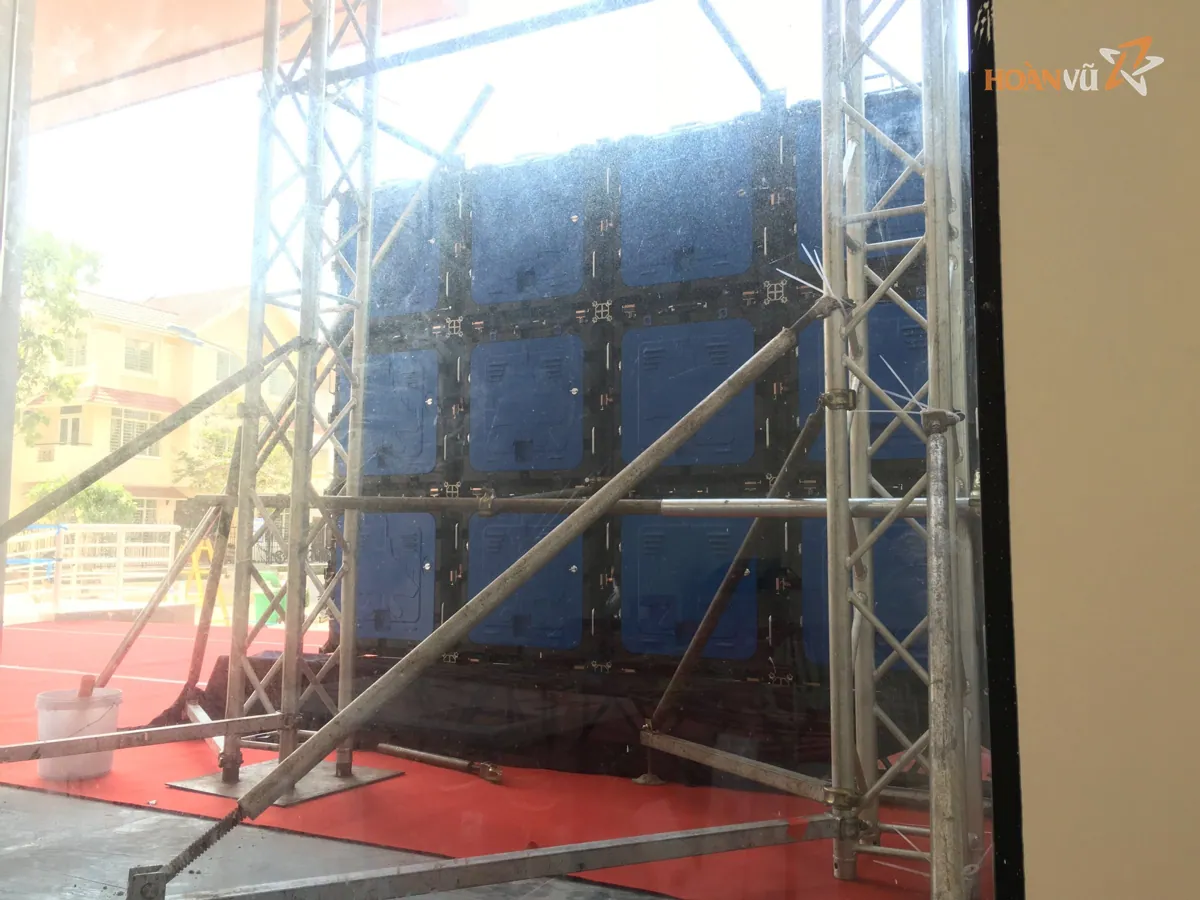
An outdoor screen has to be specified for real conditions: daylight during rehearsal, darkness during the show, and stage lighting hitting it from the side. Pixel pitch is chosen for the closest viewing distance rather than the average one, because the front rows are always where the pixels show. Hanging and ground-support frames need wind loading calculated, since a large screen behaves like a sail. Content differs too: visuals for a stadium work better simple, high in contrast and with large type, because most of the audience watches from a distance and through the screens rather than looking straight at the stage.
Audio across the bowl
A stadium has large reflective surfaces and long distances, so systems are usually split into main hangs at each side plus delay positions set deep in the stands, time-aligned by distance so sound arrives with the picture. Drums, gongs, traditional instruments and a choir ask for more channels than a standard band, so microphone counts, signal paths and mixing crew are locked in early.
Lighting and cameras
When a programme goes out live, lighting has to work for the stands and for the cameras at once. Fast colour changes, haze and lasers flatten the image easily, so the lighting team and the vision team usually sit together from the script stage. Camera positions, jib cranes and cable runs also have to stay clear of the audience sightlines.
Crowd operations
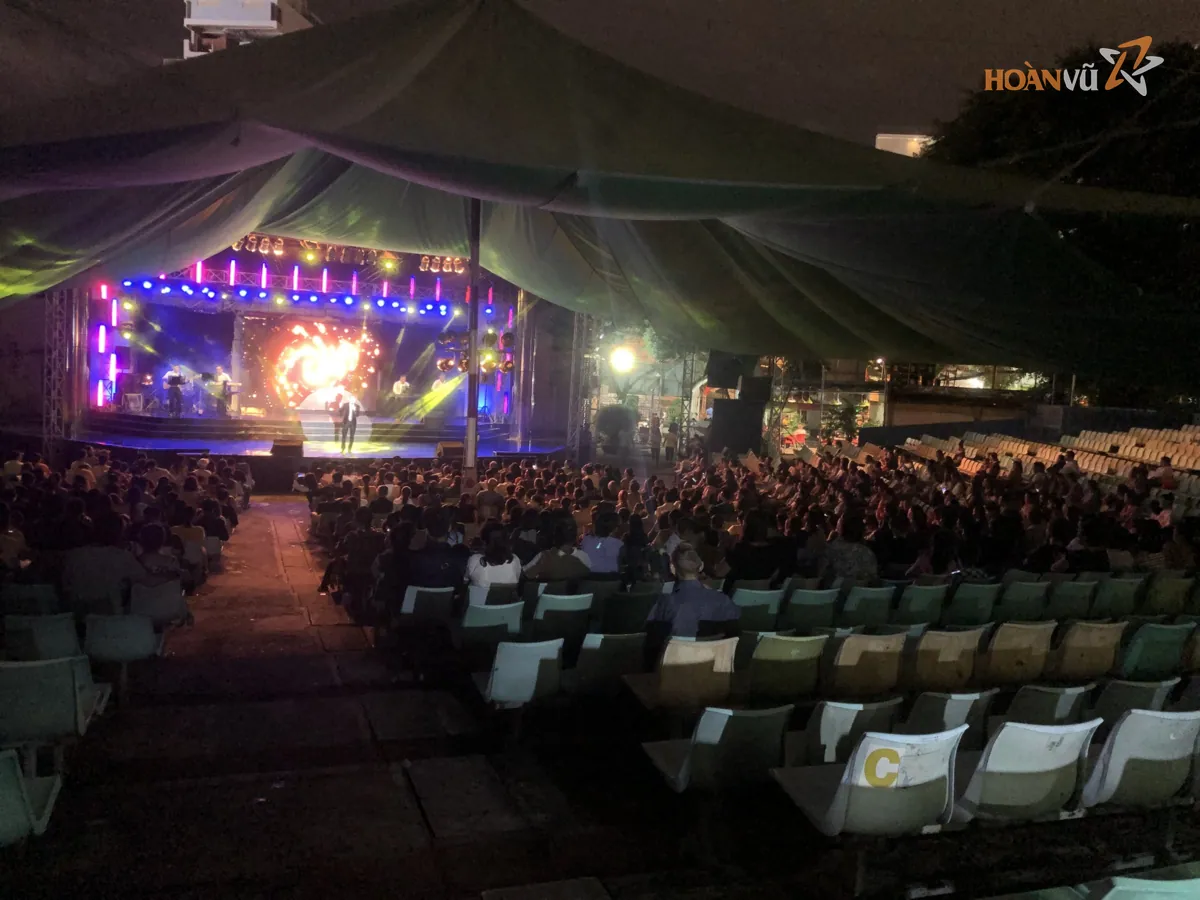
At tens of thousands of people, the hardest part is often not the stage but the flow of people. Gate counts, lanes per gate, door opening time, parking, escape routes and a wet-weather plan are all sized against expected arrivals per hour. The end of the show and the fireworks are when everyone leaves at once, so the exit plan tends to be rehearsed as carefully as the performance.
Notes for the audience
- Tickets are free gift tickets, not for sale. About 7,000 are distributed through an online platform, with timing and registration steps to be announced by the organisers.
- Door opening time has not been announced. It is worth waiting for the official notice before arranging travel.
- The programme is broadcast live, so those without a ticket can still follow it from home.
- The 15-minute fireworks display sits after the performance, so the departure window will be crowded. Allow extra time for it.
Frequently asked questions
When and where is the Muon Sac Viet Nam concert held?
It takes place at 8pm on 24 November 2026 at My Dinh National Stadium in Hanoi. The performance runs for about 120 minutes.
Are tickets on sale?
According to what has been announced, these are 38,000 tickets given to residents by the city of Hanoi and are not sold. About 7,000 are distributed through an online platform, with registration details to be announced by the organisers.
Are there confirmed stage specifications?
Not yet. What has been released is a design concept, with a bronze drum motif at the centre, a large screen system and a circular floor reaching towards the audience. Dimensions and technical specifications have not been stated.
Conclusion
Hoan Vu builds stages, LED screens, audio and lighting and livestream for indoor and outdoor programmes, so if you need a crew for that side of a show, see more at event production.
Hoan Vu handles stage, screens, filming, streaming and ticketing end to end.