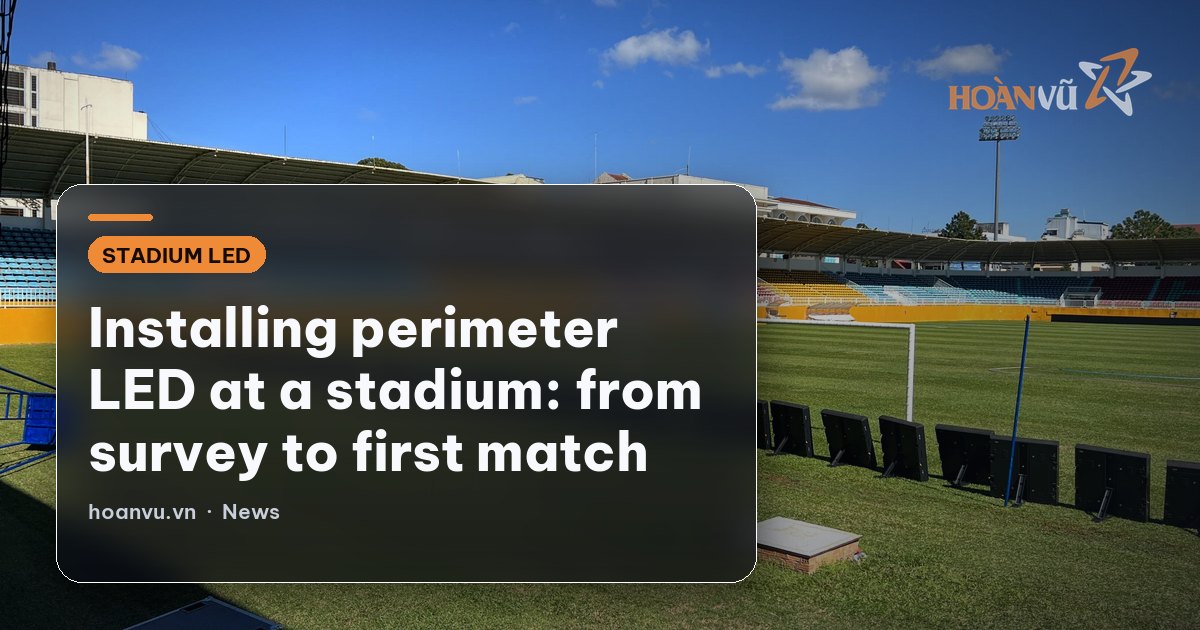
An outdoor event has no pause button. Once the start time arrives the show runs, and anything unfinished becomes an incident in front of the guests. This is the checklist the Hoan Vu crew works through before every outdoor programme.
Site survey
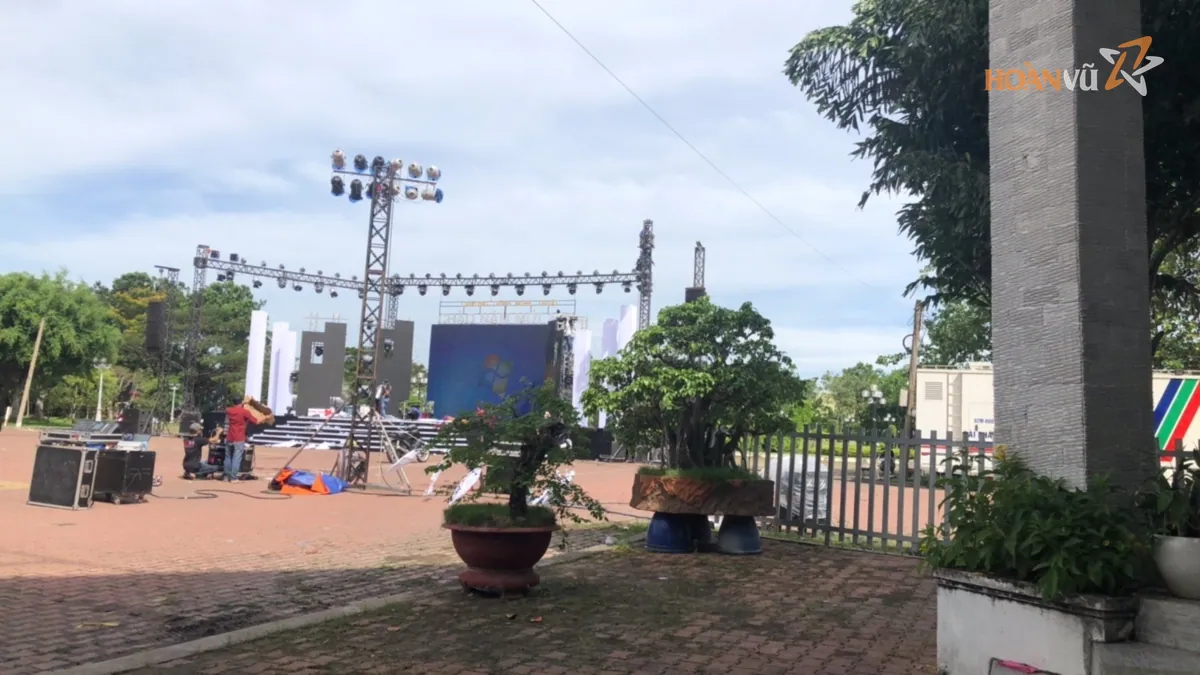
The survey needs both the organiser and the venue owner present, to settle the things that cannot be changed later.
- Stage ground: concrete, compacted earth or grass. Soft ground means base plates under the truss feet.
- Sun and wind direction: these decide which way the stage faces and where the screen sits.
- Overhead clearance: power lines, branches and canopies above the build area.
- Load-in route: how far a truck can reach and where equipment must be carried.
- Power position and the cable run from the distribution board to the stage.
Truss and stage
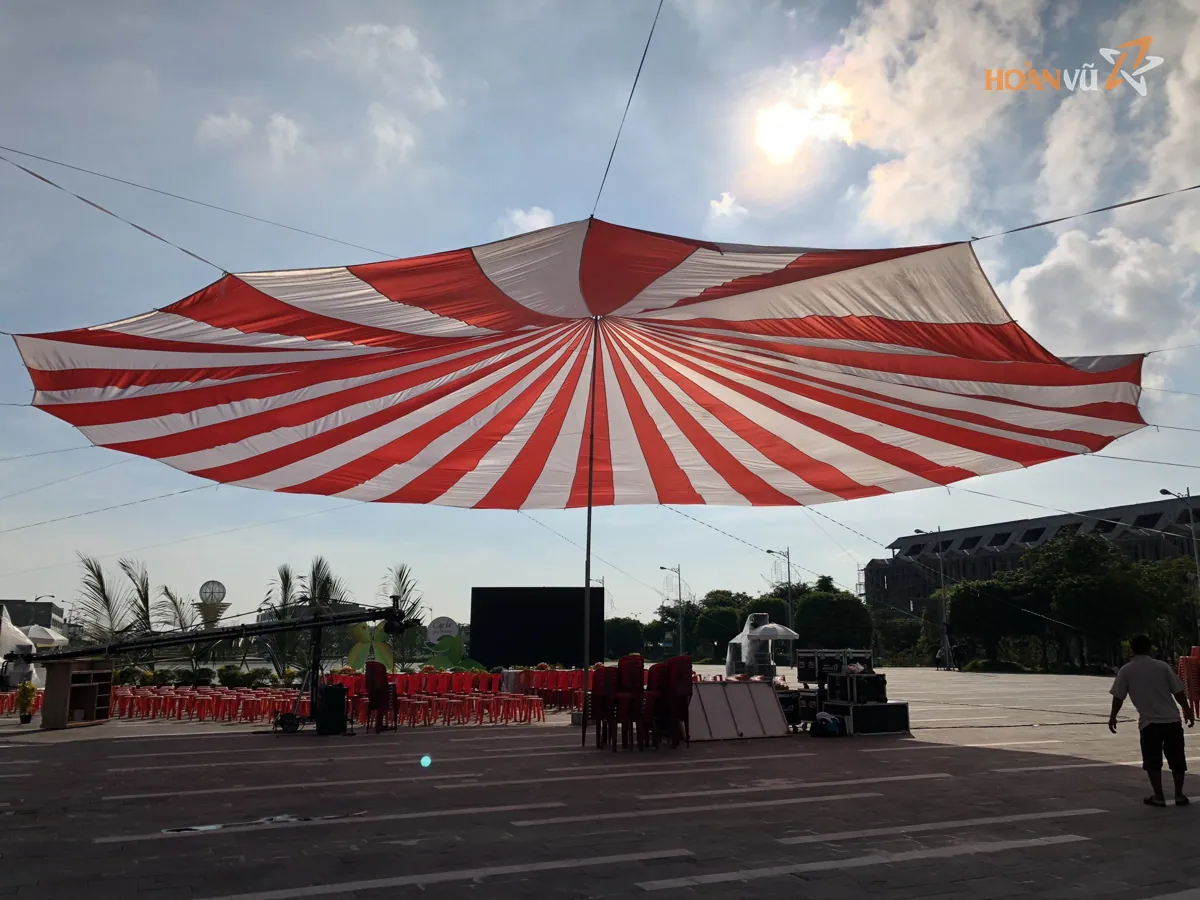
Outdoor truss must be calculated for wind load, not only for the weight of what hangs on it. The roof is the largest surface catching wind, so anchoring and ballast follow the design rather than experience.
The stage deck needs to be level and solid, with steps wide enough and an edge marking or reflective strip along the front. This is where small accidents happen during scene changes.
Power and backup
The total load has to add everything up: LED screen, lighting, sound, production equipment and any ancillary stands. Only after that can the board and cable sizes be settled.
| Item | What to prepare |
|---|---|
| Main supply | Dedicated board, breakers per circuit, proper earthing |
| Backup | Generator sized for the essential circuits |
| Cable | Correct cross-section, trunking or mats at walkways |
| Weatherproofing | Boards and outlets raised and covered |
| Emergency lighting | Lights on exit routes for a power loss |
LED screen, sound and lighting
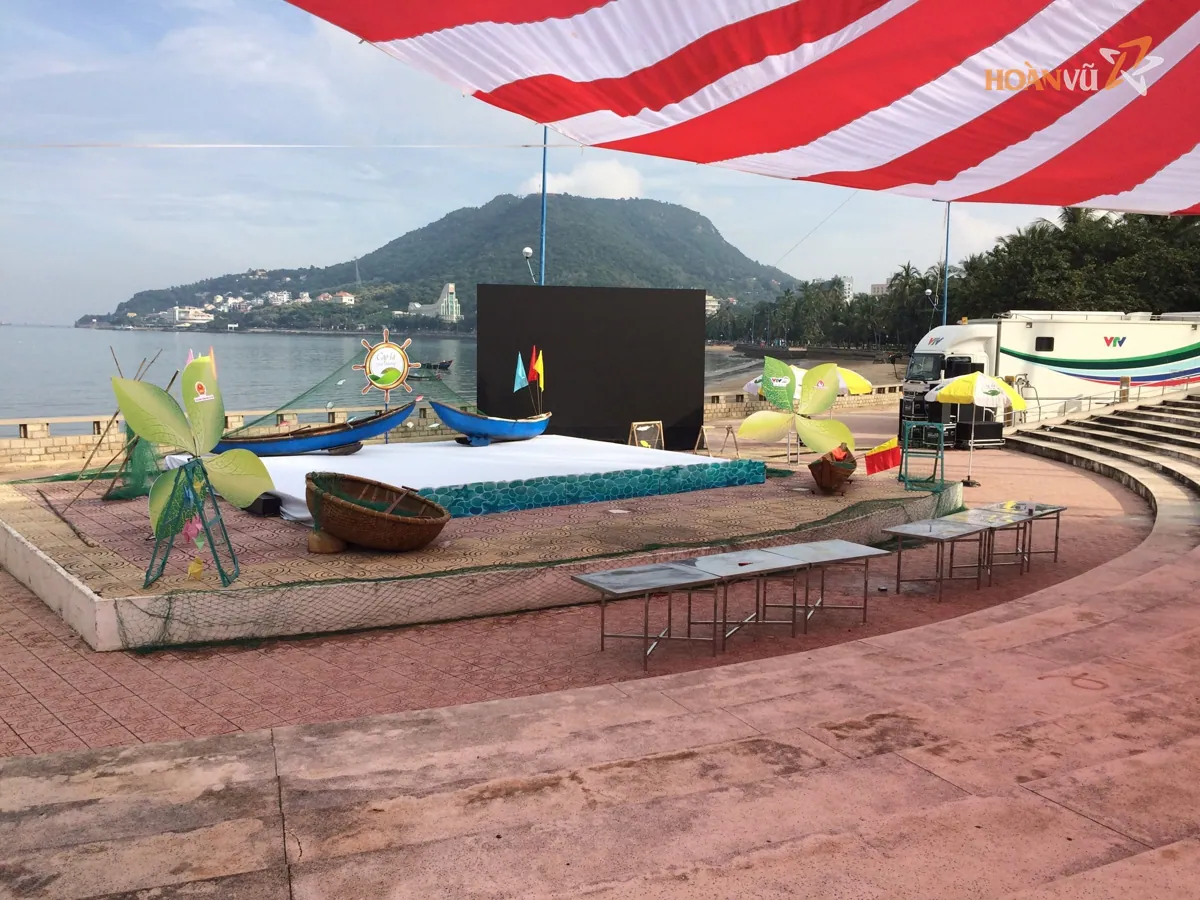
An outdoor screen needs purpose-built modules, high brightness and weatherproofing. Its position must avoid direct sun striking the face during show hours.
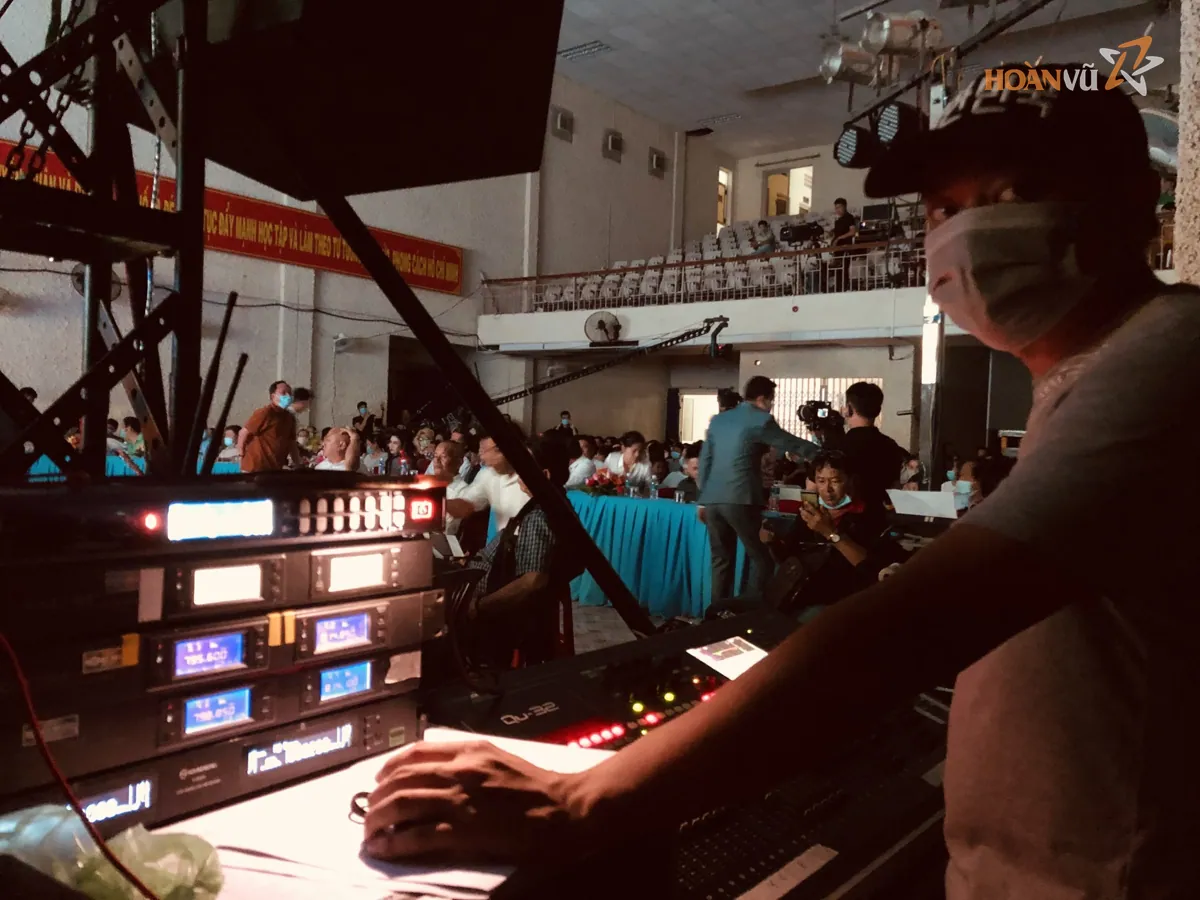
Outdoor sound has no reflecting walls, so it needs more power than indoors, and speaker aiming has to keep spill away from nearby housing. Lighting must be rigged securely, with a safety bond on every fixture.
Wet weather plan
This is the part most programmes prepare least. Three things need settling in advance.
- The stop threshold: what wind or rain level pauses the show, and who makes the call.
- What happens at a stop: covering equipment, which circuits are cut, where guests go.
- The restart plan: the order equipment comes back on and who checks safety before the show continues.
This list should be printed and handed to each team leader, not only mentioned in the crew briefing.
Technical rehearsal
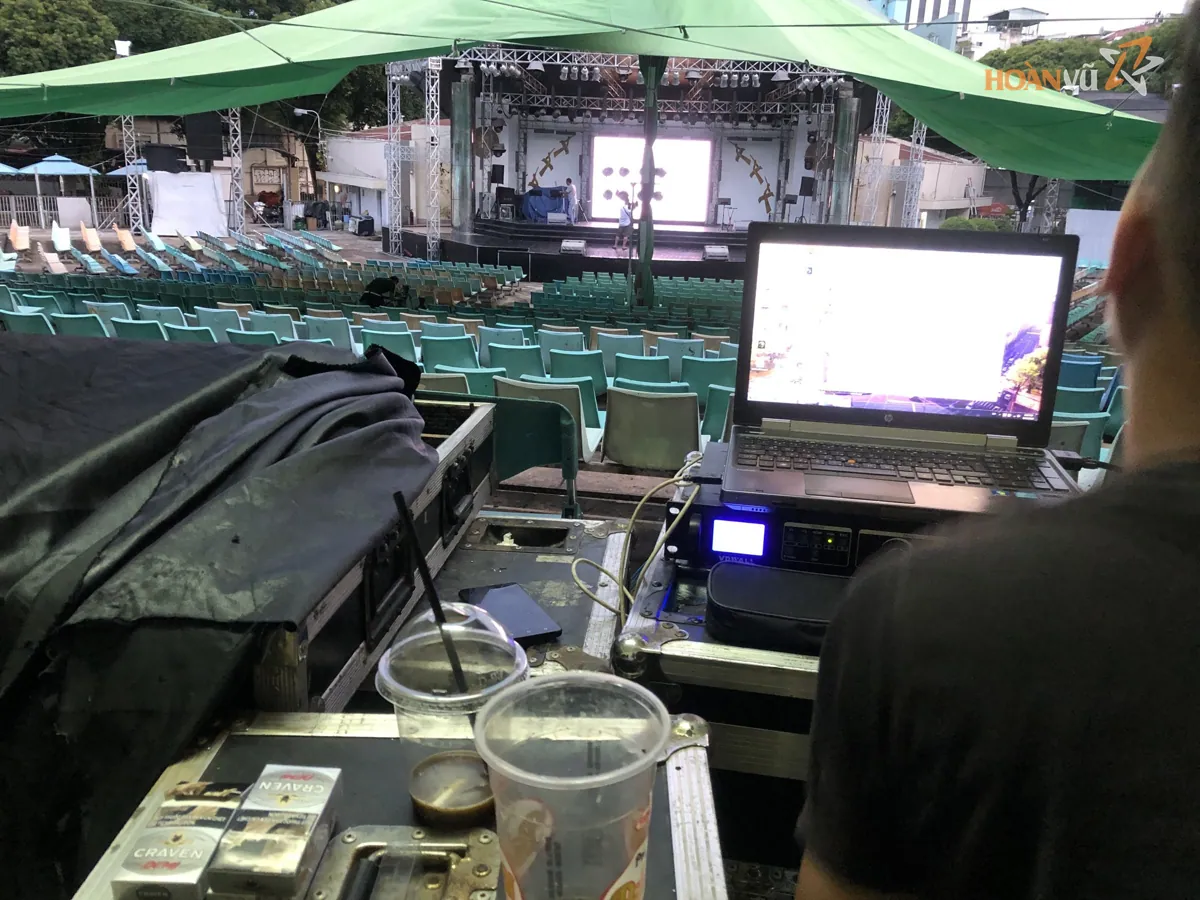
The rehearsal runs the script in order, with someone timing each segment. What must be checked: the signal path from the technical desk to the screen, microphones and their backups, music and effects, the route people take onto the stage, and the crew's internal comms.
The rehearsal ends with a list of outstanding items, each with a named owner and a time, rather than general notes.
Frequently asked questions
How far ahead should the site survey happen?
Early enough to adjust the stage design and order extra equipment if needed. A survey close to the date turns every finding into firefighting.
What happens if it rains during an outdoor event?
The plan agreed in advance applies: the stop threshold, who decides, covering equipment and cutting circuits, and where guests are moved. The key is deciding early rather than waiting for heavy rain.
Can an indoor LED screen be used outdoors temporarily?
It should not be. Brightness is insufficient in sunlight and the modules lack the ingress rating, so rain puts the equipment at risk.
Conclusion
An outdoor event that runs well does so because of work completed days earlier. A thorough survey, a correct load calculation, truss anchored to design and a printed wet-weather plan carry most of the risk.
For a site survey or a quotation for stage and LED screen build, contact Hoan Vu.
Hoan Vu handles stage, screens, filming, streaming and ticketing end to end.