A customer appreciation night can involve six or seven suppliers: staging, sound, lighting, LED screens, an MC, video and logistics. Full-service event planning brings all of them under one point of contact. The company deals with one partner, signs one contract and has one person accountable at the end.
This article explains what a full-service package usually includes, when it makes sense and what to agree on before signing.
What full-service event planning means
Full service means the organiser takes the whole chain of work: concept, script, design, renting and running equipment, coordinating people, running the show, then tearing down and handing the venue back.
The key difference from hiring each item separately is responsibility. When you hire separately, you connect the pieces yourself. If the LED screen will not take the signal from the control desk, that is your problem. In a full-service package it belongs to the organiser.
What a package usually includes
Every event is different, but most full-service packages are built around these groups of work.
| Item group | Scope | What to ask |
|---|---|---|
| Concept, script | Theme, minute-by-minute script, acts | How many script revisions are included |
| Design | Stage visuals, backdrop, printed materials | Is there a 3D render before build |
| Stage, structure | Stage deck, truss, marquees | Who is responsible for structural safety |
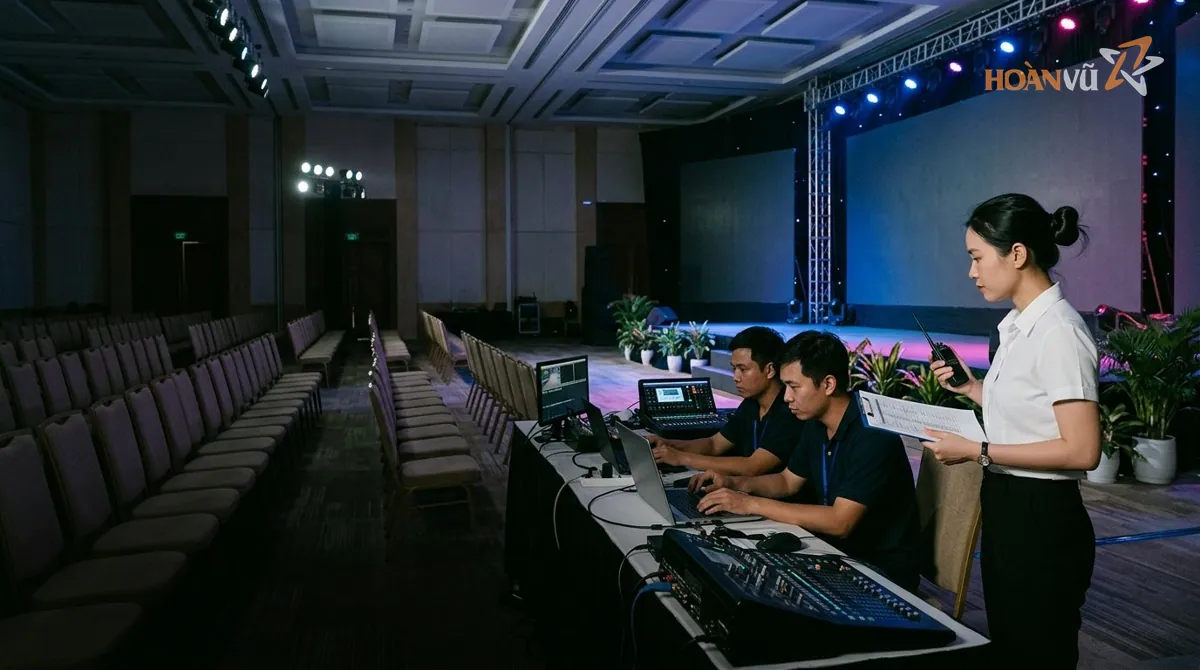
| Sound, lighting | Speakers, mixer, lights, technicians | Is a technician on the desk for the whole show |
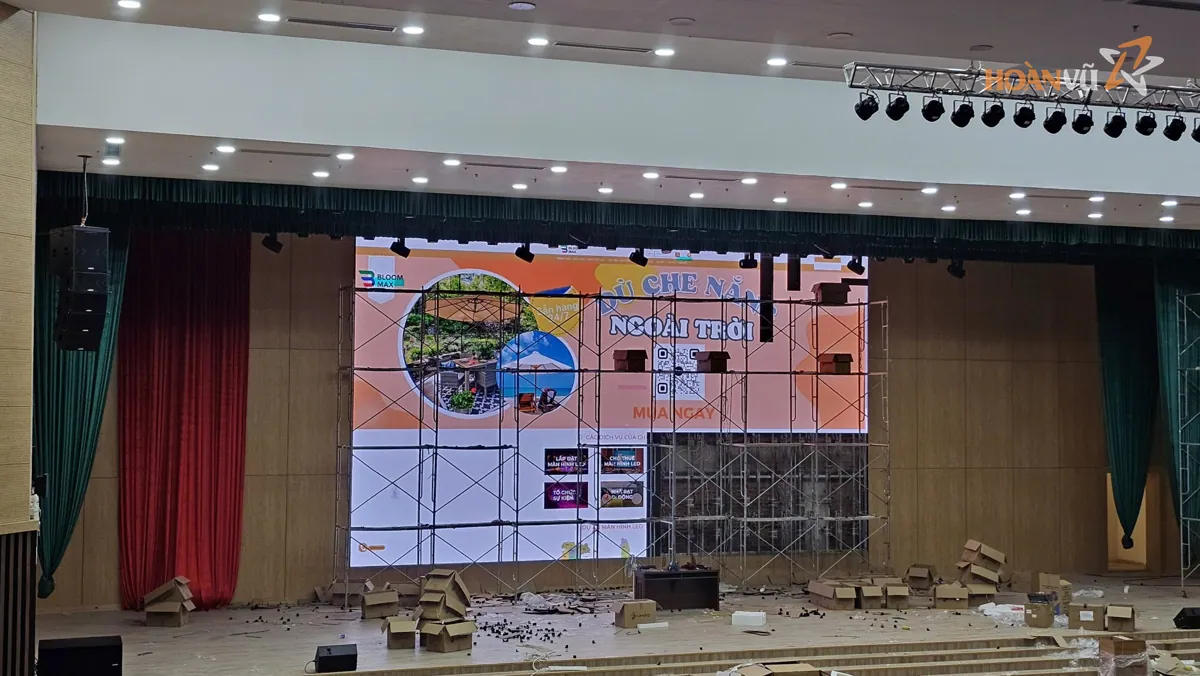
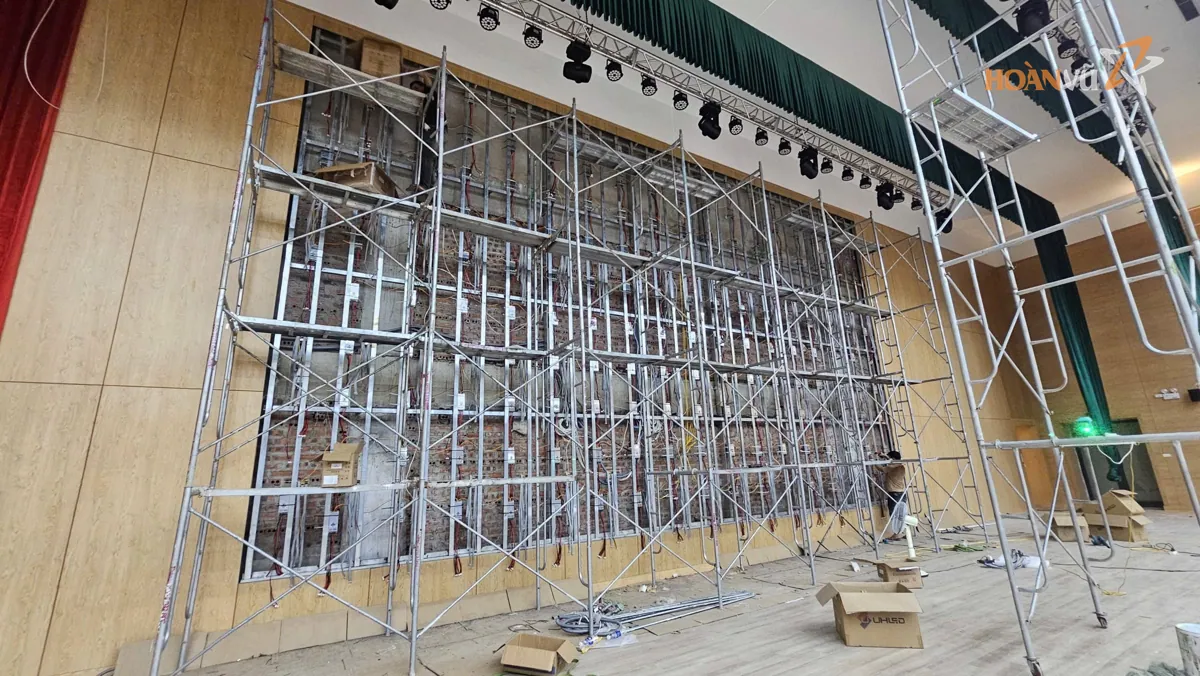
| LED screen | Screen type, size, playback content | Does the pixel pitch suit the viewing distance |
| People | MC, performers, reception, coordinators | A named list of people |
| Photo, video, livestream | Photography, filming, live streaming | Delivery deadline |
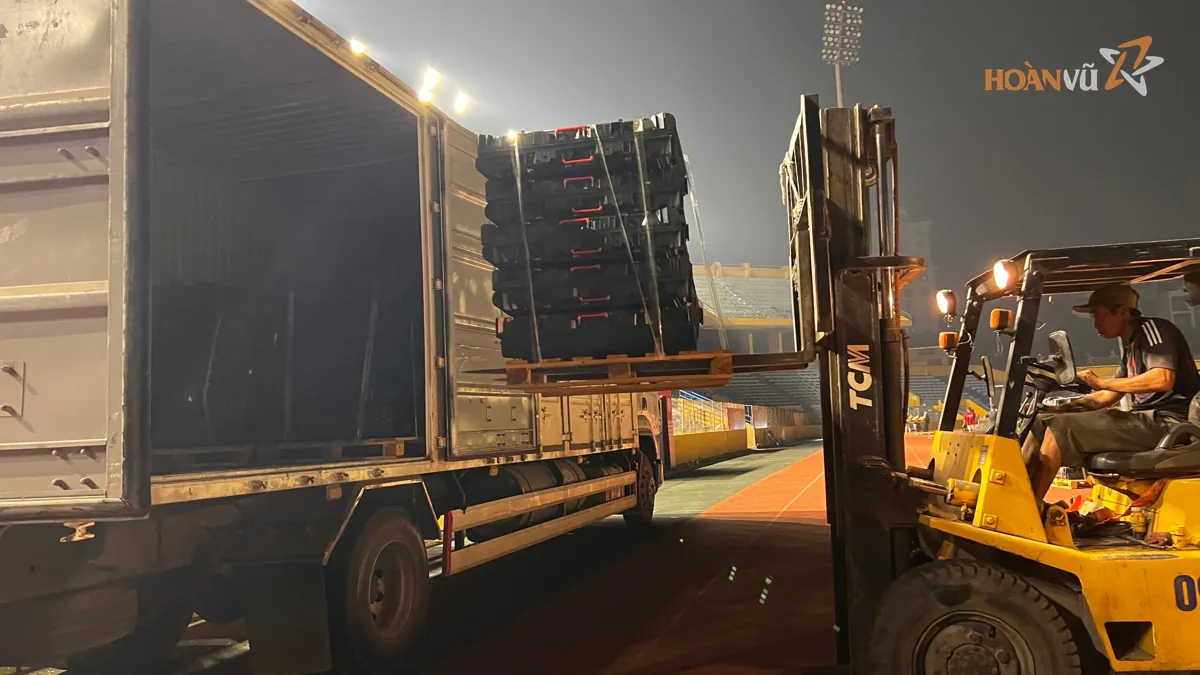
| Logistics | Transport, permits, security, cleaning | Who obtains venue permits |
This table is also a good frame for comparing quotes. Two quotes that both say full service can differ a lot in the last column.
When full service is the right choice
Full service fits three situations best.
- The company has no in-house events team, or the person in charge is juggling other work.
- The programme has several technical parts that must work together: stage, LED, sound, livestream.
- Lead time is short, with no room to manage each supplier separately.
If the company already has a team and only needs one or two pieces of equipment, hiring separately may be simpler.
Five points to agree before signing
- An item list with quantities and specifications, not general wording.
- Key dates: build day, rehearsal, teardown time.
- A lead coordinator on site from build to teardown.
- Backup plans for rain, power loss and equipment faults.
- Possible extra costs and the conditions that trigger them.
Rehearsal is the cheapest place to find mistakes. Do not accept a package that skips it.
Frequently asked questions
Is full-service event planning more expensive than hiring separately?
Not necessarily. Full service adds a coordination fee, but it saves the time spent managing many suppliers and the risk of items not matching. The fair comparison is to put both options side by side against the same item list.
How early should we contact an organiser?
The earlier you call, the more choice you have in equipment, people and venues. In the year-end season, when company parties and concerts pile up, staging equipment and LED screens are usually booked early.
What does the company still need to do after hiring full service?
Set the event goals, confirm the guest list and speeches, and approve the script. Name one person as the single decision maker so answers come quickly.
Conclusion
Full-service event planning is worth it when a programme has many technical parts that must run together and the company needs one accountable partner. A clear item list and fixed dates remove most of the risk.
Hoàn Vũ provides staging, LED screens, sound and lighting and livestreaming for events. See more on the Hoàn Vũ homepage.
Hoan Vu handles stage, screens, filming, streaming and ticketing end to end.