Ho Chi Minh City's People's Committee has issued the plan for the 6th Ho Chi Minh City International Music Festival, known to audiences as HOZO 2026. Under the plan, the main programme is set to run from 25 to 27 December under the theme "City of world music". Festival activities start in November and continue through December.
The plan names the venue precisely: Le Loi street, from Pasteur street to Nguyen Hue street, together with the Nguyen Hue walking street area, from Ngo Duc Ke street to Le Loi street. In other words, the stage sits on a central city street rather than inside a theatre or a stadium. For production crews, that single detail shapes almost every equipment and schedule decision.
Key information
| Item | Information per the plan |
|---|---|
| Main programme dates | Planned 25 - 27 December 2026 |
| Opening and closing | Per the city plan: opening on the evening of 25 December, closing on the evening of 27 December |
| Venue | Le Loi street (Pasteur - Nguyen Hue) and Nguyen Hue walking street (Ngo Duc Ke - Le Loi) |
| Theme | City of world music |
| International artists expected | Nuit Incolore (France), Kiki (Thailand), Hanbin, Younbans, Hwasa (Korea), Inayat Kaur Bajaj (India), Otyken (Siberia), The Havana Social Club (Cuba) |
| Vietnamese artists expected | Soobin, Hoa Minzy, ca nuong Kieu Anh, Trong Hieu, Bui Cong Nam, Quang Hung MasterD, Phung Khanh Linh, Grey D, Duong Domic |
| Tickets | The published plan does not state ticket information |
| Plan issued by | Ho Chi Minh City People's Committee, on the proposal of the city Department of Culture and Sports |
The musical direction remains World Music, blending Rap, Rock, African Beat, Latin Music and EDM. Alongside the main stages, the plan adds an open stage for young performers, street bands, street art, an area for children, and areas for partners and sponsors.
The festival also carries a professional programme: talks on AI in music production, on the direction of the city's music industry, and on copyright and solutions for performing arts programmes. Running in parallel is the talent search HOZO Inspired Talent 2026, held across November and December.
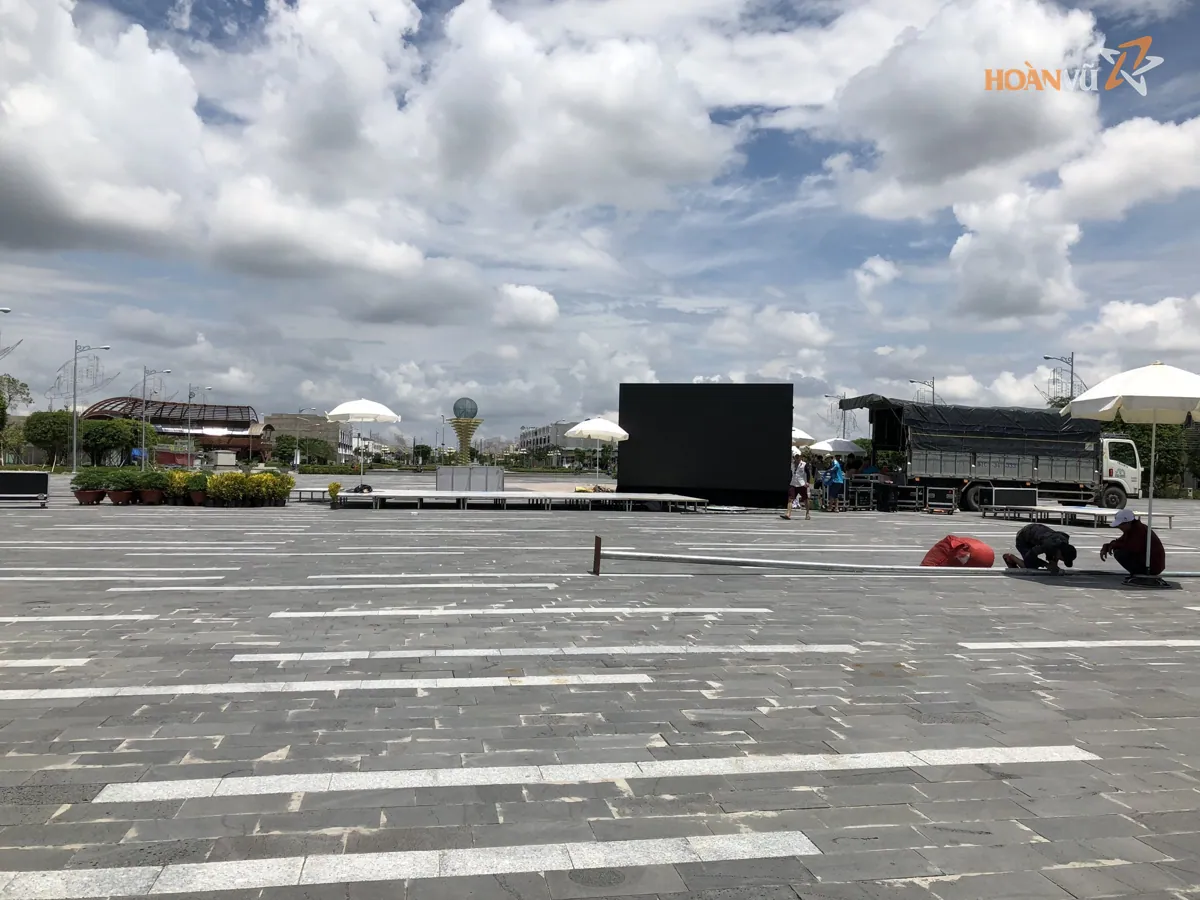
A production view: staging, sound and light, LED screens, crowd operations
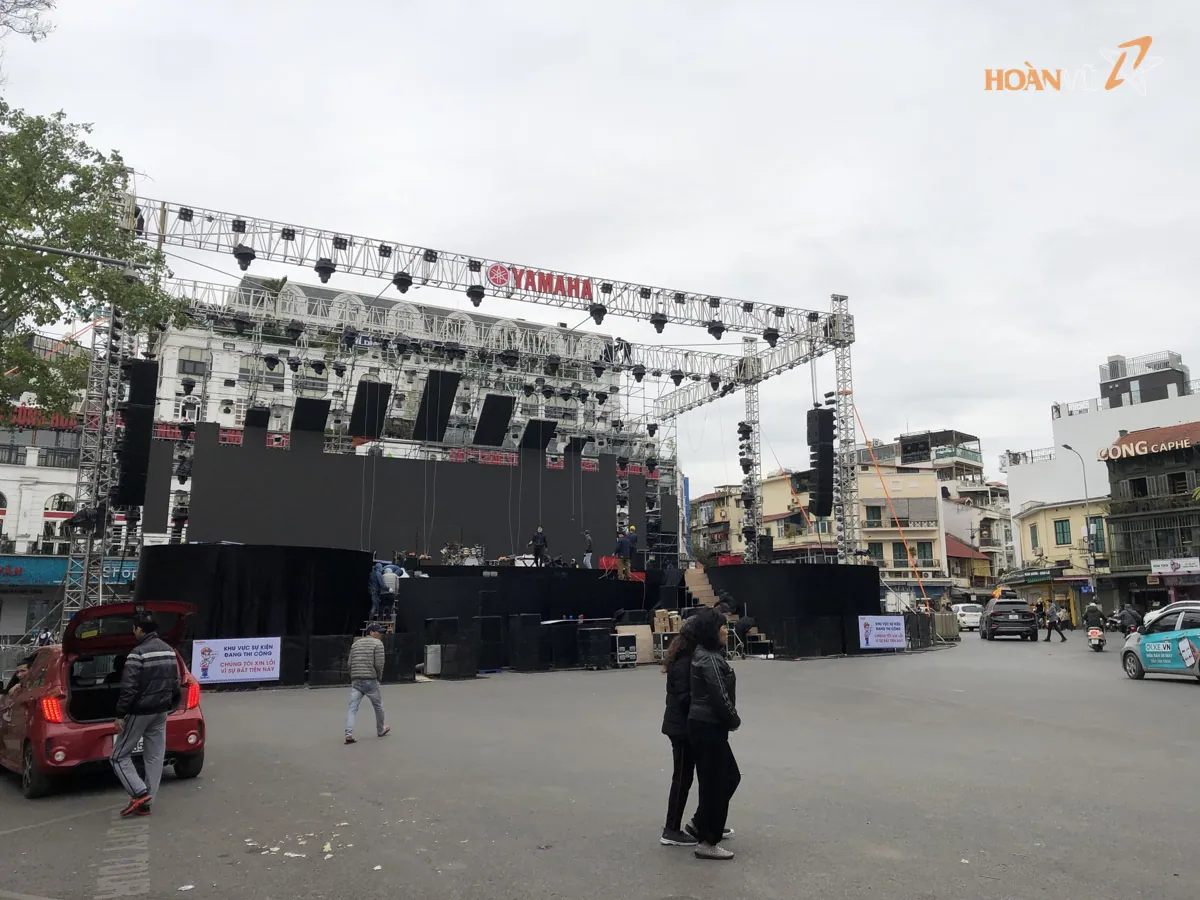
A festival staged on a road and a walking street carries its own set of problems, quite different from an indoor show. The points below are what any technical crew has to work through for this type of programme, stated in general terms.
Site access and build time. A central street is usually closed only within set hours. Most of the decking, truss work, speaker hangs and LED cabinet installation has to fit into the night or a few off-peak windows. That forces a layered schedule: deck first, truss next, screens and lights last, each layer with its own team and its own sign-off point.
Decking and load. Outdoor modular decking needs adjustable legs because road surfaces are cambered for drainage. Load calculations must cover performers, equipment on the deck, and wind acting on covers and backdrops.
Outdoor LED screens. These differ from indoor screens on two counts: brightness and water resistance. A walking street carries street lighting, signage and building screens all around, so the stage screen has to be bright enough not to wash out. The closest viewing distance decides the pixel pitch, because people standing right at the barrier will see individual pixels.
Sound. Open street stages typically use line arrays flown on truss, with coverage calculated for the far end of the crowd. A long street may call for supporting delay positions further back. Noise limits for nearby residents and buildings also apply, and that is something to settle with the authorities in advance.
Power. An outdoor stage in the middle of a street almost always needs generators, with a backup path for critical equipment. Cable runs need trays and anti-slip covers where people walk.
Weather. A rain plan is mandatory: covers for control positions, water protection for connectors, and a documented procedure for pausing and resuming the show.
Crowd operations. A street stage is open from many directions, so entry and exit flows should be separated, with barriers to route people, a lane kept clear for ambulances, and assembly points in case an area has to be cleared. A children's area, where there is one, is normally kept away from high sound pressure zones.
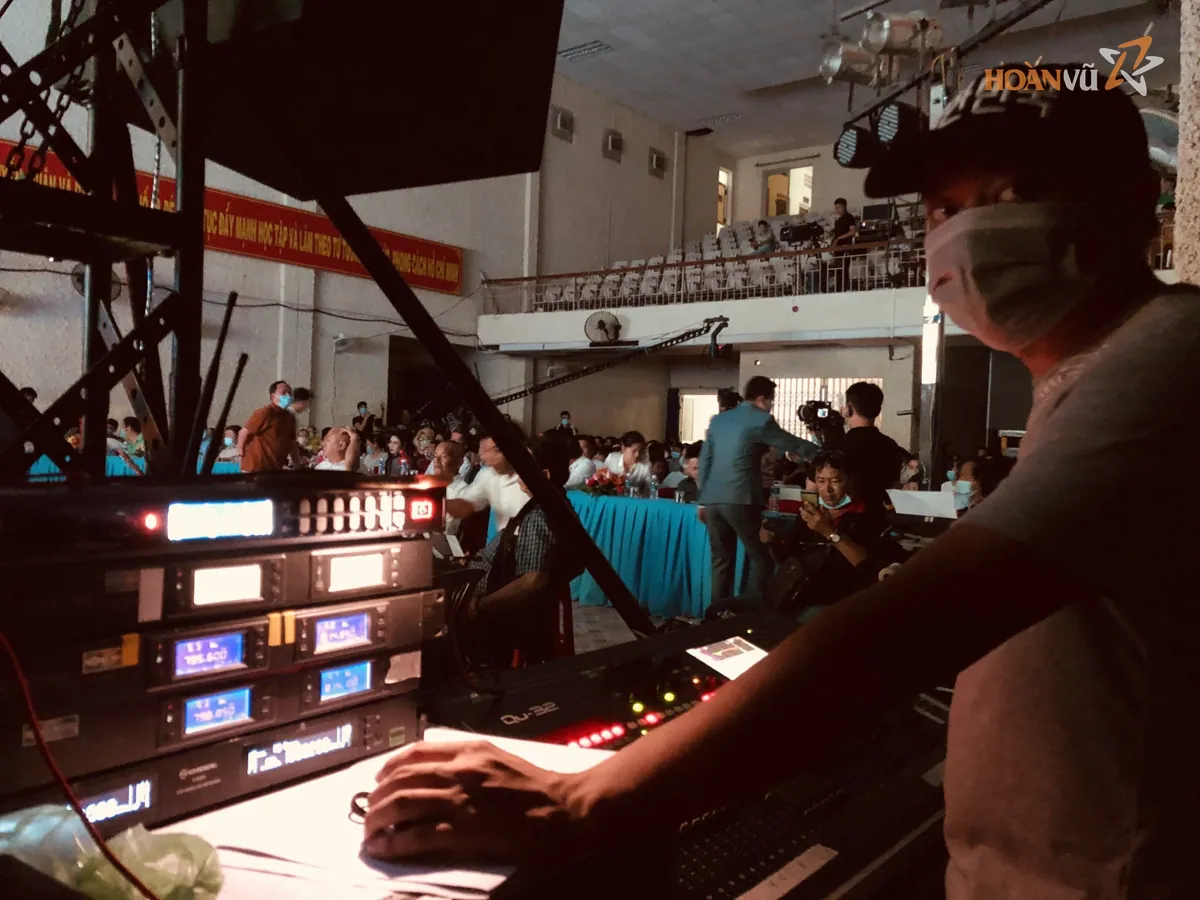
Notes for the audience
The venue sits in the heart of the former District 1, so public transport and parking further out tend to work better than driving straight to the stage area.
Gate opening times, zone maps and entry arrangements for each area are not in the published plan. Audiences should follow the organisers' official channels before heading out.
Per the city plan, the opening performance will be broadcast live on television and streamed on digital platforms, so people who cannot attend in person can still follow it.
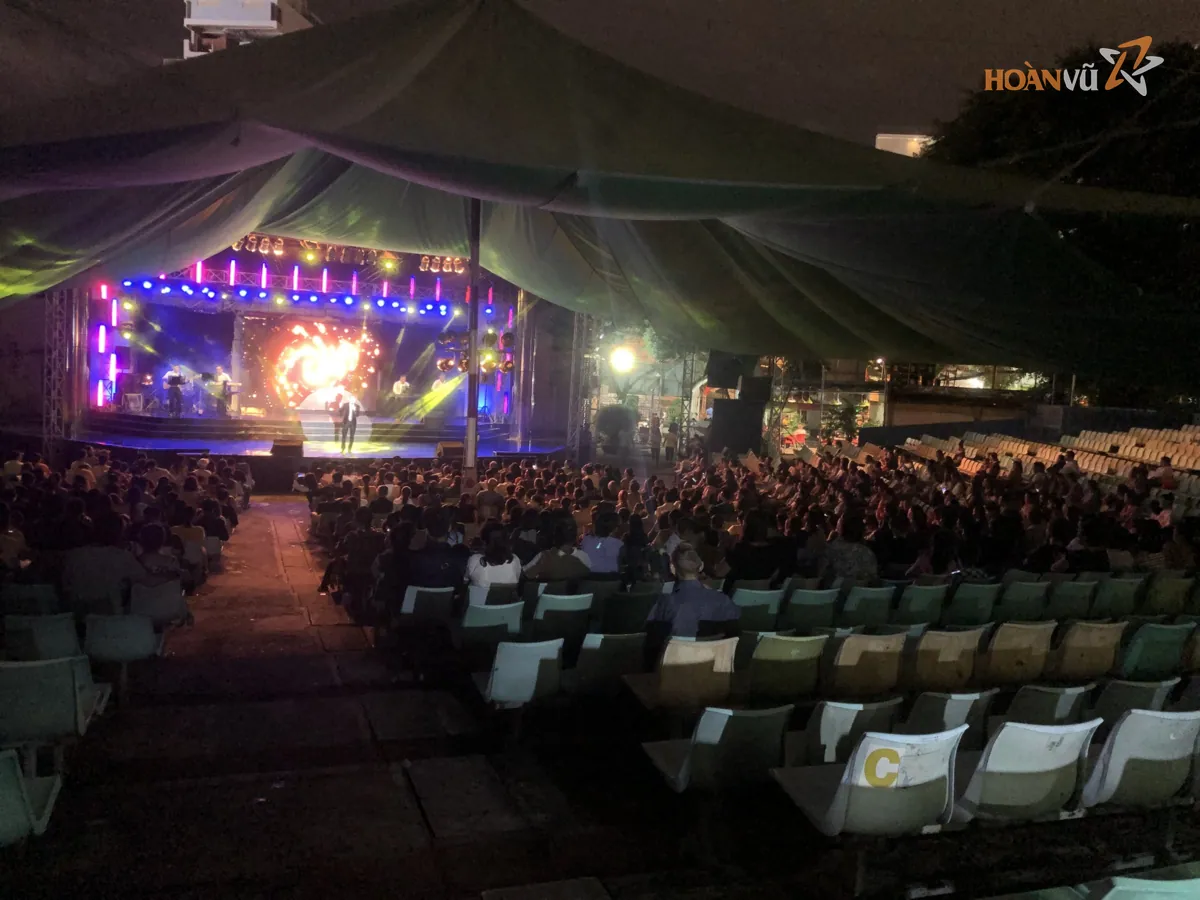
Frequently asked questions
When and where does HOZO 2026 take place?
Per the Ho Chi Minh City People's Committee plan, the main programme is set for 25 to 27 December 2026, on Le Loi street between Pasteur and Nguyen Hue, and on Nguyen Hue walking street between Ngo Duc Ke and Le Loi.
Which artists are expected to perform?
On the international side: Nuit Incolore, Kiki, Hanbin, Younbans, Hwasa, Inayat Kaur Bajaj, Otyken and The Havana Social Club. On the Vietnamese side: Soobin, Hoa Minzy, ca nuong Kieu Anh, Trong Hieu, Bui Cong Nam, Quang Hung MasterD, Phung Khanh Linh, Grey D and Duong Domic.
Do you need a ticket to attend?
The published plan does not state ticket information. Audiences should wait for an official announcement from the organisers.
Conclusion
Programmes staged in the middle of a street always demand careful work on decking, LED screens, sound and lighting and audience flow, and Hoan Vu takes on that scope for outdoor event production, with multi-camera livestream where a programme needs to go out live.
Hoan Vu handles stage, screens, filming, streaming and ticketing end to end.