The plan for the Lang Biang International Music Festival 2026 was announced in mid-October. The programme runs from 13 to 15 November 2026 in Da Lat, Lam Dong province, spread across several venues in the city rather than packed into one night. The plan was issued by Lam Dong province's steering committee for UNESCO Creative City of Music activities.
For people who build stages, the detail worth noting is the main night on 14 November at Lam Vien Square: the show uses 3D mapping and hologram effects, it is free for the public, and it is broadcast live on the province's radio and television platform. An open square, a projection layer and a live feed add up to a technical brief quite different from a ticketed indoor show.
Key information
| Item | Detail |
|---|---|
| Dates | 13 to 15 November 2026 |
| Main night | 7pm on 14 November, Lang Biang International Music programme |
| Venues | Lam Vien Square, Dalat Opera House, Lam Dong Museum, Hung Vuong ancestral temple (Cam Ly ward), Da Lat |
| 13 November | Academic seminar on Da Lat as a UNESCO Creative City of Music, with an expected 150 to 200 delegates; two musical theatre works presented at Dalat Opera House |
| 15 November | Live-setting stage reenacting the Mau Thuong Ngan worship tradition at the Hung Vuong ancestral temple; 5pm band exchange with groups from Cuba, South Korea, Russia, the United States and Vietnam at Lam Vien Square |
| Throughout 13 to 15 November | Traditional instrument experience space and gong performances at Lam Dong Museum |
| Tickets | The main programme is free for residents and visitors |
A detailed line-up has not been released in the information published so far, so that part will be updated once the organisers confirm it.
A stage, audio, lighting, LED and crowd operations view
The section below is general trade knowledge for square-based programmes, not a description of the design used by the event above.
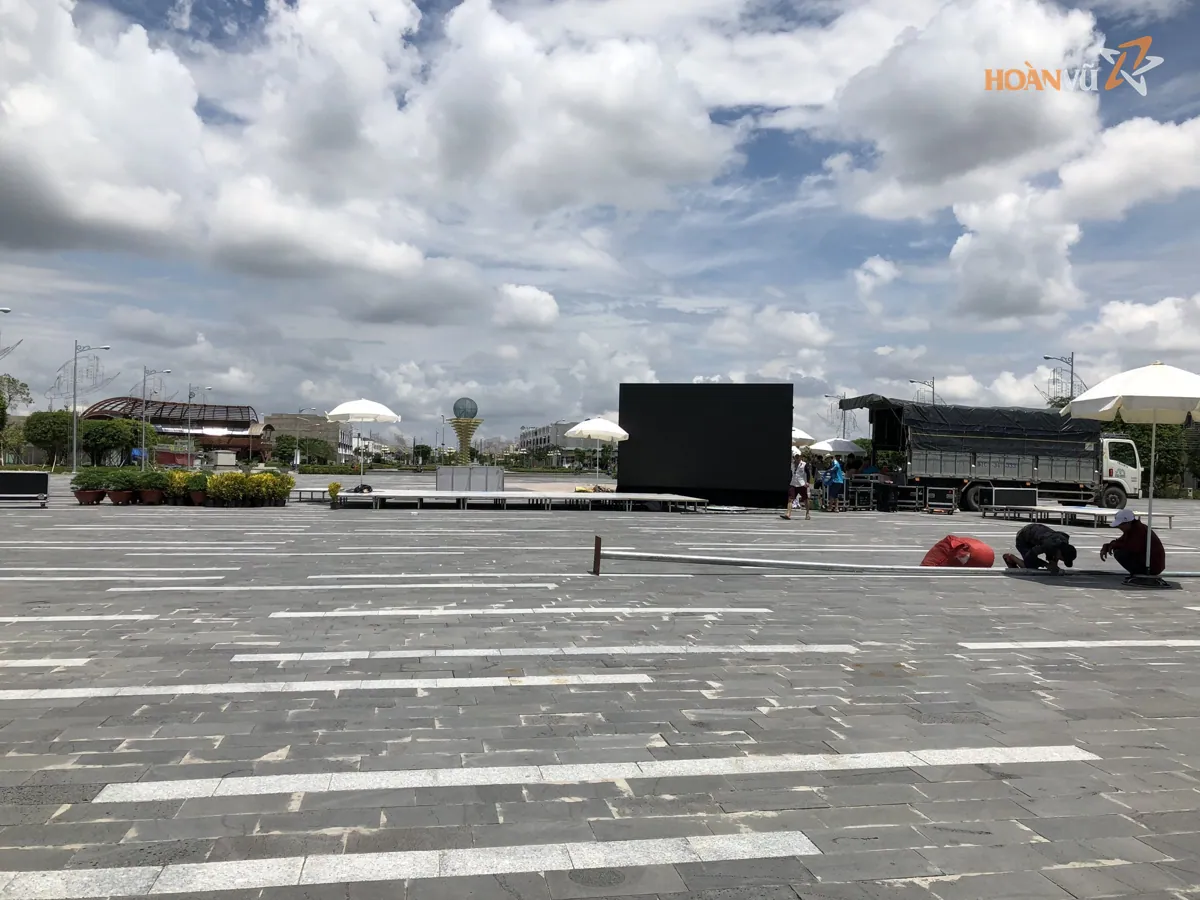
Structure on a square floor. A square has no rigging points the way an indoor arena does, so stages usually go the ground support route: free-standing truss, ballasted feet, a roof calculated for wind load. Stone or concrete paving rarely allows anchor drilling, so ballast figures have to be worked out carefully and checked again before doors open. Every extra fixture or speaker adds to the load, so the load table should follow the final drawing.
LED screens in highland weather. November in Da Lat brings mist and off-season rain, so outdoor cabinets need the right water-resistance rating, sound gaskets, a closed rear face, and cable runs kept overhead or inside trays. Brightness is chosen by time of day: daytime build checks run at high brightness, while the show itself is dialled down so cameras do not clip and the audience's eyes stay comfortable.
3D mapping and hologram effects. Architectural projection depends on three things: the projection surface, throw distance and ambient light. Street lamps, decorative lighting and nearby LED walls all cut contrast, so the lighting zoning conversation has to start early with the stage lighting team. Hologram-style effects on stage usually rely on a reflective foil or a transparent LED mesh, and they read well only within a given viewing angle, so the audience standing plan should be drawn alongside the stage plan.
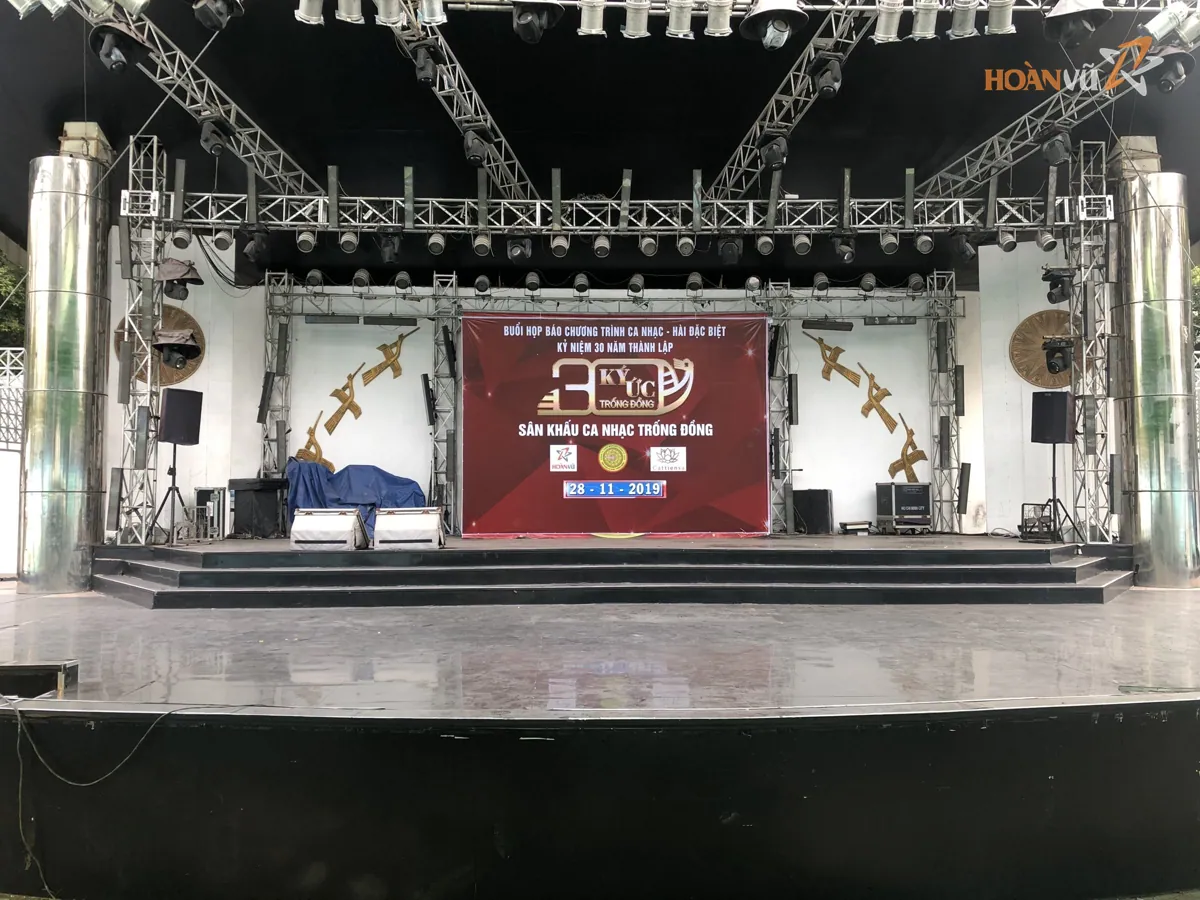
Live broadcast. With an OB van or a live crew on site, the LED wall has to run a high refresh rate so no scan lines appear on camera. The main video signal takes one path, the backup another, and power is best split into separate branches for video, audio and lighting. A standby generator already warmed up still costs less than one minute of dead air.
Audio in open space. A square has no reflective walls, so sound energy drops away quickly with distance. A line array covers the main field, delay clusters are added when the audience depth is large, and subwoofers are arranged in a row to keep low end even. Measurement and tuning belong in a quiet window earlier in the day, because once the crowd arrives, problems are hard to hear.
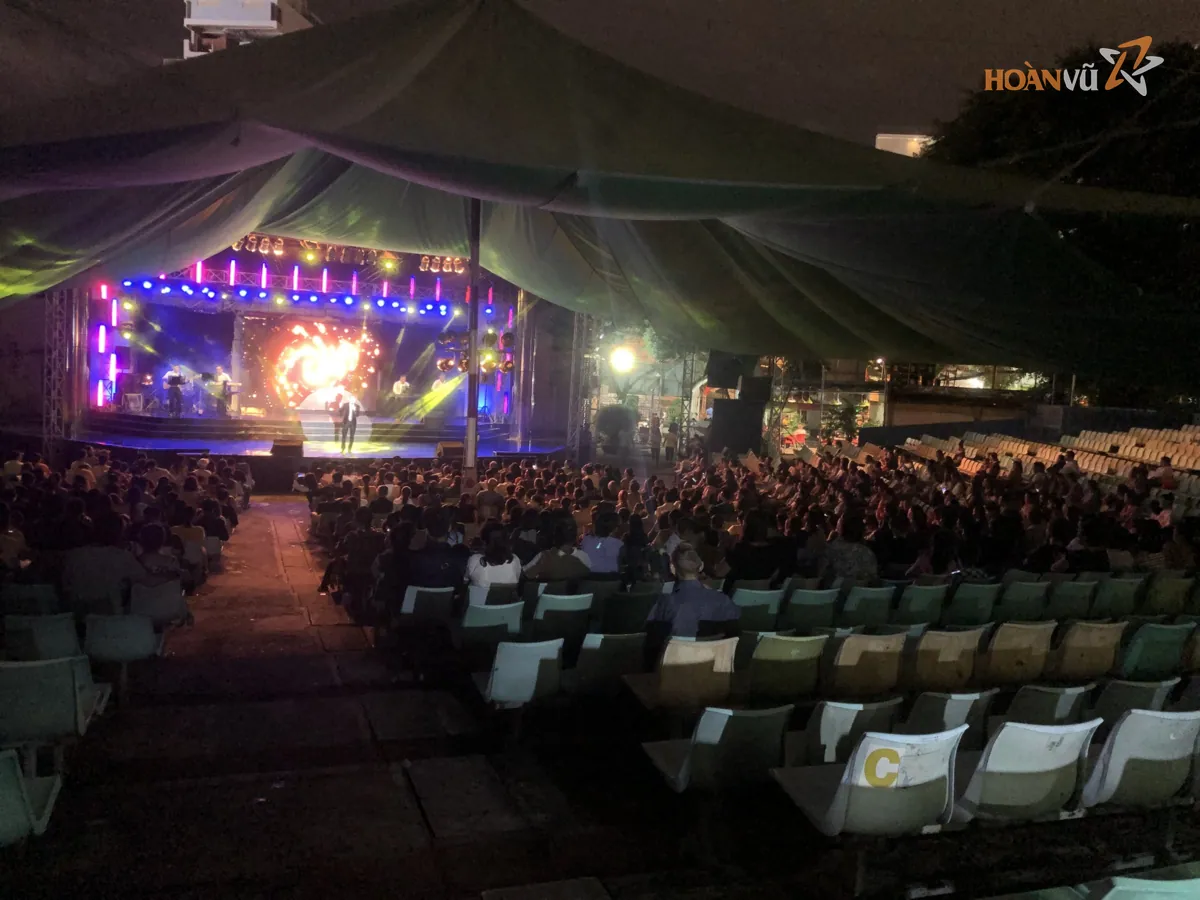
Crowd operations at a free event. With no ticket count, attendance is hard to forecast, so plans are usually built on the site's safe capacity. That means barriers dividing entry and exit flows, exits kept clear and staffed, emergency lighting on its own supply, a meeting point for anyone separated from their group, and one agreed communication channel on site.
Notes for the audience
- The main night starts at 7pm on 14 November at Lam Vien Square, free for the public.
- The international band exchange runs at 5pm on 15 November, also at Lam Vien Square.
- The traditional instrument experience space is open across all three days at Lam Dong Museum.
- For anything else, such as standing layouts and traffic routing around the square, follow the official announcements from the organisers in Lam Dong.
Frequently asked questions
When and where is the Lang Biang International Music Festival 2026?
It runs from 13 to 15 November 2026 in Da Lat, Lam Dong province. The main venues are Lam Vien Square, Dalat Opera House, Lam Dong Museum and the Hung Vuong ancestral temple in Cam Ly ward.
Do I need a ticket?
According to the information released, the main programme is free for residents and visitors, and it is broadcast live on Lam Dong province's radio and television platform.
Which bands join the exchange programme?
The exchange on the afternoon of 15 November at Lam Vien Square features bands from Cuba, South Korea, Russia, the United States and Vietnam. The line-up for the main night has not been detailed yet.
Conclusion
Square programmes like this one live on the preparation nobody sees, and that is exactly the part Hoan Vu handles: stage, LED screens, audio and lighting, and livestream for outdoor event production.
Hoan Vu handles stage, screens, filming, streaming and ticketing end to end.