When you ask for a price on an LED screen, the first questions back are usually whether it is indoor or outdoor and how far away the audience stands. Both lead straight to the most important figure for an LED screen: the pixel pitch.
What pixel pitch means
Pixel pitch is the distance between the centres of two adjacent pixels, in millimetres. P2.5 means the pixels sit 2.5 mm apart; P10 means 10 mm.
The smaller the number, the denser the pixels, the finer the image and the closer a viewer can stand without seeing the grid. In exchange, the pixel count per square metre rises sharply, and with it cost, weight and power consumption.
A rule of thumb for viewing distance
The estimate widely used in the trade: the minimum viewing distance in metres is roughly the P number. P2.5 suits viewers from about 2.5 m back, P10 from about 10 m.
This is a figure for quick guidance, not a technical standard. Real perception also depends on content: small text and data tables need a finer pitch than video and large shapes.
| Pitch | Sensible viewing distance | Typically used for |
|---|---|---|
| P1.8 to P2.5 | From about 2 to 3 m | Meeting rooms, studios, lobbies, presenter backdrops |
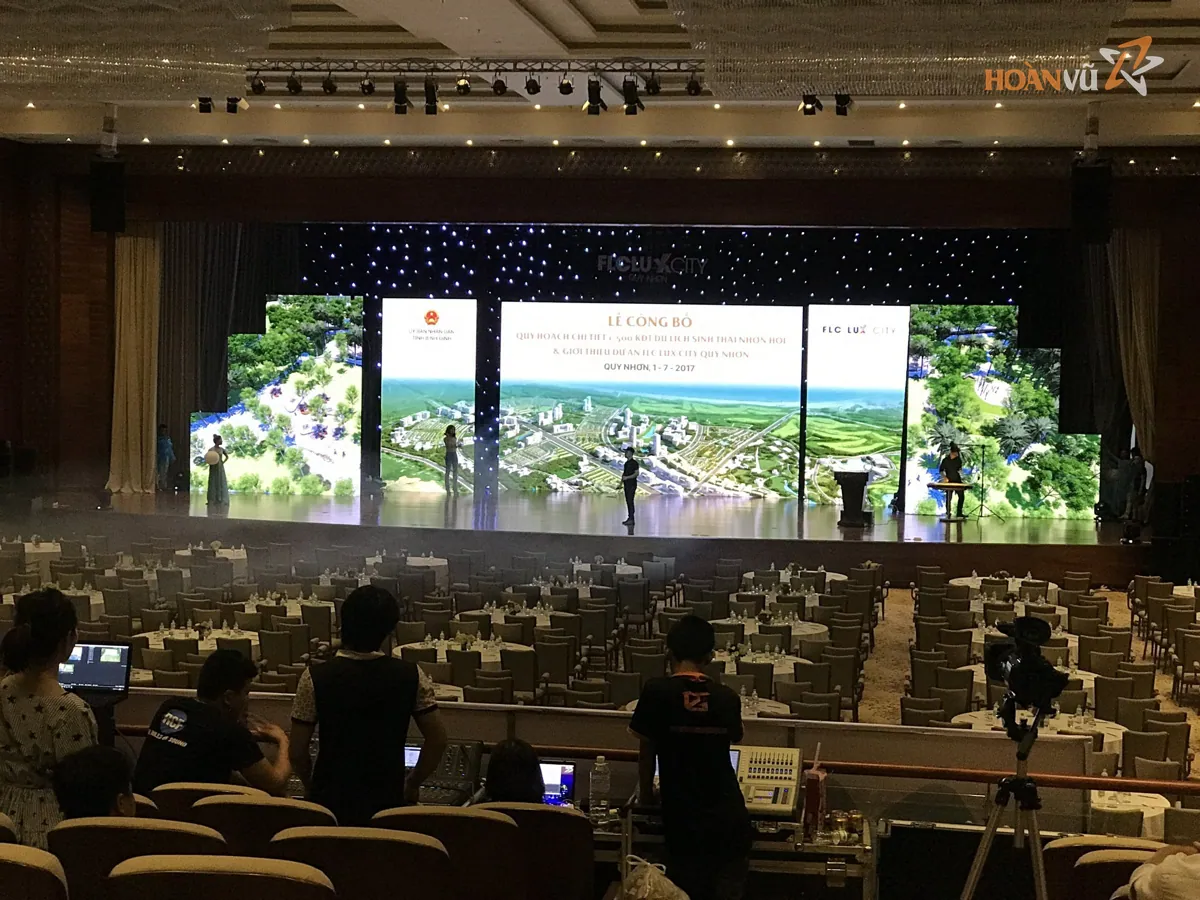
| P2.9 to P3.91 | From about 3 to 4 m | Event stages, conferences, show backdrops |
| P4 to P6 | From about 4 to 6 m | Outdoor stages, large-scale events |
| P8 to P10 | From about 8 to 10 m and beyond | Outdoor billboards, stadium perimeter LED |
Indoor and outdoor
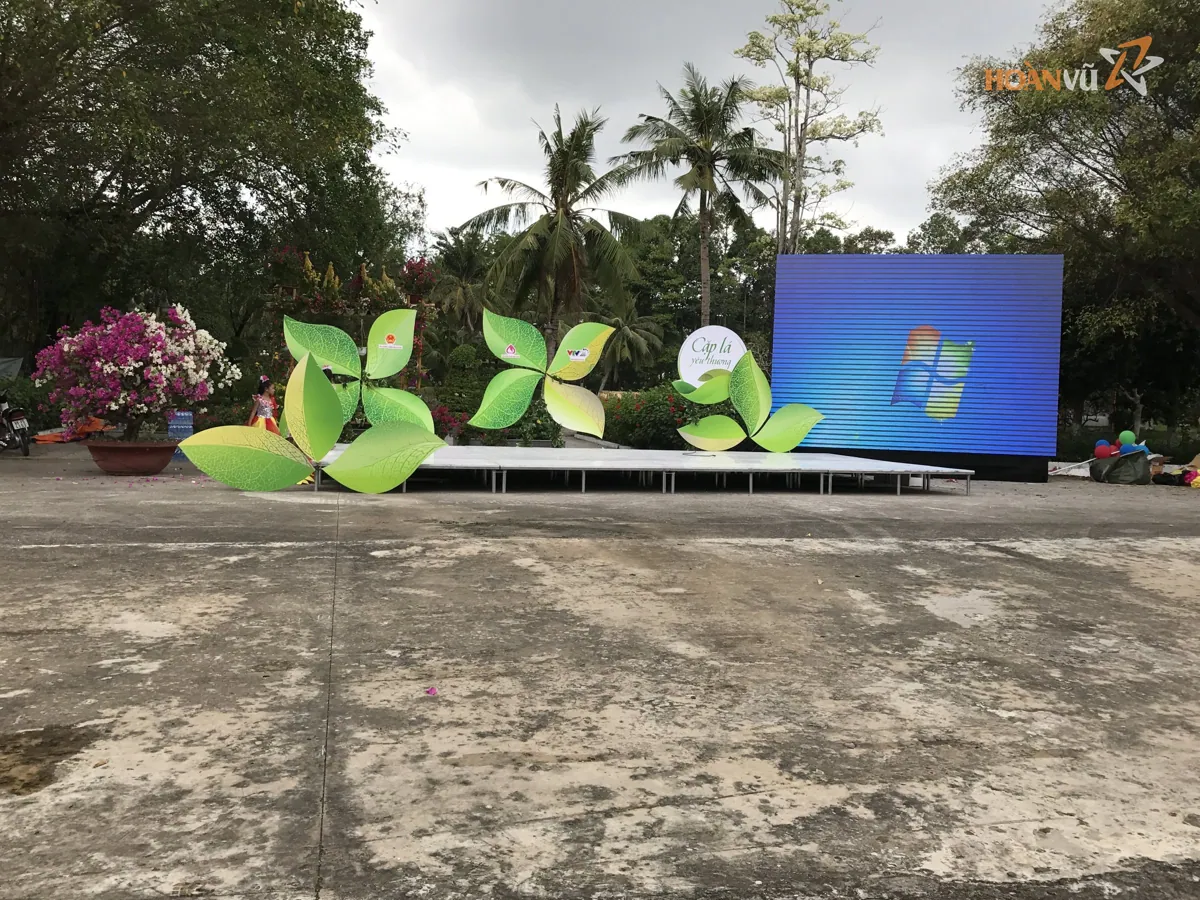
Beyond pixel pitch, the installation environment decides the module type.
- Indoor: moderate brightness because ambient light is low, lighter module housings, no need for a high ingress rating.
- Outdoor: much higher brightness to stay readable in sunlight, weatherproof and dustproof housings, better heat dissipation.
Using indoor modules for an outdoor event is a common mistake when hiring on price. By day the sun washes the image out; by night rain becomes the worry.
The screen's actual resolution
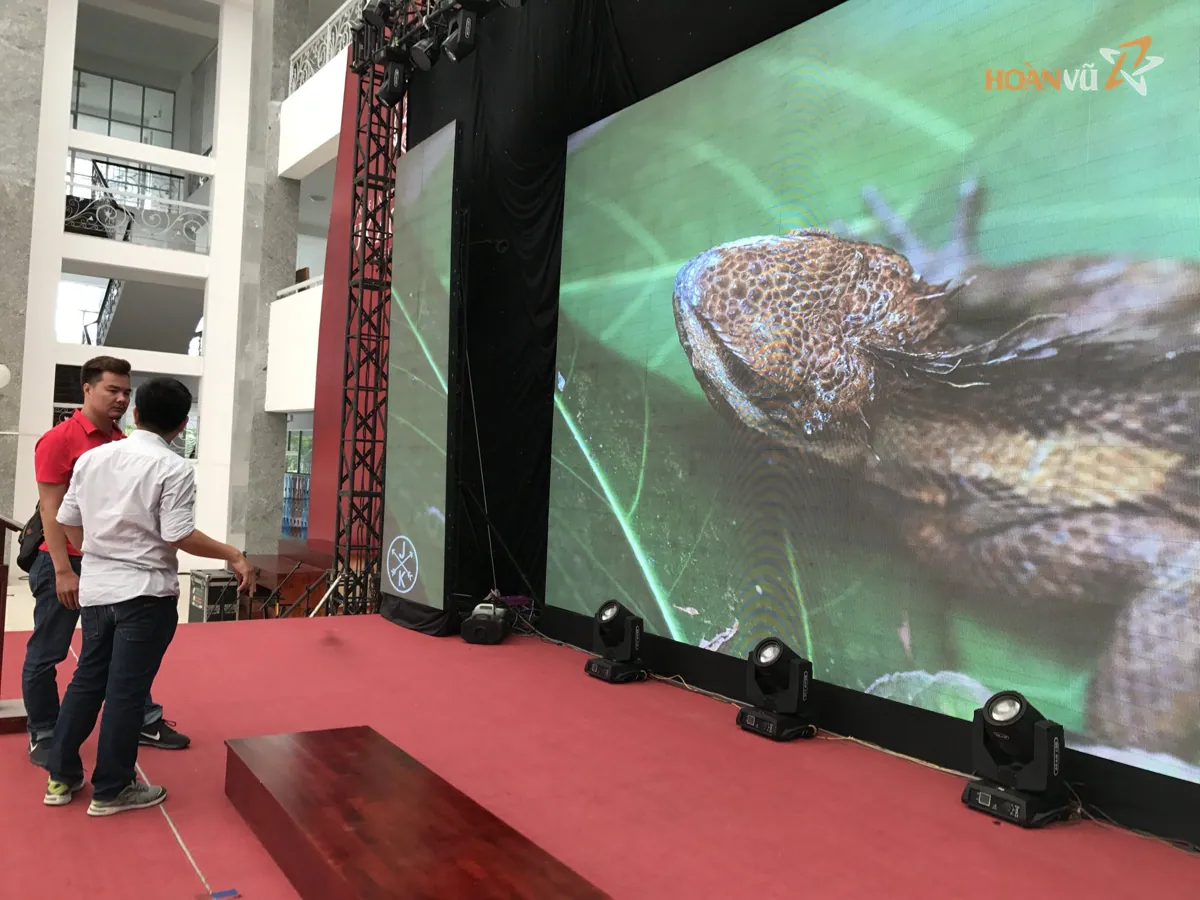
The pixel count of a whole screen equals its size divided by the pixel pitch. A screen 6 m wide in P3.91 carries roughly 1,535 pixels across, close to Full HD in that dimension.
This matters when preparing content. Design files should be made at the screen's real pixel count, not a Full HD file stretched to fit, which blurs text.
Choosing by purpose
- Measure the nearest viewer's distance to the screen, not the average distance.
- Look at the content: a lot of small text calls for one step finer.
- Decide indoor or outdoor to set the module type and brightness level.
- Calculate area and power to settle the supply and the rigging.
- Prepare content at the real resolution of the screen you have chosen.
Frequently asked questions
Is a smaller pitch always better?
No. A fine pitch is only needed when viewers stand close. For an outdoor billboard read from tens of metres away, too fine a pitch adds cost the eye cannot resolve.
Can an indoor LED screen be used outdoors?
It should not be. Indoor modules are far less bright and lack the ingress rating required. In sunlight the image washes out; in rain the equipment is at risk.
What size should content files be prepared at?
At the screen's real pixel count, calculated as size divided by pixel pitch. Stretching a Full HD file to fit the frame will blur the text.
Conclusion
Choosing a pitch balances viewing distance, content type and budget. Measure the closest viewing distance, check how much text the content carries, and only then settle on a number. Doing it the other way round means either overspending or falling short.
For advice on LED screens for halls, stages or outdoor signage, contact Hoan Vu.
Hoan Vu surveys, designs, installs and maintains turnkey.